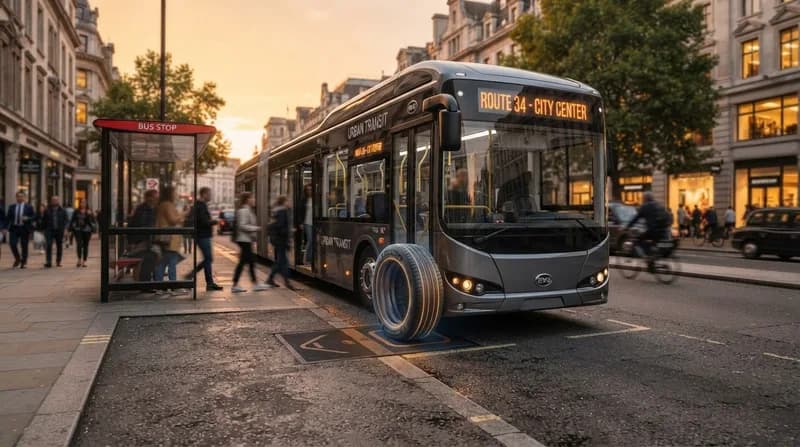
A New Paradigm in Inductive Charging
The push for widespread electric public transportation has long been hindered by the physical and economic weight of massive battery packs. Standard battery-electric buses require heavy, expensive energy storage systems to complete a full day of service, often necessitating hours of downtime at charging depots. Winduction, a promising spin-off from ETH Zurich, is aiming to change this equation entirely by moving the charging interface from the undercarriage to the contact point of the road: the tires.
Instead of the traditional inductive systems that struggle to bridge the gap between road-embedded coils and the vehicle’s floor, Winduction’s design integrates a receiving coil directly into a custom-engineered bus tire. When a bus pulls into a stop equipped with a ground-based charging plate, the magnetic field creates a power transfer directly through the wheel assembly. By focusing the energy transfer through this reduced air gap, the system claims an impressive energy efficiency rating of over 90 percent.
The Engineering Challenge: Reinventing the Tire
One of the most significant hurdles in this endeavor is material science. Standard heavy-duty bus tires utilize steel belts to maintain structural integrity under load. However, in the presence of the high-frequency magnetic fields required for inductive power transfer, these steel components would create parasitic currents, leading to excessive heat and wasted energy. To solve this, Winduction is currently developing specialized, steel-free tires in collaboration with industry partners.
While custom tires inherently command a higher price point than mass-produced rubber, the startup maintains that this is a minor line item when viewed against the total lifecycle costs of a modern transit bus. By opting for a smaller battery, operators can significantly reduce the weight of the vehicle, which in turn improves rolling efficiency and increases passenger payload capacity—creating a net gain for the transit authority’s budget.
Why It Matters: Efficiency and Infrastructure
- Battery Downsizing: Smaller batteries mean lower vehicle costs, reduced weight, and less reliance on scarce raw materials.
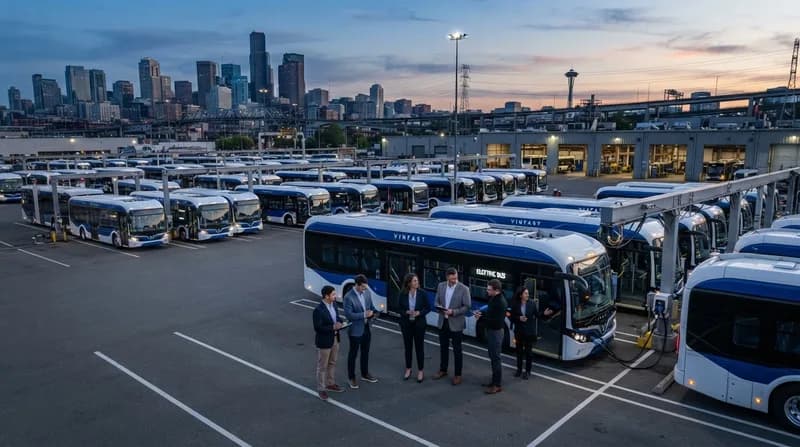
- Strategic Charging: By utilizing short stops, buses can top up throughout the day, avoiding the need for high-power, multi-hour charging sessions at centralized depots.
- Load Management: Daytime charging allows transit networks to tap into solar power production, smoothing out energy demand and reducing grid peak loads.
- Route Optimization: Calculations for the route between Zurich Airport and Zurich Oerlikon suggest that equipping only two out of 24 stops with charging plates could displace up to five hours of depot charging time.
Path to Pilot: 2028 and Beyond
The path forward involves transitioning from laboratory proof-of-concept to real-world integration. Supported by the Swiss Federal Office of Transport and the Swiss Climate Foundation, Winduction is currently constructing a specialized test stop and laboratory infrastructure in Winterthur. The immediate goal is to finalize the components for industrial deployment and convert an electric bus to fully support the tire-based charging architecture.
Discussions are already moving forward with major transit operators in the Zurich region. As cities like Zurich accelerate their procurement of electric fleets, the timing for Winduction’s innovation aligns with a growing need for more flexible, efficient transit infrastructure. If the 2028 pilot project proves successful under real-world conditions, it could mark a significant shift in how municipal transit authorities plan their transition to fully sustainable, electric-powered city travel.