The Shift Toward Automated 3D Workflows
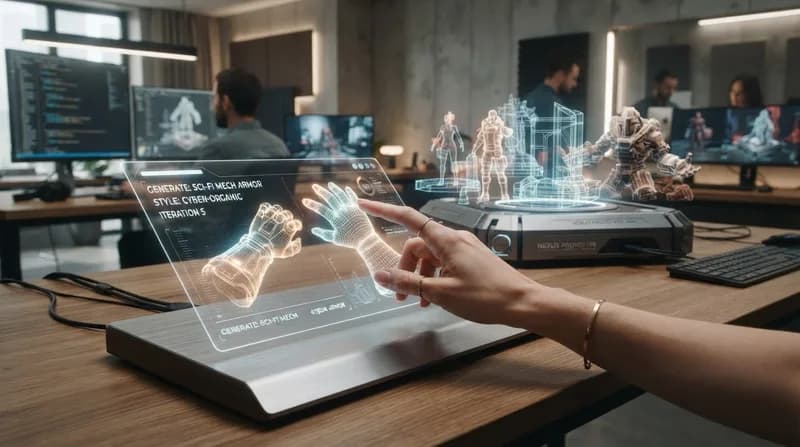
The gaming industry is currently witnessing a paradigm shift in how developers handle 3D asset generation. Traditional modeling, which requires hours of manual sculpting and texturing, is being augmented by generative AI models capable of creating complex geometry and textures from simple prompts. This evolution focuses on bridging the gap between high-fidelity conceptualization and functional game-engine ready models, significantly reducing the bottleneck for indie and AAA studios alike.
Key Technological Advancements
Recent developments, such as the integration of advanced diffusion models and point-cloud generation systems, are enabling researchers to create 3D objects with greater geometric accuracy. By utilizing point-cloud representations, these models can quickly generate the structural skeletal data of an asset, which can then be converted into textured meshes. This method is particularly effective for background props and environment assets, allowing artists to focus their efforts on character design and complex interactions rather than repetitive modeling tasks.
Why it Matters
- Reduced Development Time: AI tools allow for rapid prototyping, letting developers see assets in-game minutes after conceptualization.
- Cost Efficiency: By automating the creation of basic assets, studios can allocate resources toward more creative and technical innovation.
- Accessibility: Lowering the barrier to high-quality asset creation empowers smaller teams to compete with larger studios.
The Future of Interactive Worlds
As these models continue to evolve, the focus is shifting toward temporal consistency and multi-object scene generation. The ability to generate entire, cohesive environments rather than singular objects marks the next frontier in AI-driven game development. With persistent research into runtime agents and point-based diffusion, the prospect of dynamic, procedurally generated worlds that react to player behavior in real-time is moving from the realm of science fiction into the hands of modern developers. These tools aren't just speeding up production; they are fundamentally changing how virtual spaces are built and populated, promising a future where game worlds are more detailed and expansive than ever before.