Solving the Compression Paradox
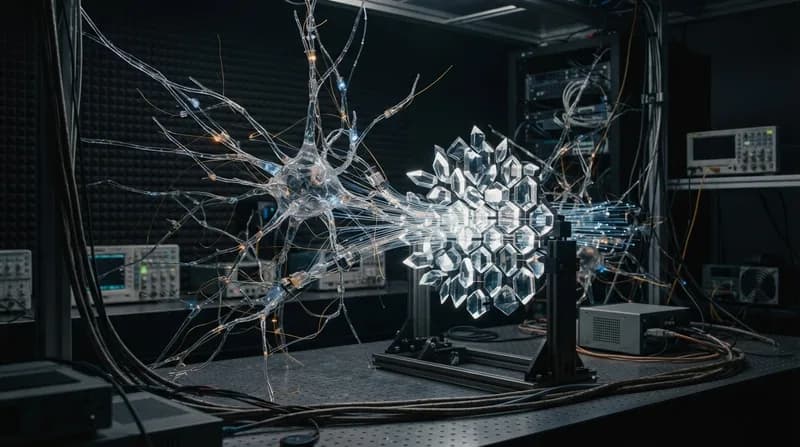
Modern Large Language Models (LLMs) are notoriously resource-hungry, often requiring massive hardware footprints to perform simple inference tasks. A groundbreaking new approach shifts the focus from traditional weight-based pruning to a structural strategy: block removal. By treating the decision of which layers or blocks to remove as a Constrained Binary Optimization problem, researchers are effectively mapping the architecture of neural networks onto the Ising model—a mathematical framework originally designed to study ferromagnetism in physics.
This innovative research demonstrates that by representing model blocks as interacting components, one can calculate the optimal subset of blocks to prune while maintaining the model’s overall performance. Instead of discarding individual weights, which can often destabilize a model's internal representations, this physics-inspired methodology preserves the semantic integrity of the model by removing redundant full-scale blocks, leading to significantly faster inference speeds without the typical loss of accuracy.
Why It Matters
- Computational Efficiency: By utilizing Ising optimization, developers can achieve lower latency, making high-performance models viable for edge devices.
- Mathematical Rigor: Moving away from trial-and-error pruning towards a structured, physics-based optimization provides a more predictable pathway to model distillation.
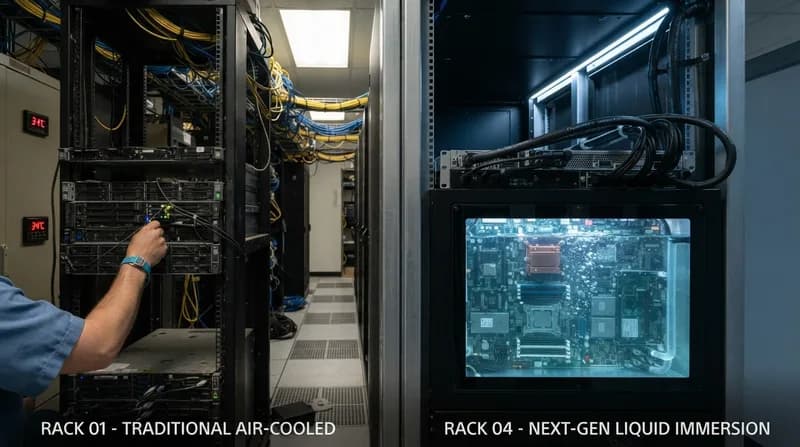
- Resource Optimization: Reducing the memory footprint of massive foundation models allows them to run on smaller, more affordable hardware clusters.
The implications for the AI field are substantial. As foundation models continue to scale in size, the ability to 'prune like a physicist' offers a sustainable path forward. Rather than simply throwing more compute at the problem, this method allows for a graceful shrinking of models, enabling high-performance AI capabilities to exist within constrained power and memory budgets. This research marks a pivotal step in bridging the gap between abstract theoretical physics and practical, real-world deployment of highly efficient neural architectures.