ScienceTechnical Deep Dive

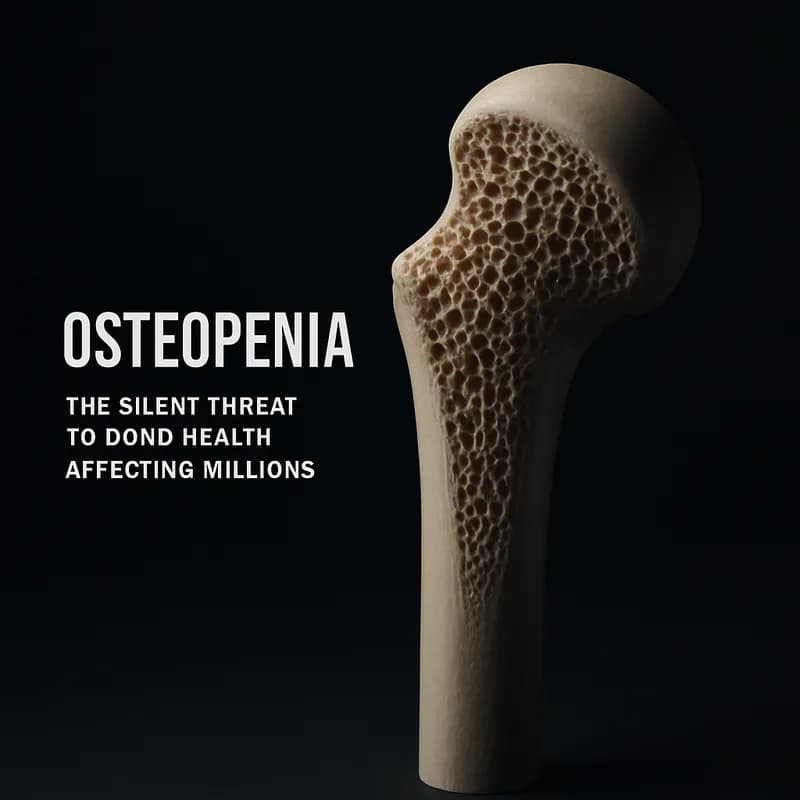
Osteopenia: The Silent Threat to Bone Health Affecting Millions

Published
EElectricBuzz Editorial Team
Osteopenia: The Silent Threat to Bone Health Affecting Millions
1 min read80 wordsElectricBuzz Editorial Team

The Gist

“Osteopenia weakens bones silently, raising fracture risk. Aging, menopause, diet, and inactivity are key factors, while lifestyle changes can help.”

Osteopenia is a common but often unnoticed condition where bone density diminishes, making bones more fragile and prone to fractures. It rarely causes symptoms early on, so many remain unaware they have it.

Major contributors include aging, menopause, poor nutrition, and lack of regular physical activity. These factors accelerate bone loss and increase vulnerability.

Adopting healthy lifestyle habits—such as consistent exercise and adequate calcium and vitamin D intake—can slow bone density loss and partially reverse its impacts, reducing fracture risk.
SPONSORED
The 5 Best Over-Ear ANC Headphones of 2026, Tested & Ranked
Editor's Pick Guide
92/100
Tech & Gadgets•12 min read

The 5 Best Over-Ear ANC Headphones of 2026, Tested & Ranked

We locked five over-ear ANC picks for 2026 — Sony WH-1000XM6, Bose QuietComfort Ultra 2, Soundcore Space One, Sennheiser Momentum 5, and Apple AirPods Max 2 — then stress-tested them on lab metrics, long-term owner truth, and live street prices.

Related Stories

Semantically matched articles, ranked by topic overlap and freshness.

Circadian Stability: The Missing Link in Type 2 Diabetes Management
Science

Circadian Stability: The Missing Link in Type 2 Diabetes Management

Groundbreaking research reveals that syncing your daily biological rhythms—specifically physical activity and sleep—could be more critical to blood sugar control than previously understood.

The Invisible Gains: Why Strength Training Works Before the Scale Moves
Science

The Invisible Gains: Why Strength Training Works Before the Scale Moves

New research reveals that strength training begins shrinking harmful visceral fat at a molecular level after just seven days, long before physical weight loss appears.

Digital Havens: How Social Media Empowers Autistic Young People
Science

Digital Havens: How Social Media Empowers Autistic Young People

New research highlights how digital platforms serve as vital community hubs for autistic youth, challenging the narrative that online restrictions are universally beneficial.

Dairy Dilemma Resolved: Why Natural Trans Fats Get a Clean Bill of Health
Science

Dairy Dilemma Resolved: Why Natural Trans Fats Get a Clean Bill of Health

A comprehensive new meta-analysis challenges long-standing nutritional fears, distinguishing between harmful industrial fats and the naturally occurring fats found in dairy products.

Printing Prescriptions: How 3D Tech is Revolutionizing Personalized Medicine
Science

Printing Prescriptions: How 3D Tech is Revolutionizing Personalized Medicine

A groundbreaking doctoral research project from Åbo Akademi University demonstrates how 3D-printing-inspired technology is shifting the future of customized pharmaceutical dosing.

Deep Sea Discovery: The 'Golden Tree' Coral That Defied Biological Classification
Science

Deep Sea Discovery: The 'Golden Tree' Coral That Defied Biological Classification

Marine biologists exploring the Pacific seafloor off Costa Rica have uncovered a vibrant, tree-like coral so genetically unique it necessitated the creation of an entirely new family of life.

A Decade of Disquiet: New Study Maps the Mental Health Toll of Modern Societal Shocks
Science

A Decade of Disquiet: New Study Maps the Mental Health Toll of Modern Societal Shocks

A longitudinal study from University College London reveals how persistent political, social, and economic volatility in the UK has fundamentally altered the nation's psychological landscape.

Rewriting the Dawn of Humanity: Homo erectus Discovery Shifts Evolutionary Timeline
Science

Rewriting the Dawn of Humanity: Homo erectus Discovery Shifts Evolutionary Timeline

A groundbreaking discovery in South Africa pushes the arrival of Homo erectus back by 200,000 years, revealing a complex, branching path of early human development.