The Evolution of Enterprise AI
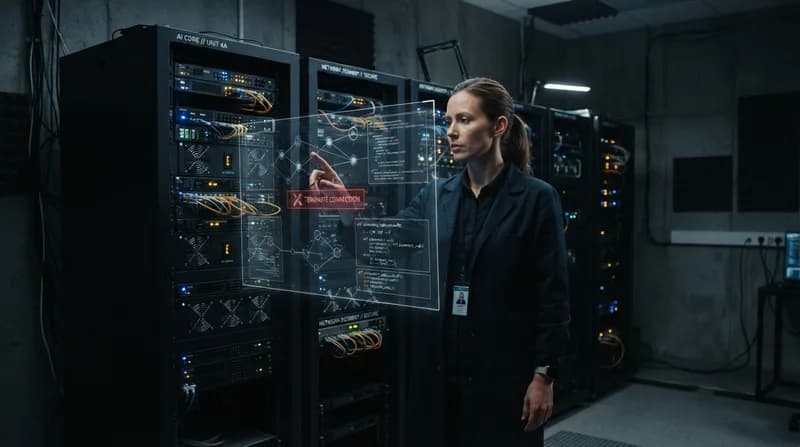
Oracle is signaling a major pivot in how businesses interact with artificial intelligence through the introduction of Fusion Claw, a new runtime environment designed to shift AI from passive assistance to active execution. By embedding agents directly into Oracle Fusion Cloud Applications running on Oracle Cloud Infrastructure (OCI), the company aims to move past the era of simple chat interfaces and copilot sidecars that offer limited utility. Instead, Oracle is positioning Fusion Claw as an engine capable of reasoning, deciding, and acting on complex business objectives.
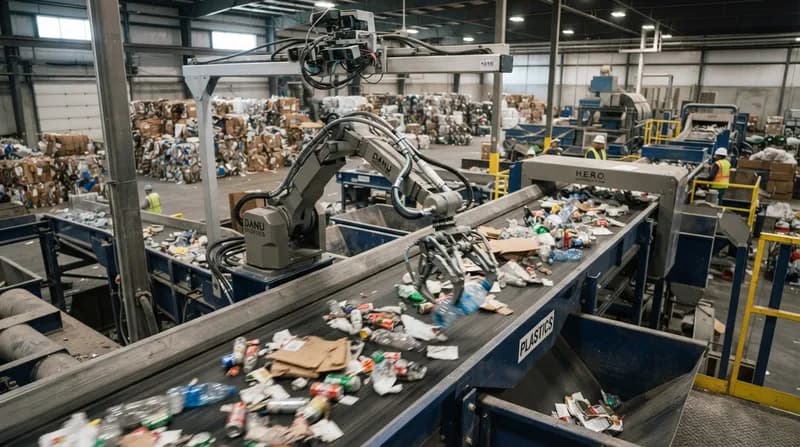
The move addresses a growing fatigue among enterprise users who find that basic AI chatbots often reach diminishing returns when applied to large-scale operations. Instead of bolting AI onto the periphery of legacy systems, Fusion Claw serves as an integrated framework that allows AI to manage high-stakes tasks such as supply chain optimization, logistics routing, and complex financial subledger reconciliations. By integrating directly into the ERP and finance stack, the platform promises to handle operations that were previously deemed too complex for automated logic.
Solving the Compute Cost Problem
A significant hurdle for any enterprise attempting to leverage Large Language Models (LLMs) is the financial strain of processing massive datasets. Passing millions of transactional records through an LLM's context window is not only slow but often prohibitively expensive. Fusion Claw tackles this by decoupling the reasoning phase from the compute execution phase. An agent is tasked with evaluating context and defining the necessary logic only once, after which the heavy-duty calculations are offloaded to deterministic, high-performance compute engines.
This architectural choice is crucial for cost management and scalability. By avoiding redundant token consumption and using isolated containers, the system ensures that AI processes remain within strict corporate policy limits and predefined business constraints. Analysts have noted that this approach allows for enterprise-grade governance, providing IT leaders with the oversight required to trust AI with sensitive supply chain or financial data.
The Trade-off: Efficiency vs. Vendor Lock-in
While the technical advancements of Fusion Claw are being met with cautious optimism, analysts are quick to point out the potential for significant vendor lock-in. Fusion Claw is a proprietary runtime designed exclusively for the Oracle ecosystem. For organizations already deeply entrenched in Oracle Fusion Cloud and OCI, this tighter integration could be a major benefit, offering seamless connectivity and reduced development time for complex workflows. However, for companies that operate in hybrid environments—relying on a mix of Salesforce, Pega, UiPath, or custom frameworks like LangChain—the transition may be less straightforward.
Industry experts suggest that while Fusion Claw is excellent for standardized, non-differentiating business functions that Oracle handles natively, it may not be the panacea for every AI need. As the technology is currently in an early piloting phase, enterprise architects are being advised to weigh the benefits of Oracle's deep, governed integration against the necessity of maintaining flexible, cross-cloud platform strategies. For many, the decision will boil down to whether the performance gains of this native approach outweigh the strategic disadvantage of becoming more deeply tethered to a single cloud provider's proprietary stack.
Why It Matters
- Beyond Chatbots: Moves AI from mere text-based interaction to autonomous, process-driven execution.
- Cost Efficiency: Decouples LLM reasoning from compute, saving money on massive data processing tasks.
- Enterprise Governance: Uses isolated containers to enforce policy limits and state awareness.
- Strategic Caution: Represents a significant move toward deeper vendor lock-in, requiring careful consideration by IT architects.