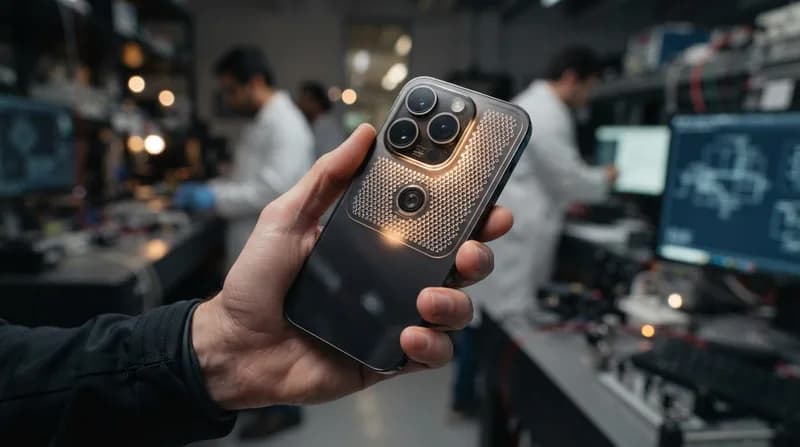
Strategic Acquisition of Glass Imaging
OpenAI has reportedly finalized a $300 million deal to acquire Glass Imaging, a California-based startup renowned for its advanced computational photography technology. Founded in 2019 by former Apple engineers Ziv Attar and Tom Bishop—the same duo behind Apple's iconic Portrait Mode—the company has spent years refining neural networks designed to transcend the physical limitations of mobile camera hardware. By integrating sophisticated AI directly into the image capture process, Glass Imaging allows smartphones to produce professional-grade visuals without the need for bulky sensors or lenses.
Unlike traditional post-processing software that cleans up images after the fact, Glass Imaging’s proprietary technology works in real-time. The system is trained to understand the specific optical characteristics of various smartphone sensor modules, enabling it to pull superior detail and clarity the instant the shutter button is pressed. This hardware-aware approach to imaging is considered a significant leap forward, as it bridges the gap between limited physical hardware and the demands of modern mobile photography.
The Broader Push Toward AI Hardware
This acquisition is widely viewed as a pivotal step in OpenAI’s ongoing transformation from a software-first entity into a hardware-inclusive powerhouse. The company has long been rumored to be exploring its own ecosystem of consumer devices, including smartphones, AI-optimized earbuds, and dedicated personal companion hardware. The purchase of Glass Imaging provides OpenAI with the internal expertise needed to ensure its potential devices offer industry-leading camera performance, a critical selling point for any high-end mobile product.
This move follows a significant string of hardware-focused investments by OpenAI, most notably the acquisition of Jony Ive’s design firm for $6.5 billion. With legendary design pedigree now under its umbrella and the addition of Glass Imaging’s computational photography breakthroughs, OpenAI is positioning itself to compete directly with traditional hardware giants. By controlling both the silicon-level software and the overarching device design, the company aims to create a deeply integrated experience that relies on generative AI as its primary interface rather than a secondary feature.
Why It Matters
- Vertical Integration: OpenAI is moving toward a full-stack strategy, controlling the AI model, the hardware design, and the critical imaging software.
- Computational Advantage: By mastering real-time neural network image processing, the company can deploy powerful AI features on smaller, more efficient physical devices.
- Market Strategy: The heavy investment in camera tech suggests that OpenAI’s future hardware will center on visual capture and AI-driven spatial computing.
As the industry watches for the first official product rollout from the collaboration between Sam Altman and Jony Ive, the Glass Imaging acquisition serves as a clear indicator that the next generation of AI devices will be defined by an intense fusion of optics and advanced machine learning.