A Radiant Discovery in the Canopy
In a striking finding that bridges the gap between zoology and light physics, researchers have documented a rare form of photoluminescence in the Mexican hairy dwarf porcupine (Sphiggurus mexicanus). While many creatures are known to absorb short-wave light and re-emit it at longer wavelengths, observing this phenomenon in live, wild mammals is notoriously difficult. The study, led by Jonathan Pérez-Flores of El Colegio de la Frontera Sur, reveals that these arboreal rodents possess a vibrant, glowing aesthetic under UV light that would appear more at home in a rave than a forest.
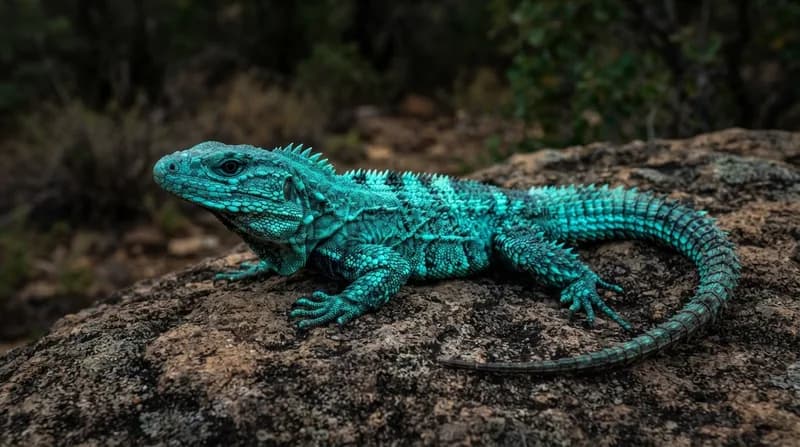
The study highlights a distinct biological reaction where the porcupines emit a brilliant greenish-blue light. Unlike museum specimens, which researchers found to have significantly degraded or non-existent luminescent properties, the live subjects displayed high-intensity emissions. The head area serves as the primary source of the light, with quills casting the strongest glow, while the animals' palms and soles shimmer with a bright yellow hue.
Why it Matters for Conservation
Beyond the sheer aesthetic curiosity, this discovery serves a practical purpose in wildlife management. Hairy dwarf porcupines are notoriously difficult to track in the dark, as their natural brown and yellow pigmentation provides exceptional camouflage against the dense foliage of the Mexican canopy. By utilizing UV LED flashlights during night surveys, researchers can now easily distinguish the animals from their environment.
- Enhanced Visibility: UV light transforms camouflaged rodents into high-contrast targets, significantly increasing success rates for nocturnal observation.
- Conservation Efficiency: Increased sighting rates allow for more accurate population counting, which is vital for protecting the species near the city of Chetumal.
- Biological Insight: The study underscores a growing trend in science: that bio-fluorescence in mammals may be far more widespread than previously documented, with over 125 mammal species now suspected to share similar traits.
The team successfully identified 20 individuals during their field surveys, averaging 1.6 sightings per walk. This methodology offers a non-invasive, efficient way for environmental authorities to monitor the health and distribution of the porcupine population without resorting to more intrusive tracking technologies that could stress these nocturnal creatures.
The Science of the Glow
Photoluminescence occurs when organic pigments in the hair and skin absorb high-energy ultraviolet photons and re-radiate them as visible, lower-energy light. While this has been observed in everything from platypuses to flying squirrels, the intensity seen in the Mexican hairy dwarf porcupine stands out. The discovery opens new doors for researchers to explore how this trait might be used by the animals themselves—whether as a signal to others of their species or simply as a result of chemical structures in their keratin-based quills.