E-BUZZ ME Logo
ScienceTechnical Deep Dive

NASA’s Webb Telescope Uncovers Hidden Giant Planet in Beta Pictoris System

Published
NASA’s Webb Telescope Uncovers Hidden Giant Planet in Beta Pictoris System
1 min read157 words

The Gist

Astronomers have discovered a hidden giant planet, Beta Pictoris d, using the James Webb Space Telescope to peer through a dense disk of cosmic dust.

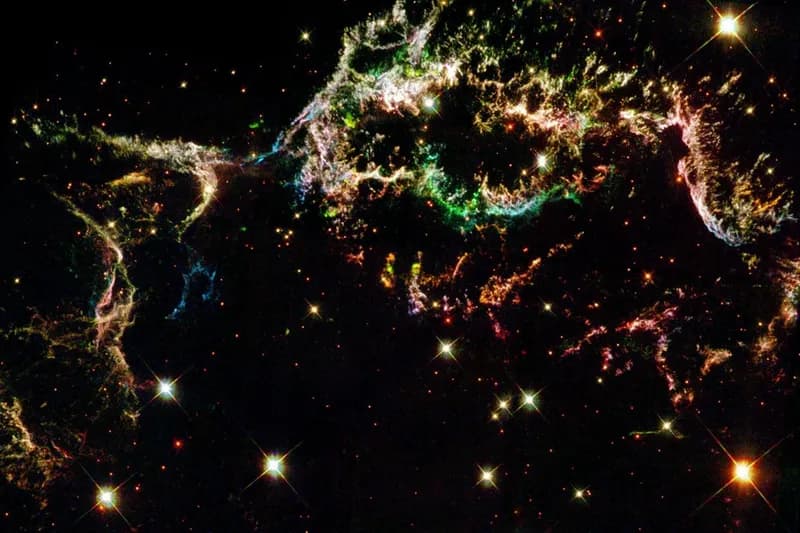
NASA’s James Webb Space Telescope has achieved a significant breakthrough by identifying a giant planet previously concealed within one of the most studied planetary systems in astronomy. The planet, designated Beta Pictoris d, had remained hidden behind a bright disk of cosmic dust that often obscures direct observations in the Beta Pictoris system.

A New Detection Methodology

Rather than relying solely on traditional visual imaging, Webb revealed the existence of the planet through the detection of specific atmospheric signatures. Researchers identified traces of carbon monoxide, water vapor, and methane, which signaled the presence of the massive world. This discovery highlights the telescope's advanced spectroscopic capabilities and its ability to penetrate dense celestial environments.

The successful identification of Beta Pictoris d demonstrates a promising new method for locating elusive exoplanets. By focusing on atmospheric chemical markers, scientists can now find planets that were previously considered invisible due to the glare or interference of their host system's debris disks.
Related Stories

Semantically matched articles, ranked by topic overlap and freshness.

NASA to Conduct Orbital Rehearsals with SpaceX and Blue Origin Landers
Science65%

NASA to Conduct Orbital Rehearsals with SpaceX and Blue Origin Landers

NASA astronauts will perform critical docking tests with prototype lunar landers from SpaceX and Blue Origin during the Artemis III mission in 2027.

Predictable Antarctic Ice Loss Offers Decades for Sea Level Preparation
Science61%

Predictable Antarctic Ice Loss Offers Decades for Sea Level Preparation

New research suggests that Antarctic ice retreat may remain predictable through 2050, giving governments a critical window to implement coastal defenses.

Neural Switch Discovered Controlling Bee Colony Labor Division
Science61%

Neural Switch Discovered Controlling Bee Colony Labor Division

Researchers have identified specific brain circuits that dictate the professional roles of honeybees as they age.

Global Shift to Healthier Diets Could Slash Farm Emissions by 85%
Science61%

Global Shift to Healthier Diets Could Slash Farm Emissions by 85%

A transition toward more nutritious food choices could revolutionize global agriculture and significantly reduce the environmental impact of livestock farming by 2050.

Super El Niño Set to Break 150-Year Temperature Records
Science61%

Super El Niño Set to Break 150-Year Temperature Records

A developing 'super' El Niño in the tropical Pacific has a 90 percent chance of becoming the strongest in recorded history, threatening unprecedented global heat.

New Study Challenges the Existence of Dark Energy
Science61%

New Study Challenges the Existence of Dark Energy

A controversial research paper suggests that the universe’s expansion may not be accelerating, potentially eliminating the need for dark energy as a scientific explanation.

Breakthrough Fluoride-Free Gel Could Regrow Damaged Tooth Enamel
Science60%

Breakthrough Fluoride-Free Gel Could Regrow Damaged Tooth Enamel

Researchers have developed a protein-inspired gel that mimics natural tooth formation to repair microscopic cracks and rebuild enamel.

Simple AI Prompt Resolves Decades-Old Mathematical Conjecture
Science60%

Simple AI Prompt Resolves Decades-Old Mathematical Conjecture

For the second time in a week, artificial intelligence has disproved a long-standing mathematical conjecture using surprisingly basic prompts.