A New Frontier for Student Innovation
NASA has officially set its sights on the next generation of space explorers, launching the "Moon Base Challenge," a $1 million initiative aimed at solving the complex logistical hurdles of establishing a permanent human presence on the lunar surface. Announced at the Kennedy Space Center by NASA Administrator Jared Isaacman, the program is a direct call to action for high school and college students across the United States. Rather than waiting for a career in aerospace, students are being invited to tackle the exact engineering and design problems currently facing NASA’s mission architects.
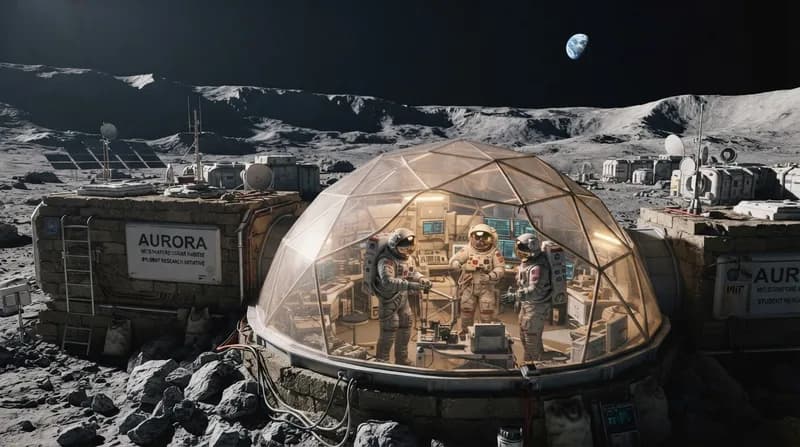
The goal is to cultivate fresh, out-of-the-box thinking for a base near the lunar South Pole—a region of strategic importance due to potential water ice reserves. By participating, students are not merely engaging in a theoretical academic exercise; they are producing deliverables that mimic real-world aerospace workflows, including technical trade studies, design proposals, and professional-grade presentations. The initiative aims to bridge the gap between classroom learning and the rigors of space exploration.
Defining the Six Pillars of Lunar Survival
The challenge centers on six fundamental areas that are critical for sustaining human life on the Moon. These categories reflect the harsh realities of the lunar environment, where every resource must be managed with extreme efficiency and reliability:
- Power Generation and Storage: Developing methods to harness solar energy or other sources that can withstand the long, dark lunar nights and keep essential systems running indefinitely.
- Facility Construction: Proposing innovative ways to build habitats and research structures that can shield astronauts from radiation and extreme temperature fluctuations.
- Life Support Systems: Designing air, water, and food management systems that are highly regenerative, as supply chains from Earth are neither cheap nor quick.
- Surface Transportation: Inventing mobile solutions that can traverse the rugged, regolith-covered terrain to support exploration and cargo movement.
- Communications Networks: Ensuring that astronauts can maintain consistent, high-speed connectivity with their colleagues on Earth, even during remote missions.
- Astronaut Protection: Engineering advanced safety protocols and hardware to mitigate the health risks posed by the lunar environment, including micro-meteoroids and dust.
Why It Matters: Bridging the Gap to Mars
The significance of the Moon Base Challenge extends beyond the lunar surface. NASA views the establishment of a semi-permanent lunar presence as the essential "proving ground" for future crewed missions to Mars. By mastering the ability to extract resources, build infrastructure, and maintain safety in deep space, humanity gains the confidence and the technical roadmap necessary for interplanetary travel.
For the participants, the stakes are equally high. The challenge provides a rare opportunity for young innovators to build professional skills in a collaborative, high-pressure environment. It serves as an incubator for the next generation of aerospace engineers, scientists, and planners who will be responsible for defining the "Golden Age of Science" in the coming decades.
How to Participate
The competition is structured to be inclusive, welcoming students from technical, vocational, and various academic backgrounds. Prospective teams can register via the official NASA STEM Gateway, with the registration window remaining open until January 25, 2027. The program is administered through a partnership between NASA’s Office of STEM Engagement and the Institute of Competition Sciences, ensuring that students have the mentorship and resources required to refine their proposals into viable, high-impact concepts.