A New Era for Nancy Public Transport
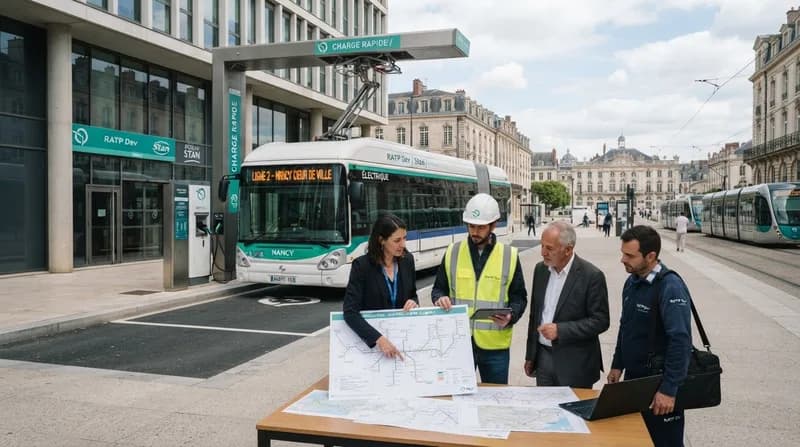
Starting January 1, 2027, the greater Nancy area in France will enter a new phase of public transit management. RATP Dev, the prominent subsidiary of the Parisian state-owned operator RATP, has officially been awarded a major seven-year contract to oversee the region's transport network. This transition marks the end of Keolis's tenure, which has managed the STAN network since 2019, and signals a strategic commitment to sustainability and modernization that will reshape how over 340,000 residents traverse the city.
The scope of the project is significant, covering a fleet of 257 vehicles that facilitate approximately 20 million passenger trips each year. RATP Dev’s winning bid emphasizes regional cohesion, merging the public transit services of four local authorities—the Nancy Metropolis, Bassin de Pompey, Sel & Vermois, and Moselle et Madon—into a single, harmonized operation. This consolidation is designed to simplify transit for thousands of daily commuters while fostering stronger connections between communities in north-eastern France.
Accelerating the Electrification Roadmap
Central to RATP Dev’s proposal is a dramatic pivot toward zero-emission technology. Currently, only 11 percent of the total fleet consists of battery-electric buses and trolleybuses. Under the new agreement, RATP Dev has committed to raising that figure to 35 percent by the end of the contract in 2033. This transition builds upon the foundation laid in 2025, when the previous operator introduced the HESS Lightram 25 DC trolleybus to the city's streets.
Beyond just changing the powertrain of the fleet, the operator has set an ambitious goal to slash the network's CO₂ emissions by 38 percent over the seven-year period. While the specific makes and models for the future procurement phase remain under wraps, the plan includes a significant upgrade to existing infrastructure. By 2030, the network will see the transformation of the T2 line into a dedicated Bus Rapid Transit (BRT) route, offering high-performance, low-emission travel on one of the city's most critical arteries.
Key Strategic Objectives
- Unified Branding: The existing STAN network brand will be applied across all four integrated local authorities.
- Digital Transformation: Introduction of a centralized Mobility-as-a-Service (MaaS) application to handle ticketing, real-time tracking, and on-demand bookings.
- Seamless Payments: Implementation of contactless bank card payments directly on board all vehicles.
- Service Reorganization: A phased rollout of network improvements beginning in 2027, with major service expansions planned for 2029 and 2030.
- On-Demand Consolidation: All existing on-demand transport services will be unified under the newly launched Rivéo brand.
The overhaul of Nancy’s transport network is not merely about replacing older buses with electric alternatives; it is about digitizing the experience and making public transit an intuitive, efficient, and cohesive choice for residents. By integrating various municipalities under a single digital and operational umbrella, RATP Dev aims to set a benchmark for regional cooperation in French public infrastructure, proving that local connectivity is the key to a more sustainable future.