The Printing Conundrum: Zero-Dimension Artifacts
The November 2026 Windows security update has introduced a surprising technical bottleneck for office productivity. Users are reporting that documents containing images with zero-sized width or height dimensions—often invisible artifacts generated by document creation tools or embedded watermarks—are failing to render correctly during the printing process. This phenomenon prevents documents from printing entirely, regardless of whether the user is aware of the problematic hidden objects.
Microsoft has confirmed that the issue primarily manifests when printing Microsoft Word documents through the Windows Graphics Device Interface (GDI). However, the scope of the bug is broad, with the company noting that printing from other third-party applications is also susceptible to the glitch. The issue impacts an extensive range of operating systems, spanning from Windows 11 26H2 all the way back to Windows 10 Enterprise LTSC 2016, alongside Windows Server versions dating back to 2016.
Activation and Licensing Failures
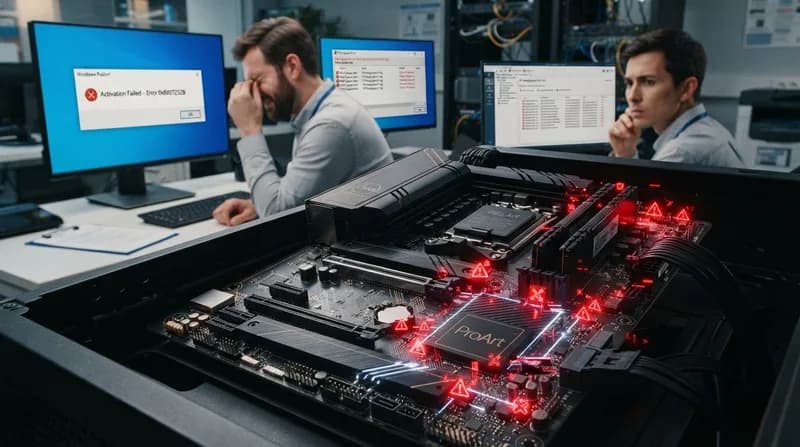
Beyond printing issues, the update has complicated infrastructure management for IT professionals. Administrators utilizing the Software Licensing Management Tool (SLMGR) via the command line have encountered significant errors, specifically the 0x80041008 'Invalid parameter' code. This prevents the execution of critical system tasks, such as configuring Key Management Service (KMS) or installing product keys using the slmgr.vbs script.
This bug poses a direct challenge to organizations that rely on automated scripts to maintain their Windows deployments. While the scope of this particular error is more targeted than the printing bug, affecting specific iterations of Windows 11, Windows 10, and modern Windows Server editions, it presents a substantial hurdle for routine system maintenance and compliance reporting. Microsoft has acknowledged the issue and confirmed that a corrective patch is currently in development.
Why It Matters
- Operational Downtime: IT departments are facing manual workarounds for routine licensing tasks, which can disrupt large-scale fleet management.
- Transparency in Document Generation: The bug highlights how hidden metadata and zero-size objects—often inserted by software without user knowledge—can directly impact hardware output performance.
- Patch Reliability: The incident serves as a reminder of the volatility inherent in monthly security rollouts, where intended protection can introduce secondary functional regressions across diverse legacy and modern environments.
As Microsoft works toward deploying a fix, organizations affected by the licensing errors are encouraged to coordinate with Microsoft Support for Business for interim guidance. Meanwhile, investigation into the GDI printing defect continues, leaving many administrators to weigh the necessity of the security update against the potential for disrupted office workflows.