The Low-Tech Vulnerability
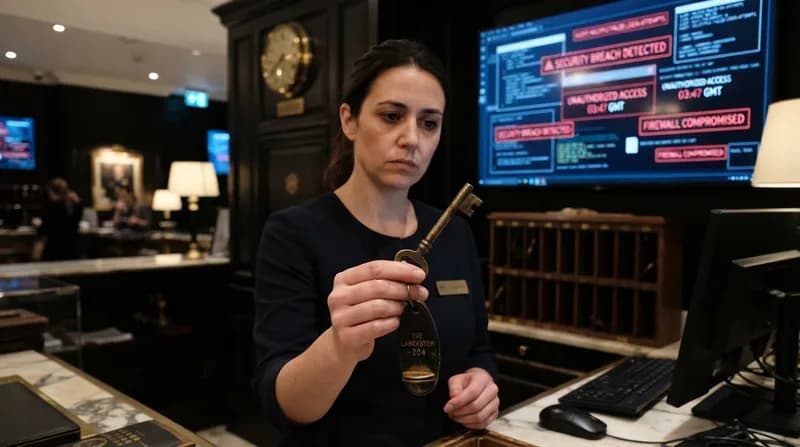
In a world increasingly focused on sophisticated cyberattacks and advanced social engineering, sometimes the greatest security risk is as simple as a whiteboard. A recent incident at a hotel in London highlighted this reality when administrative credentials for the establishment's Booking.com portal were left in plain view behind the front desk. The login information, scribbled in plain English, was accessible to anyone wandering through the lobby who happened to glance behind the partition.
The breach was brought to light by Neycho Tepavicharov, co-founder of the Delaware-based web hosting company Flashcloud. While staying at the hotel, Tepavicharov noticed that an office door left ajar exposed a whiteboard containing the exact username and password required to control the hotel’s reservation system. The implications of this discovery were significant: any individual with a smartphone camera or a sharp memory could have easily compromised the hotel’s entire digital booking interface.
Why It Matters
The potential for abuse in such a scenario is extensive. With administrative access to a booking platform, unauthorized parties could theoretically cancel existing reservations, manipulate guest contact details, or intercept sensitive information. Perhaps most dangerous is the opportunity for phishing; by sending 'payment confirmation' requests directly through the legitimate portal, an attacker could trick guests into handing over credit card details under the guise of an official hotel communication.
- Operational Risk: Unauthorized changes to bookings can lead to chaos in daily hotel operations and guest dissatisfaction.
- Data Privacy: Access to guest names and contact information creates a severe breach of consumer privacy.
- Financial Fraud: Compromised accounts enable highly effective phishing scams targeting unsuspecting patrons.
A Lesson in Modern Authentication
When confronted by Tepavicharov, the hotel management was reportedly mortified, admitting that the whiteboard had simply become the 'easiest' way for staff to share a single account. This reveals a common organizational failing: prioritizing convenience over basic security hygiene. The incident serves as a poignant, if unintentional, case study for why businesses must abandon the era of shared accounts.
The standard for professional operation is clear: each staff member should be assigned individual credentials to ensure accountability and auditability. Furthermore, the implementation of multi-factor authentication (MFA) is non-negotiable in an environment that handles guest financial data. By utilizing secure, centralized password managers, businesses can move their security strategies off the walls and into encrypted, protected environments, ensuring that the only people with access to the system are those who actually belong there.