1. Surface Laptop Ultra
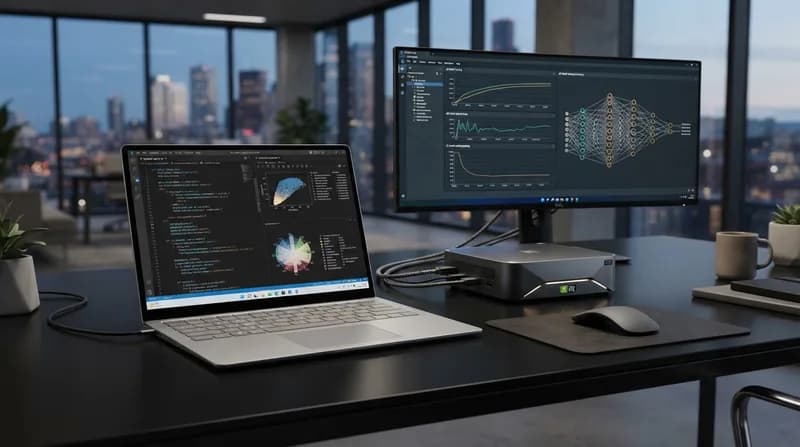
Microsoft has officially unveiled the Surface Laptop Ultra, a high-performance machine engineered specifically to handle advanced AI models and agent workflows directly on the local hardware. Departing from traditional reliance on the cloud, this laptop utilizes Nvidia’s new RTX Spark chip to provide the computational overhead required for demanding AI tasks. To ensure peak performance under these intensive workloads, the device features a specialized thermal management system designed to maintain stability during prolonged processing.
The pricing structure for the Surface Laptop Ultra is decidedly premium, starting at $2,600 for the base model, with a more robust configuration beginning at $3,700. For power users and developers, Microsoft offers high-end options that can push the total cost toward $5,900. Beyond its AI capabilities, the hardware is positioned as a versatile workstation capable of managing intensive content creation, video rendering, and high-fidelity gaming, making it a direct competitor to high-end creative laptops.
2. Surface RTX Spark Dev Box
For those requiring a dedicated workstation for software engineering and AI agent development, Microsoft introduced the Surface RTX Spark Dev Box. Starting at $6,000, this machine is curated for the development lifecycle, shipping pre-installed with an array of essential professional tools, including VS Code, GitHub Copilot CLI, WSL, and PowerShell 7. By integrating the RTX Spark chip, Microsoft aims to provide developers with a robust environment to build and test AI models without needing to interface with external servers.
A critical component of this release is the software integration with a revamped version of Windows 11. This OS update introduces 'Execution Containers,' a feature designed to securely sandbox AI agents. This innovation allows developers to manage memory and action spaces in a controlled environment, ensuring that agents can operate effectively while remaining isolated from the core system. The feature will be rolled out across the wider Windows 11 ecosystem, signaling Microsoft’s intention to make local agent orchestration a cornerstone of its platform strategy.
3. Dell XPS 16 Creator Edition
In addition to its proprietary hardware, Microsoft is collaborating with major PC manufacturers to expand the RTX Spark-powered ecosystem. Dell has joined the initiative with the launch of the XPS 16 Creator Edition. Available for preorder with an expected late October delivery, the device carries a price tag of $3,800. This machine brings the same local AI-processing benefits to the familiar XPS form factor, targeting professional creators who need mobile workstation power combined with the latest in Nvidia silicon.
Why it Matters
Microsoft’s shift toward local AI processing marks a significant departure from cloud-centric models. By offloading computation to local hardware, developers gain increased privacy, reduced latency, and the ability to work offline. The move to incentivize MacBook Pro users with a $1,000 trade-in credit underscores the company's aggressive goal to capture the developer market share in Silicon Valley and beyond, positioning Windows as the primary operating system for the next generation of AI agent development.