The Evolution of Mercedes-Benz MB.DRIVE
Mercedes-Benz has announced a significant expansion of its MB.DRIVE driver assistance technology, marking a shift toward more seamless, hands-free automation for the German market. By the end of 2026, the manufacturer plans to deploy two primary new features: the Hands-Free Assistant and a proactive Lane-Change Assistant. These updates aim to reduce the fatigue associated with long-distance motorway driving by allowing the vehicle to handle steering and lane positioning under specific conditions.
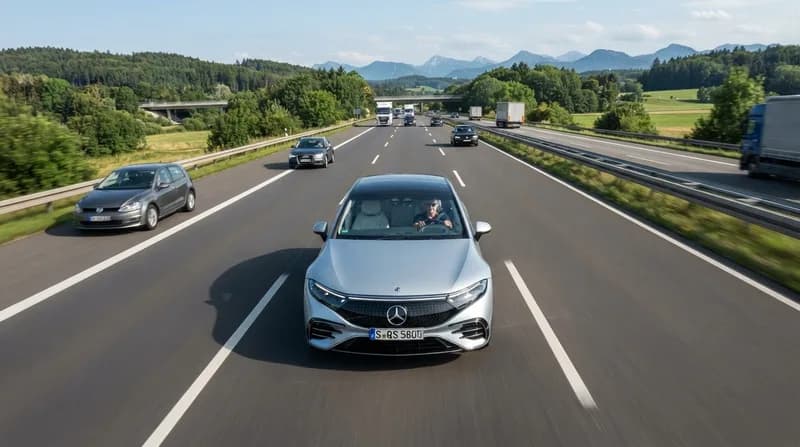
With the Hands-Free Assistant, drivers will be permitted to remove their hands from the steering wheel at speeds reaching up to 130 km/h. This is a substantial leap from the brand's current partially automated systems, which typically require consistent tactile feedback on the wheel. While the system manages the vehicle's path, Mercedes-Benz maintains that the driver must remain alert and prepared to intervene at any moment, as the human operator retains final legal responsibility for the vehicle's safe operation.
Autonomous Lane Changes and Urban Navigation
Complementing the hands-free capabilities, the new proactive Lane-Change Assistant allows the vehicle to autonomously initiate and execute overtaking maneuvers. Unlike earlier iterations that required manual confirmation through the turn signal lever, this system handles the logic of lane positioning independently. By analyzing traffic flow in real-time, the car can now position itself in the correct lane without requiring constant input from the driver.
Beyond the highway, Mercedes-Benz is moving quickly toward urban automation with its MB.DRIVE ASSIST PRO. This system promises comprehensive point-to-point assistance, capable of navigating complex city environments. An Early Access Program for this urban functionality is scheduled to begin in December 2026 across select cities in Germany and California, with a broader market roll-out expected in the first half of 2027.
Technical Specifications
- Sensor Array: Utilizes 27 distinct components, including 10 cameras, 5 radar sensors, and 12 ultrasonic sensors.
- Computing Power: Powered by a central processor capable of reaching up to 254 TOPS (Trillions of Operations Per Second).
- Operating System: Built on the proprietary MB.OS platform with software collaboration from partners including Nvidia.
- Deployment: Compatible with both cars and vans; existing, suitably equipped vehicles will receive the new features via over-the-air (OTA) updates.
Why it Matters
This rollout highlights the rapid transition from basic driver support to highly automated, software-defined mobility. By leveraging a high-performance compute architecture and a dense sensor network, Mercedes-Benz is positioning its fleet to adapt to modern infrastructure demands. The ability to push these capabilities to existing owners through OTA updates demonstrates the company's strategy to extend the relevance of its hardware through continuous software iteration.