E-BUZZ ME Logo
ScienceTechnical Deep Dive

Mathematicians Accelerate Formalization of Fermat’s Last Theorem Using AI

Published
Mathematicians Accelerate Formalization of Fermat’s Last Theorem Using AI
2 min read225 words

The Gist

Researchers in London report unexpectedly rapid progress in translating Fermat’s Last Theorem into machine-verifiable code using artificial intelligence.

In a significant milestone for computational mathematics, researchers at a recent event in London have demonstrated that artificial intelligence can drastically speed up the formalization of complex mathematical proofs. The team has been focusing on Fermat’s Last Theorem, one of the most famous problems in the history of mathematics.

Bridging Human Logic and Machine Code

Formalization involves translating traditional mathematical proofs—which are often written in human language and notation—into a rigorous, machine-readable format that can be verified by computer software. Historically, this process is incredibly labor-intensive, often taking years for even the most brilliant minds to complete for a single theorem.

By leveraging AI tools, the mathematicians involved have reported progress that far exceeds initial expectations. The AI assists by suggesting logical steps and helping to bridge gaps in the formal code, serving as a high-speed collaborator for the human researchers.

The Legacy of Fermat's Last Theorem

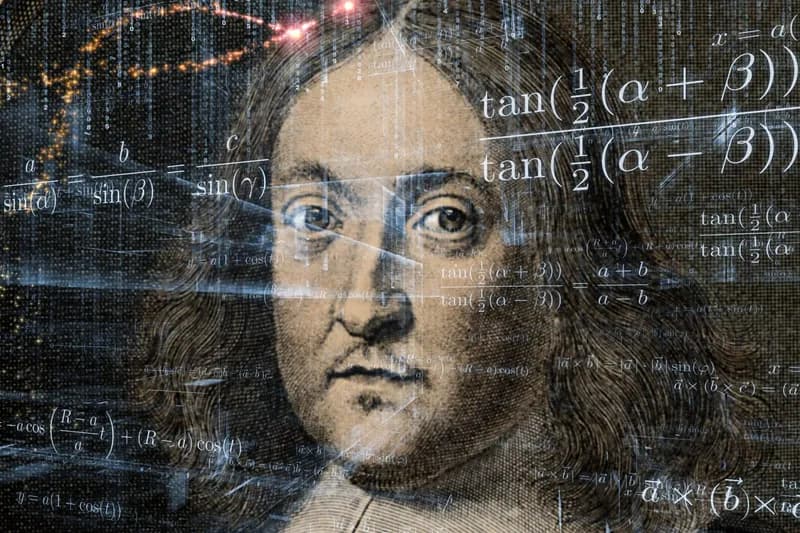
First proposed by Pierre de Fermat in 1637 and famously proven by Andrew Wiles in 1994, the theorem states that no three positive integers a, b, and c satisfy the equation a^n + b^n = c^n for any integer value of n greater than 2. While the proof is already established in the academic community, formalizing it ensures total logical consistency and opens the door for AI to assist in discovering entirely new mathematical truths in the future.


Related Stories

Semantically matched articles, ranked by topic overlap and freshness.

OpenAI Debuts Programmable AI Keypad Targeting Developer Workflows
Artificial Intelligence65%

OpenAI Debuts Programmable AI Keypad Targeting Developer Workflows

OpenAI has introduced a specialized AI-integrated keypad designed to streamline coding tasks, though its niche appeal may leave general users puzzled.

The Future of Open Access: Navigating Structural Challenges and AI Integration
Science64%

The Future of Open Access: Navigating Structural Challenges and AI Integration

As the scientific community pushes for an open-access future, experts warn that systemic issues and the rise of AI must be addressed to ensure sustainability.

AI Aids Stanford Researchers in Discovering Natural Weight Loss Molecule
Science63%

AI Aids Stanford Researchers in Discovering Natural Weight Loss Molecule

Stanford scientists have identified a natural molecule that mimics the weight-loss effects of Ozempic with fewer side effects by targeting specific brain regions.

Prentis AI Lab in Talks to Raise $100M for Task Automation
Artificial Intelligence63%

Prentis AI Lab in Talks to Raise $100M for Task Automation

Co-founded by Reid Hoffman and Mark Pincus, Prentis is pivoting focus toward automating routine computer tasks over traditional coding.

CFTC Issues Warning to Prediction Markets Over Self-Certification Practices
Tech & Gadgets63%

CFTC Issues Warning to Prediction Markets Over Self-Certification Practices

The Commodity Futures Trading Commission is moving to restrict how prediction markets use blanket 'self-certifications' for event-based contracts.

Protect AI and Hugging Face Report: 4 Million Models Scanned for Security Risks
Artificial Intelligence63%

Protect AI and Hugging Face Report: 4 Million Models Scanned for Security Risks

Six months into their partnership, Protect AI and Hugging Face have analyzed over 4 million machine learning models to identify critical security vulnerabilities.

Intel Unveils AutoRound: Advanced Quantization for LLMs and VLMs
Artificial Intelligence63%

Intel Unveils AutoRound: Advanced Quantization for LLMs and VLMs

Intel has introduced AutoRound, a sophisticated weight-only quantization algorithm designed to optimize Large Language Models and Vision-Language Models.

Sweden Explores Rare Earth Deposits to Challenge Global Supply Dominance
Science62%

Sweden Explores Rare Earth Deposits to Challenge Global Supply Dominance

Researchers are mapping Sweden's mineral wealth to create magnets from natural element combinations, aiming to reduce reliance on Chinese exports.