Bridging Language and Visuals
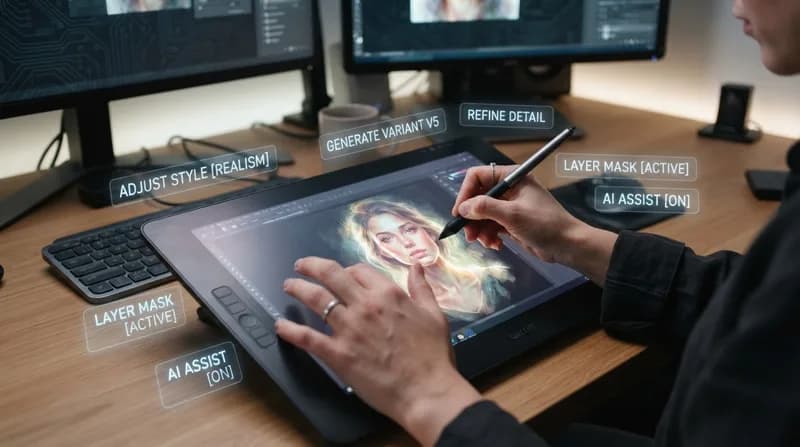
The evolution of generative AI has reached a new milestone with the implementation of instruction-tuning for Stable Diffusion, specifically through the InstructPix2Pix architecture. By training models to follow natural language commands rather than just descriptive prompts, developers are unlocking a more intuitive way to manipulate visual data. This method allows users to perform complex image edits simply by describing the desired change, effectively transforming the model into a responsive creative assistant.
The Core Mechanics
At its heart, InstructPix2Pix leverages a sophisticated alignment process that maps textual instructions to specific pixel-level modifications. Instead of generating an image from scratch, the model interprets how an existing image should evolve based on the user's intent. This approach drastically reduces the friction typically associated with manual image editing tools, as the model handles the heavy lifting of composition, lighting, and style adjustments automatically.
Why it Matters
- Intuitive Control: Users no longer need complex software expertise to perform advanced edits; natural language is sufficient.
- Workflow Acceleration: This technology allows for rapid iteration, enabling artists and creators to refine concepts in real-time.
- Broad Applicability: From digital art "cartoonization" to professional photo retouching, the potential use cases are expanding rapidly across the creative industry.
The research behind this instruction-tuning breakthrough highlights a shift toward models that act as collaborators rather than static engines. As Hugging Face continues to document these advancements, the community gains deeper insights into how Large Language Models can be effectively fused with latent diffusion models to produce highly controllable, high-fidelity visual outputs that respond precisely to human feedback.