The Science of Predictive Age Difference
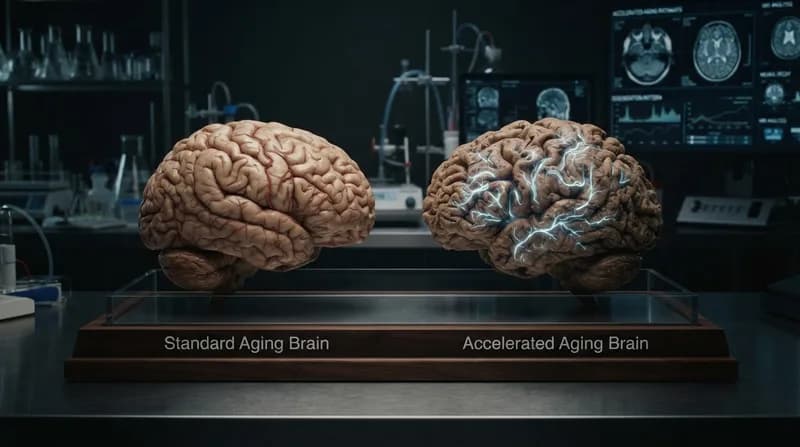
Researchers are gaining unprecedented insight into how the human brain weathers the passage of time when faced with specific neurological and psychiatric conditions. A major study led by Shile Qi at the Nanjing University of Aeronautics and Astronautics has utilized large-scale MRI imaging to identify distinct patterns of accelerated brain aging. By calculating what researchers call a 'Predictive Age Difference' (PAD)—a metric that measures the gap between a subject's chronological age and their biological brain age—the team has uncovered that not all disorders impact the brain in the same way.
The study, which analyzed data from over 48,000 individuals, reveals that the brain does not age uniformly across all conditions. Instead, specific illnesses leave what can be described as biological fingerprints. While a high PAD score generally indicates that a brain appears older than it actually is, the regions affected by this accelerated decline vary significantly depending on the underlying diagnosis.
Neurodegenerative Conditions and Accelerated Aging
The most profound associations with accelerated aging were found in neurodegenerative conditions, specifically Alzheimer’s disease and mild cognitive impairment. These conditions exhibited the highest PAD values in the study, signaling the most significant degree of premature biological aging. This observation aligns with clinical realities, where the rapid decline in cognitive function is reflected in the structural degradation of the brain's physical architecture.
In contrast, the researchers observed a surprising outcome regarding developmental conditions. When comparing individuals with ADHD or autism spectrum disorder against the control groups, there was no statistically significant difference in their overall PAD scores. This suggests that while these conditions involve complex neurological differences, they do not necessarily manifest as a generalized 'accelerated aging' of the brain tissue in the same way as degenerative or psychiatric illnesses do.
Localized Impact and Future Biomarkers
The study went beyond global brain metrics to examine specific regions, revealing that different disorders target distinct neural networks. The prefrontal cortex, a hub for higher-order cognitive function, emerged as a common site of accelerated aging across multiple conditions. Psychiatric disorders were found to be particularly linked to elevated aging markers in the frontal and temporal lobes, whereas dementia-related patterns were localized more heavily in the frontal and occipital cortex.
Addiction presents yet another unique profile. In individuals struggling with alcohol or tobacco addiction, the researchers identified accelerated aging patterns within the default mode network, the salience network, the putamen, and the thalamus. By tying these physical changes to specific gene transcription patterns, the study hints that each disorder may have a unique biological pathway driving the aging process.
Why It Matters
- Diagnostic Potential: Identifying PAD-based biomarkers could allow clinicians to track the progression of neurological conditions more objectively.
- Targeted Interventions: Understanding which brain regions are affected by a specific disorder allows for better-targeted therapeutic strategies.
- Biological Pathways: Linking gene expression to structural aging helps researchers move closer to identifying the root causes of complex psychiatric and neurological issues.
While the researchers caution that these findings are correlational and do not imply direct causation—especially given that psychiatric conditions often overlap—the study marks a significant step forward. By decoding these distinct signatures, the medical community may eventually develop tools that provide a more granular view of how mental and neurological health shapes the physical integrity of the brain over time.