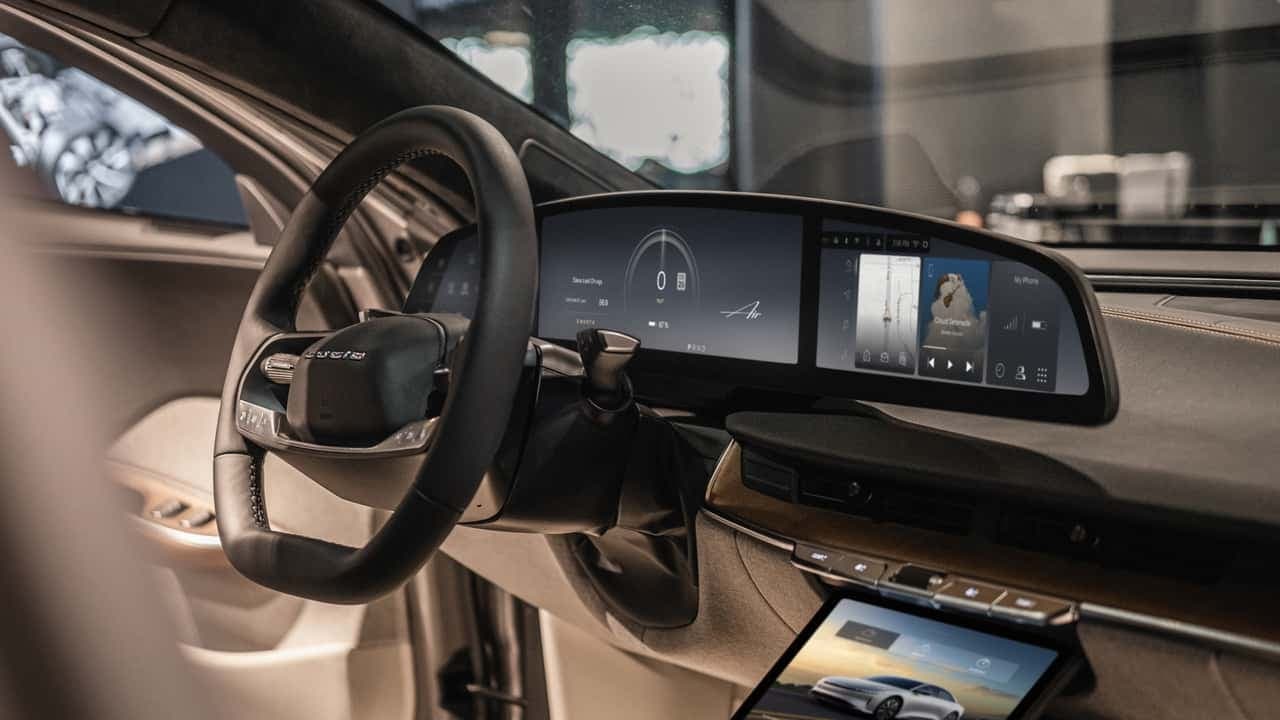
The Evolution of the Lucid Cockpit
Lucid Motors has officially pulled back the curtain on its UX 3.0 interface, a comprehensive overhaul of the infotainment experience for the Air luxury sedan. Aiming to bring the Air in line with the sophisticated digital ecosystem found in the upcoming Gravity SUV, the update introduces a more responsive, intuitive, and multitasking-friendly environment for drivers and passengers alike. The redesigned software centers on a clean, card-based interface that prioritizes accessibility and seamless navigation between the upper Cockpit display and the lower Pilot Panel.
For owners of 2025 and newer Lucid Air models, this transition is effortless. The UX 3.0 update is being deployed as a standard over-the-air (OTA) package via the 2.11.0 firmware release. However, for those driving 2022, 2023, and specific early 2024 models, the update carries a significant caveat: a physical hardware retrofit is required to support the new software's increased processing demands.
Hardware Retrofit Requirements
Lucid has confirmed that the necessary hardware upgrade is priced at $950 in the United States, a fee that covers both the new processor unit and the professional installation required to integrate it into the vehicle’s central computer architecture. Because the transition to a second-generation infotainment processor occurred mid-production for the 2024 model year, owners of those specific vehicles will need to check their eligibility based on their exact manufacturing date to determine if their car requires the upgrade.
While paying for an infotainment upgrade may be unconventional in the automotive industry, Lucid maintains that this hardware shift is essential for enabling the more advanced features of the UX 3.0 platform. The company plans to release further details regarding the availability and pricing of this retrofit program for international markets in the coming months, ensuring global customers aren't left behind as the brand matures its software offerings.
Key Features of UX 3.0
- Enhanced Multitasking: Users can now independently operate apps on the top and bottom screens, allowing for a split-view experience where navigation remains on the upper display while media or climate controls occupy the Pilot Panel.
- Redesigned Home Screen: The interface now utilizes swipeable, modular cards that house frequently accessed functions, making navigation significantly faster than the previous menu-heavy structure.
- Quick Controls: A new swipe-down gesture from the top of the Pilot Panel provides immediate access to commonly used system toggles and settings.
- Improved Route Planning: The navigation suite now offers more granular customization, allowing drivers to filter charging networks based on adapter compatibility and arrival range expectations.
- Optimized Smartphone Integration: Both Apple CarPlay and Android Auto have received stability improvements and a layout adjustment to better utilize the unique crescent-shaped display geometry of the Lucid Air.
Why It Matters
The push toward UX 3.0 highlights the growing challenge of "software-defined vehicles." As manufacturers attempt to extend the life of their cars through digital improvements, they inevitably hit the ceiling of their original silicon. By offering a $950 retrofit, Lucid is attempting to balance the need for sustained high performance with the physical constraints of older hardware. It represents a pivot toward treating in-car infotainment as a modular piece of the ownership experience—a strategy that ensures long-term software viability but introduces new costs for legacy owners who prioritize the latest tech features.
Future Outlook
As Lucid prepares for the launch of the Gravity SUV, the UX 3.0 update serves as a unifying bridge across its entire product lineup. By standardizing the interface, the brand is positioning itself to iterate on software faster, with future updates potentially rolling out simultaneously across all vehicles equipped with the second-generation processor. The move signals that for future Lucid buyers, the digital experience will be as fluid and updateable as a smartphone, though early adopters may find themselves deciding exactly how much they value cutting-edge software performance versus the costs of hardware maintenance.