E-BUZZ ME Logo
ScienceTechnical Deep Dive

Long-Term Soil Study Uncovers Unexpected Climate Risk

Published
Long-Term Soil Study Uncovers Unexpected Climate Risk
1 min read163 words

The Gist

A 37-year experiment reveals that soil microbes can break down carbon previously thought to be stable, potentially accelerating global warming.

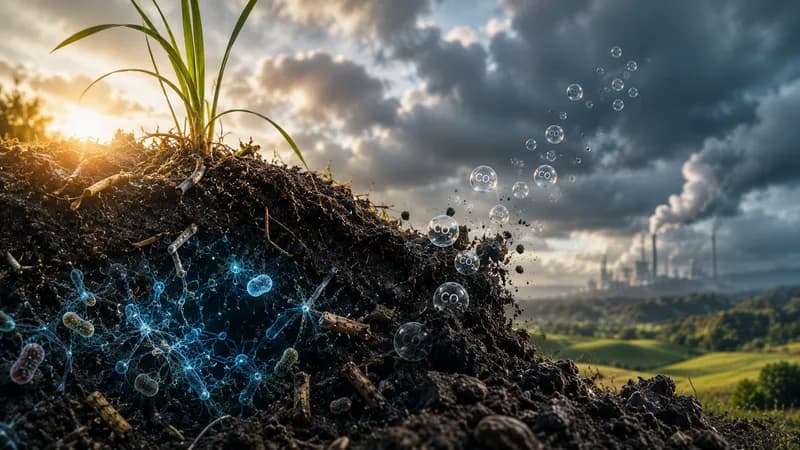
A groundbreaking study spanning nearly four decades has challenged long-held assumptions about soil stability and carbon sequestration. The world's longest-running soil warming experiment has uncovered a hidden climate threat: as temperatures rise, soil microbes are beginning to consume carbon that scientists previously believed was permanently protected.

The Breakdown of Stable Carbon

For years, researchers operated under the assumption that certain forms of soil carbon were largely immune to microbial decomposition. However, after 37 years of observation, the data suggests that sustained warming eventually triggers microbes to break down these stable carbon reserves. This process releases additional carbon dioxide into the atmosphere, creating a feedback loop that could significantly intensify global warming trends.

Implications for Climate Models

This discovery suggests that current climate projections may underestimate the volume of greenhouse gases released from natural sources. By demonstrating that even 'protected' soil carbon is vulnerable to rising temperatures, the study highlights the urgent need to revise carbon cycle models to account for long-term microbial adaptation.


Related Stories

Semantically matched articles, ranked by topic overlap and freshness.

Predictable Antarctic Ice Loss Offers Decades for Sea Level Preparation
Science72%

Predictable Antarctic Ice Loss Offers Decades for Sea Level Preparation

New research suggests that Antarctic ice retreat may remain predictable through 2050, giving governments a critical window to implement coastal defenses.

Global Shift to Healthier Diets Could Slash Farm Emissions by 85%
Science71%

Global Shift to Healthier Diets Could Slash Farm Emissions by 85%

A transition toward more nutritious food choices could revolutionize global agriculture and significantly reduce the environmental impact of livestock farming by 2050.

Super El Niño Set to Break 150-Year Temperature Records
Science66%

Super El Niño Set to Break 150-Year Temperature Records

A developing 'super' El Niño in the tropical Pacific has a 90 percent chance of becoming the strongest in recorded history, threatening unprecedented global heat.

Breakthrough Fluoride-Free Gel Could Regrow Damaged Tooth Enamel
Science65%

Breakthrough Fluoride-Free Gel Could Regrow Damaged Tooth Enamel

Researchers have developed a protein-inspired gel that mimics natural tooth formation to repair microscopic cracks and rebuild enamel.

NASA’s Webb Telescope Uncovers Hidden Giant Planet in Beta Pictoris System
Science65%

NASA’s Webb Telescope Uncovers Hidden Giant Planet in Beta Pictoris System

Astronomers have discovered a hidden giant planet, Beta Pictoris d, using the James Webb Space Telescope to peer through a dense disk of cosmic dust.

Acoustic Stimulation: Can Sound Frequencies Boost Crop Yields?
Science64%

Acoustic Stimulation: Can Sound Frequencies Boost Crop Yields?

Startup Haivya is utilizing specialized acoustic signals to boost plant development, reporting significant yield increases in crops like soybean and pepper.

Neural Switch Discovered Controlling Bee Colony Labor Division
Science64%

Neural Switch Discovered Controlling Bee Colony Labor Division

Researchers have identified specific brain circuits that dictate the professional roles of honeybees as they age.

Childhood Sugary Drink Consumption Linked to Adult Hypertension
Science63%

Childhood Sugary Drink Consumption Linked to Adult Hypertension

A long-term study suggests that frequent consumption of sodas and sports drinks during childhood significantly increases the risk of high blood pressure later in life.