Scaling the Electric Freight Revolution
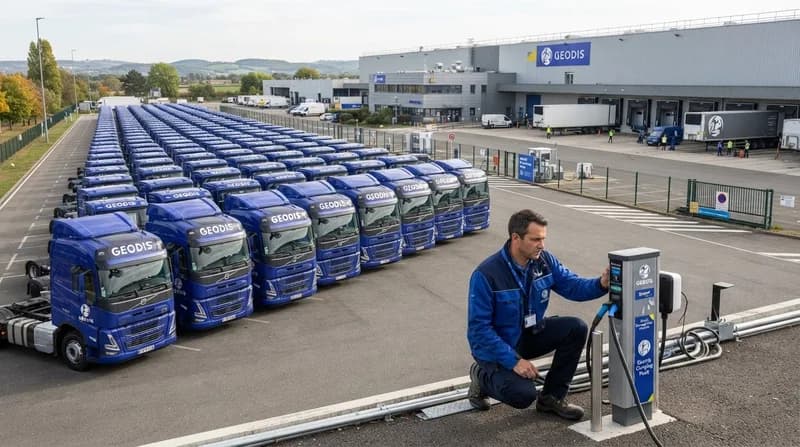
Logistics leader Geodis has announced a massive expansion of its sustainable fleet, finalizing an order for 110 battery-electric 44-tonne heavy-duty trucks. The procurement, split between industry stalwarts Renault Trucks and Volvo Trucks, represents a significant leap forward in the company's efforts to decarbonize its road freight operations. This move will bring the total number of electric vehicles in the firm’s European Road Network unit to 190, solidifying its position as a major player in the transition to emission-free logistics.
Scheduled for full delivery by May 2027, these heavy-duty rigs are slated for deployment primarily across France. Geodis intends to utilize these vehicles for a versatile range of duties, spanning from complex urban distribution to demanding long-haul transport. While specific model designations, battery capacities, and performance metrics remain undisclosed, the sheer scale of the order highlights the growing confidence in current heavy-duty electric vehicle technology for high-volume commercial operations.
Building Dedicated Infrastructure
Recognizing that fleet electrification is only as effective as the charging network supporting it, Geodis is simultaneously launching a bold infrastructure initiative. The company is developing its own network of "electric corridors" along vital French transport routes to ensure its new fleet remains operational. By strategically positioning charging hubs at intervals of 250 to 500 kilometers, the logistics giant aims to eliminate range anxiety for its long-haul drivers.
This initiative builds upon an existing footprint of roughly 60 charging points, with an ambitious target to exceed 200 operational stations by 2030. This proactive stance addresses a critical bottleneck in the European market: despite the increasing number of electric trucks hitting the road, the current density of publicly accessible, high-power charging infrastructure remains insufficient for heavy-duty requirements. By constructing its own corridor network, Geodis is effectively future-proofing its logistics operations against the current scarcity of specialized fast-charging facilities.
Why It Matters
- Decarbonization at Scale: The move aligns with Geodis' long-term sustainability goals and its role as a founding member of the European Clean Trucking Alliance.
- Bridge to Infrastructure: By building its own corridors, Geodis is bridging the gap while waiting for wider EU-funded public infrastructure projects to mature.
- Operational Versatility: The shift from urban short-haul to long-haul electric transport demonstrates that the technology is maturing rapidly enough for diverse logistical applications.
As the European Commission shifts funding priorities toward heavy-duty charging infrastructure, Geodis’ strategy serves as a blueprint for other logistics providers aiming to meet stringent CO₂ reduction targets. With 10.6 billion euros in revenue and a global presence, the company’s investment signals that the era of heavy-duty electric road freight is no longer theoretical—it is currently being deployed at scale.