The Evolution of Wrist-Based Health Monitoring
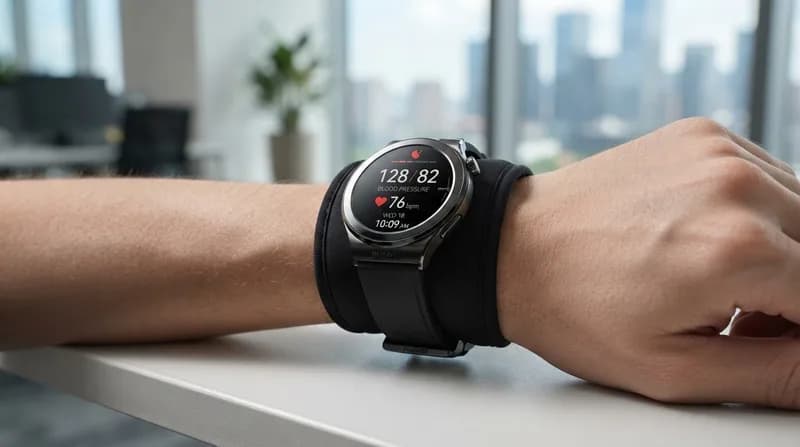
Huawei has officially unveiled the Watch D3, the third iteration of its specialized blood-pressure-monitoring smartwatch. While the broader wearables market relies almost exclusively on optical sensors to estimate cardiovascular metrics, Huawei continues to pursue a distinct path by integrating actual mechanical hardware into its chassis. By utilizing a miniature pump and an inflatable airbag concealed within the wrist strap, the Watch D3 provides genuine blood pressure readings that go beyond the predictive algorithms seen in many consumer devices.
The D3 distinguishes itself through its status as a CE-certified medical device under EU Medical Device Regulation (MDR). This certification places it in a different tier than standard fitness trackers, positioning it as a viable tool for users who require more reliable cardiovascular data without the need to carry around bulky, traditional upper-arm monitors.
Refined Design and Practical Usability
One of the primary challenges with the previous generation was the physical footprint, which felt more like clinical equipment than a lifestyle accessory. The D3 represents a significant step forward in ergonomics, being thinner (11.3 mm) and lighter (40 g) than the D2. While it remains noticeably chunkier than a standard smartphone companion device, the improvement in comfort is substantial enough to make it a more reasonable option for 24-hour wear.
The interface is anchored by a vibrant 1.92-inch display, capable of hitting a peak brightness of 3,000 nits, ensuring visibility in direct sunlight. Users can expect roughly five to six days of battery life under standard conditions, though this figure drops significantly to roughly 24 hours when the device is tasked with continuous ambulatory blood pressure monitoring (ABPM). This specific mode allows the watch to take automated readings throughout the day and night, providing a comprehensive data profile for health management.
Key Technical Specifications
- Blood Pressure Method: Integrated micro-pump and inflatable strap airbag
- Certification: CE-certified medical device (EU Medical Device Regulation)
- Display: 1.92-inch panel with 3,000-nit peak brightness
- Battery Life: Up to 6 days (typical usage); approx. 1 day with 24-hour ABPM enabled
- Weight: 40 grams
- Thickness: 11.3 mm
- Durability: IP68 rating (with specific warnings against submersion and showering)
Usage Considerations and Market Outlook
Despite the medical-grade hardware, the Watch D3 maintains a range of standard smartwatch features, including call notifications, messaging alerts, and heart rate monitoring. It integrates with the Huawei Health ecosystem, which provides a centralized hub for data management and allows users to share health alerts with family members. However, the presence of these specialized mechanical components introduces unique physical limitations; the watch is not designed for swimming or showering, and users are advised to keep the strap dry to maintain the accuracy of the inflatable mechanism.
As the device launches in the UK on September 23 for £399.99, it faces the dual challenge of convincing consumers to embrace a more substantial wearable design while navigating the rigorous scrutiny of health data privacy. Huawei has publicly committed to adhering to all local data protection regulations, viewing these privacy standards as a fundamental requirement for maintaining its presence in the European wearable market. For those prioritizing medical-grade cardiovascular tracking in a wearable form factor, the D3 represents the current state-of-the-art in hardware-based health monitoring.