E-BUZZ ME Logo
ScienceTechnical Deep Dive

High Chili Pepper Consumption Linked to Increased Esophageal Cancer Risk

Published
High Chili Pepper Consumption Linked to Increased Esophageal Cancer Risk
1 min read155 words

The Gist

A comprehensive review suggests a significant association between high chili pepper intake and esophageal cancer, though researchers caution that more study is needed.

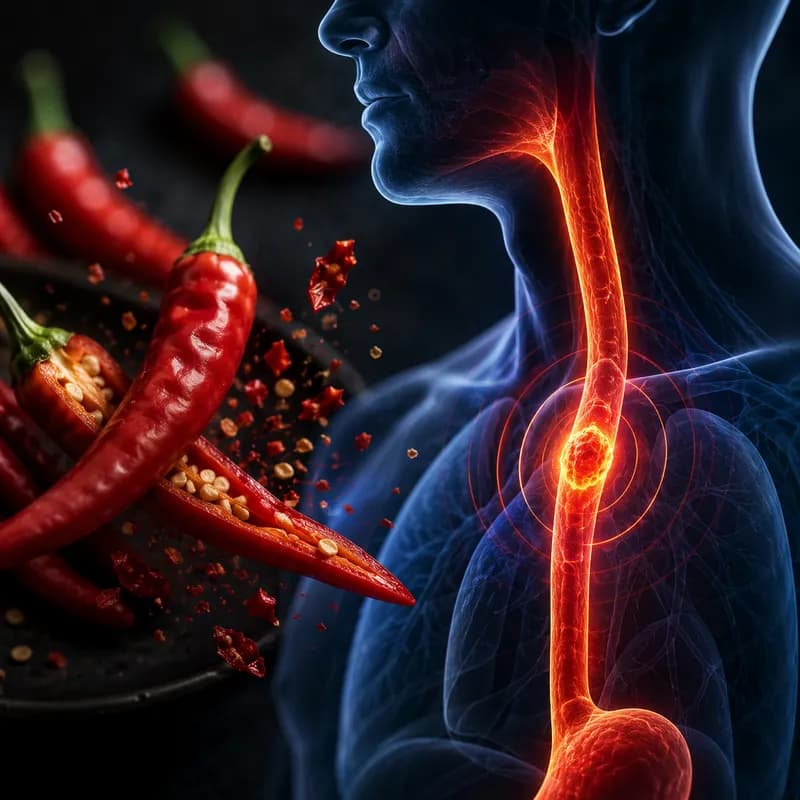
A major scientific review has identified a potential link between high levels of chili pepper consumption and an increased risk of esophageal cancer. The study found that individuals who consumed the highest amounts of chili peppers faced a substantially higher risk compared to those with lower intake levels.

Mixed Results for Other Cancers

While the connection to esophageal cancer appeared significant, the evidence regarding stomach and colorectal cancers remains less clear. The research team noted that the data did not provide a definitive correlation for these other types of digestive system cancers, suggesting a more complex relationship between capsaicin—the active component in chilies—and various organs.

Association vs. Causation

Researchers involved in the review have emphasized that these findings currently demonstrate an association rather than a direct cause-and-effect relationship. They noted that further research is essential to determine if moderate consumption poses similar health risks or if other dietary and lifestyle factors are influencing the results.


Related Stories

Semantically matched articles, ranked by topic overlap and freshness.

Childhood Sugary Drink Consumption Linked to Adult Hypertension
Science64%

Childhood Sugary Drink Consumption Linked to Adult Hypertension

A long-term study suggests that frequent consumption of sodas and sports drinks during childhood significantly increases the risk of high blood pressure later in life.

Global Shift to Healthier Diets Could Slash Farm Emissions by 85%
Science63%

Global Shift to Healthier Diets Could Slash Farm Emissions by 85%

A transition toward more nutritious food choices could revolutionize global agriculture and significantly reduce the environmental impact of livestock farming by 2050.

Super El Niño Set to Break 150-Year Temperature Records
Science62%

Super El Niño Set to Break 150-Year Temperature Records

A developing 'super' El Niño in the tropical Pacific has a 90 percent chance of becoming the strongest in recorded history, threatening unprecedented global heat.

Predictable Antarctic Ice Loss Offers Decades for Sea Level Preparation
Science60%

Predictable Antarctic Ice Loss Offers Decades for Sea Level Preparation

New research suggests that Antarctic ice retreat may remain predictable through 2050, giving governments a critical window to implement coastal defenses.

Breakthrough Fluoride-Free Gel Could Regrow Damaged Tooth Enamel
Science60%

Breakthrough Fluoride-Free Gel Could Regrow Damaged Tooth Enamel

Researchers have developed a protein-inspired gel that mimics natural tooth formation to repair microscopic cracks and rebuild enamel.

Natural Plant Compound Shows Promise in Combating Rheumatoid Arthritis
Science59%

Natural Plant Compound Shows Promise in Combating Rheumatoid Arthritis

Researchers have identified a plant-derived compound that reduces joint damage and rebalances immune activity in animal models, offering a potential new treatment pathway.

New Study Challenges the Existence of Dark Energy
Science58%

New Study Challenges the Existence of Dark Energy

A controversial research paper suggests that the universe’s expansion may not be accelerating, potentially eliminating the need for dark energy as a scientific explanation.

Acoustic Stimulation: Can Sound Frequencies Boost Crop Yields?
Science58%

Acoustic Stimulation: Can Sound Frequencies Boost Crop Yields?

Startup Haivya is utilizing specialized acoustic signals to boost plant development, reporting significant yield increases in crops like soybean and pepper.