A Record-Breaking Shift for Commercial Logistics
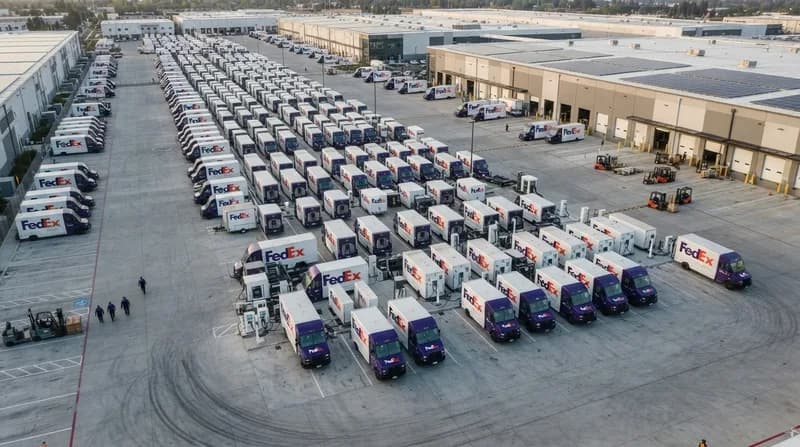
The global logistics landscape is undergoing a profound transformation as FedEx announces its most significant investment in electric vehicle technology to date. The company has finalized a contract for 2,000 all-electric medium-duty delivery vans from the specialized manufacturer Harbinger. Valued at over $300 million, this agreement marks the largest binding order for electric trucks in history, signaling a massive scale-up of sustainable shipping infrastructure across North America.
FedEx has deep roots with Harbinger, having previously participated as a co-lead investor during a $160 million funding round in early 2025. By transitioning from legacy diesel vehicles to these specialized electric platforms, FedEx is aggressively pursuing its long-term objective of fully electrifying its entire pick-up and delivery fleet by 2040. The deployment of these vehicles will span operations in both the United States and Canada, with local support for the latter provided by the Kaizen Automotive Group.
Engineering the Future of Delivery
The new fleet consists of Class 5 and Class 6 vehicles, designed to handle gross vehicle weights ranging from 7.25 to 11.79 tonnes. While technical specifics regarding the exact drivetrain configurations remain under wraps, Harbinger has emphasized the vehicle's role in modernizing the driver experience. The chassis has been engineered specifically for the demands of urban and suburban logistics, featuring optimized handling characteristics and a tight 12.8-meter turning circle to improve maneuverability in congested delivery zones.
Beyond performance, the vehicles are outfitted with a suite of advanced safety and driver-assistance systems. These additions are calculated to mitigate driver fatigue and enhance precision on the road, creating a more ergonomic workspace for operators. These improvements, combined with the inherently smoother operation of an electric drivetrain, aim to set a new standard for quality of life for long-haul delivery personnel.
Economic and Environmental Impact
The transition to Harbinger's electric platform is as much a financial strategy as it is an environmental one. According to projections provided by the manufacturer, this fleet refresh is expected to shave $40 million in annual operating costs off FedEx’s ledger. When considering the 20-year projected lifespan of these trucks, the total operational savings could reach a staggering $800 million.
The environmental gains are equally substantial. Harbinger estimates that, based on U.S. Department of Energy data, these 2,000 vehicles will prevent more than 1.7 million tonnes of CO2 emissions from entering the atmosphere over their two-decade operational lifespan. As deliveries are slated to commence at the end of 2027, the logistics industry is watching closely to see how this transition influences the broader market for heavy-duty electrification.
Why It Matters
- Operational Scale: At 2,000 units, this is the largest binding order of electric trucks in history, proving that commercial-grade electric logistics are ready for prime-time deployment.
- Long-Term Savings: The move is designed to pay for itself, with an estimated $800 million in total cost savings over the vehicles' service life.
- Sustainability Goals: This order provides a critical bridge for FedEx to meet its 2040 net-zero goals, significantly reducing its carbon footprint in the medium-duty sector.