A Major Shift in Last-Mile Logistics
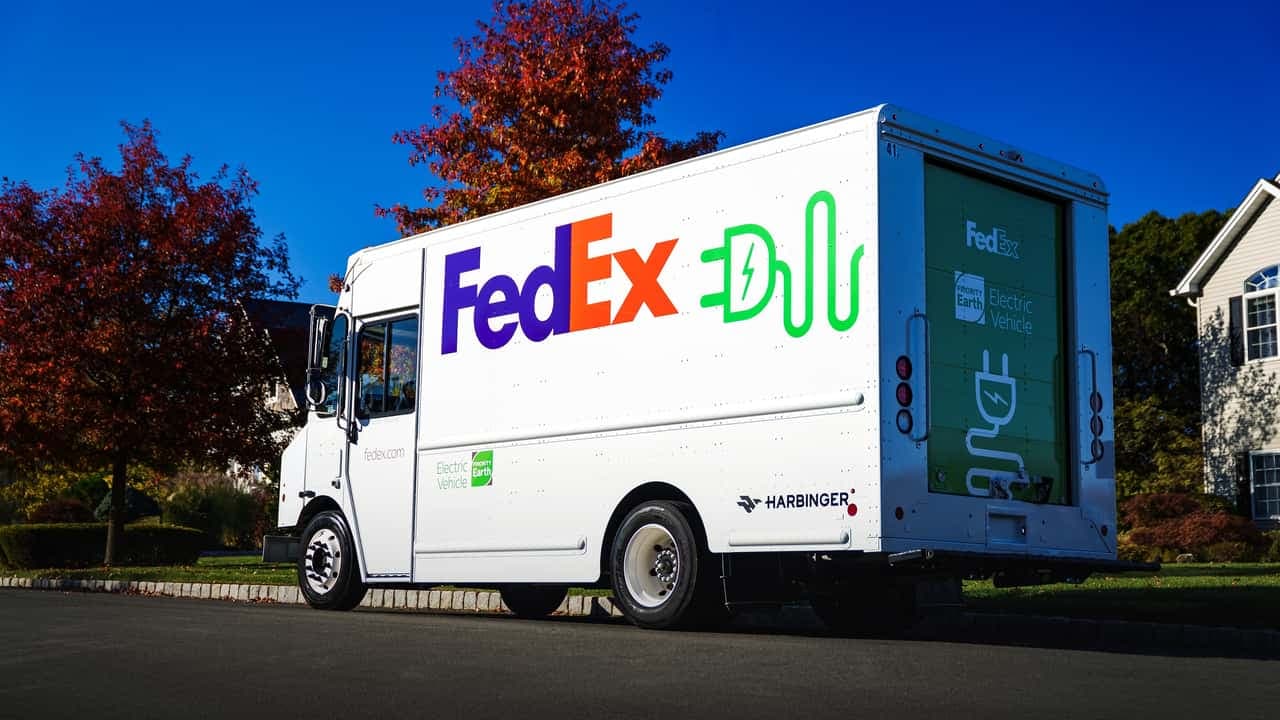
In a significant expansion of its electrification strategy, FedEx has announced a substantial purchase of 2,000 all-electric, medium-duty trucks from American startup Harbinger Motors. This massive order, valued at over $200 million, underscores a pivotal shift for the logistics giant, which aims to transition its entire pickup and delivery fleet to electric power by 2040. The deployment is set to unfold across the United States and Canada over the next 18 months, marking a major milestone for Harbinger's production capabilities.
Beyond the logistical impact, the economic benefits of this transition are substantial. Harbinger estimates that the 2,000 vehicles will generate $40 million in annual fuel savings for FedEx. Over the projected 20-year service life of these vehicles, that figure is expected to balloon to a cumulative $800 million. Furthermore, this move is a centerpiece of FedEx’s environmental commitment, with projections indicating the fleet will prevent 1.7 million tons of carbon dioxide from entering the atmosphere over the span of their operational years.
Engineering the Harbinger Platform
Harbinger has distinguished itself by focusing on purpose-built EV technology for medium-duty applications, specifically Class 5 and Class 6 vehicles. Unlike adapted internal combustion platforms, Harbinger’s chassis is designed from the ground up for electrification. The trucks feature a highly integrated all-in-one electric drive unit that encapsulates the motor, transmission, and differential into a single housing, optimizing space and reducing mechanical complexity.
The performance metrics for these trucks are designed to handle rigorous urban delivery cycles. The drivetrain outputs a robust 440 horsepower paired with an impressive 1,140 pound-feet of torque. Powering this system is a modular 800-volt battery architecture, which can be configured in various capacities to provide a real-world range between 140 and 210 miles. When it comes to downtime, the 800-volt system excels; the trucks are capable of charging from 20% to 80% in under an hour using DC fast-charging infrastructure.
Design and Maneuverability
For drivers navigating dense city environments, the design of the Harbinger fleet prioritizes utility and agility. The trucks are available in three distinct wheelbase configurations—ranging from 158 to 208 inches—to suit various delivery needs. A critical operational advantage of the Harbinger platform is its superior maneuverability, featuring a 50-degree wheel cut that results in a 42-foot turning diameter, making it significantly easier to navigate tight loading bays and congested urban streets.
With a Gross Vehicle Weight Rating (GVWR) ranging between 16,000 and 26,000 pounds, these trucks occupy a unique space in the logistics sector. While competitors like Rivian offer lower starting price points for their vans, Harbinger’s vehicles cater to a heavier duty cycle, providing durability that the company claims is unrivaled in its class. With the initial delivery of 53 units last year serving as a successful proof-of-concept, the new 2,000-unit commitment solidifies Harbinger’s role as a key supplier in the decarbonization of North American logistics.
Why it Matters
- Operational Efficiency: The 800-volt architecture ensures rapid charging times, minimizing idle time for high-frequency delivery routes.
- Sustainability Goals: This order is a major step toward FedEx’s ambitious goal of a fully electrified fleet by 2040.
- Economic Viability: $800 million in total life-cycle fuel savings demonstrates that fleet electrification is becoming increasingly cost-competitive with diesel.
- Domestic Manufacturing: The vehicles are built in California, highlighting a domestic supply chain solution for the rapidly growing electric commercial vehicle market.