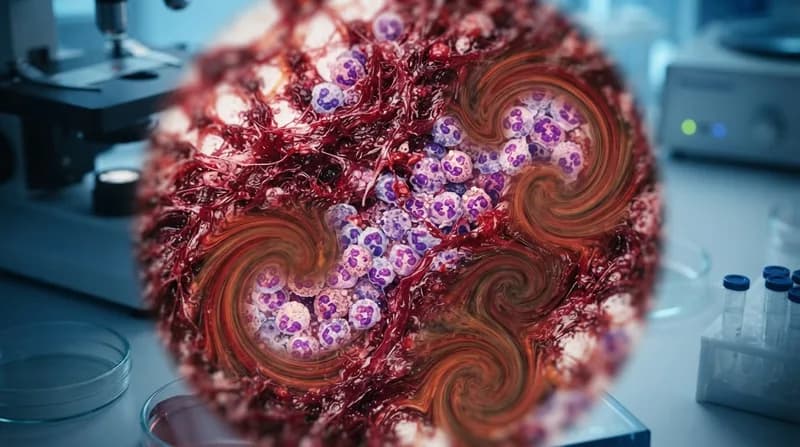
The Immune System's Healing Stagnation
For more than 131 million people worldwide, diabetic ulcers are not merely minor inconveniences but life-altering medical crises. These chronic wounds, which contribute to a staggering $755 billion in global healthcare costs annually, carry severe risks ranging from chronic pain to amputation. For years, the medical community has struggled to understand why these lesions resist standard healing protocols. Recent research published in MedScience suggests that the answer lies in a microscopic malfunction: immune cells in diabetic patients become trapped in a state of chronic inflammation, effectively blocking the body's natural transition into the tissue-repair phase.
Led by a team of researchers including Yi Ru and colleagues, the comprehensive review maps out how various immune populations—from monocytes and macrophages to T and B cells—behave throughout the stages of injury recovery. Under healthy conditions, the immune system orchestrates a precise choreography, shifting from a defensive 'attack' mode to a constructive 'repair' mode. In the presence of diabetes, this signal is lost, leaving the wound environment in a perpetually hostile, inflammatory state that prevents regeneration.
The Macrophage Misalignment
The core of the problem appears to reside in macrophage polarization. During standard recovery, monocytes enter damaged tissue and transform into macrophages. Initially, these cells adopt an 'M1' state, which is pro-inflammatory and essential for clearing debris and pathogens. As healing progresses, they are meant to transition into 'M2' macrophages, which facilitate tissue rebuilding. Diabetic conditions, however, prevent this vital shift. These cells remain locked in an M1 configuration, continuously releasing inflammatory signals that cause collateral tissue damage instead of fostering growth.
Beyond Macrophages: A Complex Network
The research highlights that macrophages are not the only culprits. Other immune players contribute to the persistent inflammatory state:
- Neutrophils and Mast Cells: Neutrophils, the first responders to injury, often form poorly regulated 'extracellular traps' in diabetic wounds. This, coupled with the excessive activation of mast cells, keeps the wound environment flooded with proteases and histamine, preventing the stabilization required for closure.
- Dendritic Cell Dysfunction: These cells, responsible for clearing dead cellular material via a process called efferocytosis, show diminished efficacy in diabetic patients. When they fail to remove apoptotic cells, the resulting accumulation of debris acts as a constant trigger for further inflammation, exacerbated by reduced activity of the SLC7A11 transporter.
- T and B Cell Interaction: Specialized populations like regulatory T cells and dendritic epidermal T cells are found in lower numbers and exhibit reduced functionality. Similarly, B cells, which could potentially encourage the shift to M2 macrophage states, are mismanaged, weakening the body’s coordinated effort to remodel damaged skin.
Future Implications: Personalized Immunotherapy
This deeper understanding of immune behavior is fueling a new wave of therapeutic innovation. Rather than relying on broad-spectrum treatments, the future of diabetic wound care lies in 'immune-reprogramming.' Scientists are currently exploring topical anti-cytokine biologics that can quiet inflammatory signaling and drugs designed to force the transition of macrophages into their pro-reparative M2 state. Additionally, the development of smart dressings and advanced biomaterials could soon allow for the targeted delivery of immune-regulating substances directly to the site of injury. The researchers emphasize that timing is everything; because diabetic wounds cycle through distinct inflammatory and proliferative phases, the next generation of medicine will likely require personalized profiles to determine exactly which immune pathways to modulate and when.