The Myth of the Pristine Cosmos
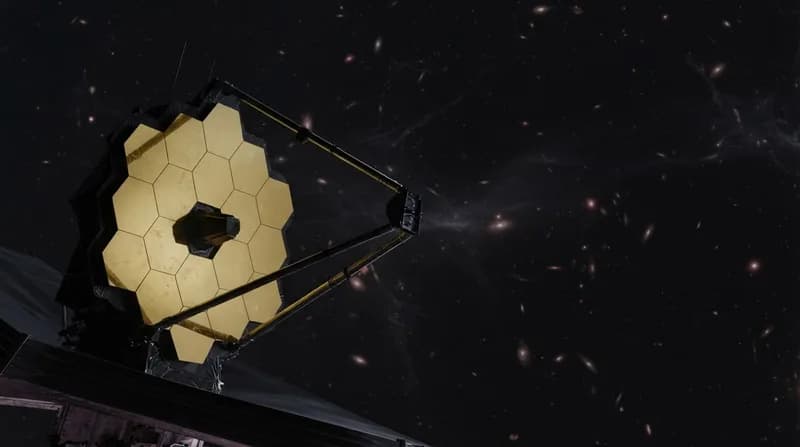
For decades, the prevailing consensus among cosmologists suggested that the universe in its infancy—roughly 500 million years after the Big Bang—was a relatively 'clean' place. It was assumed that the gaseous environment surrounding the first generation of galaxies consisted almost exclusively of hydrogen and helium, the basic building blocks forged in the immediate aftermath of the Big Bang. However, new research from the University of Arizona, leveraging the unprecedented observational power of the James Webb Space Telescope (JWST), is challenging this timeline of cosmic purity.
By analyzing the light spectra of three extremely distant galaxies, researchers have discovered that these ancient structures were already actively distributing heavy elements—such as carbon, oxygen, and silicon—into the intergalactic medium. This suggests that the process of chemical enrichment occurred with surprising speed, potentially narrowing the window of time during which the universe existed in a truly primordial, metal-free state.
The Mechanism of Early Galactic Enrichment
The formation of complex elements requires the intense heat and pressure found at the cores of stars. As these early stars reached the end of their lifespans and triggered supernova explosions, they acted as cosmic chimneys, ejecting carbon and oxygen into the surrounding space. While this process is well-understood, the speed at which these materials escaped the gravitational pull of their host galaxies was previously underestimated.
Using nearly 30 hours of JWST infrared exposure time, the research team identified light absorption patterns that were significantly 'blueshifted.' This spectral shift provided concrete evidence that gas enriched with heavy elements was being forcibly expelled from these infant galaxies. This movement, often referred to as 'baryon cycling,' demonstrates that even in the dawn of the cosmos, galaxies were not isolated islands but dynamic participants in a complex galactic ecosystem.
Why It Matters: The Vanishing 'Population III' Stars
This discovery has significant implications for our understanding of 'Population III' stars. These hypothetical stellar entities are thought to be the very first stars born from pure hydrogen and helium. If the surrounding environment was already contaminated with heavy elements just 500 million years post-Big Bang, the opportunity for these pristine stars to form and persist was much smaller than previously estimated.
- Rapid Contamination: Galaxies began spreading heavy elements into space almost as soon as the first stars formed.
- Baryon Cycling: The existence of early outflows confirms that material recycling was integral to galactic evolution from the very beginning.
- Observational Challenges: The speed of this enrichment explains why finding truly pristine 'Population III' stars remains a difficult needle-in-a-haystack endeavor for modern astronomy.
- Cosmic Chemistry: The fundamental ingredients for life were being seeded across the cosmos only a fraction of the way into the universe’s history.
Outlook and Implications
The study, published in Nature Astronomy, underscores the necessity of high-sensitivity infrared instruments like the JWST to piece together the history of the early universe. By proving that the cosmic 'cup of water' was dyed with heavy elements much earlier than expected, researchers are forced to update their models of early star formation and galactic development. Future research will likely focus on observing even earlier galaxies to determine if there is any moment in history that truly remained free of the chemical fingerprints of stellar evolution.