The Decline of London's Digital Infrastructure
London, a global hub for business and technology, is facing an unexpected digital bottleneck. According to the latest data from network testing firm Ookla, the UK capital has plummeted to the bottom of the rankings among European cities regarding mobile connectivity. While London was an early adopter of 5G technology, the city now contends with the slowest median download speeds, the lowest upload performance, and the highest latency under heavy load across the continent.
This performance slump is a dramatic reversal from 2021, when London ranked seventh out of 18 major European cities for median download speeds. Since then, the city's network traffic has expanded at a rate that the existing infrastructure simply cannot support. In stark contrast, cities like Paris have consistently maintained download speeds exceeding 225 Mbps, highlighting a widening digital divide between London and its continental peers.
The Anatomy of Network Congestion
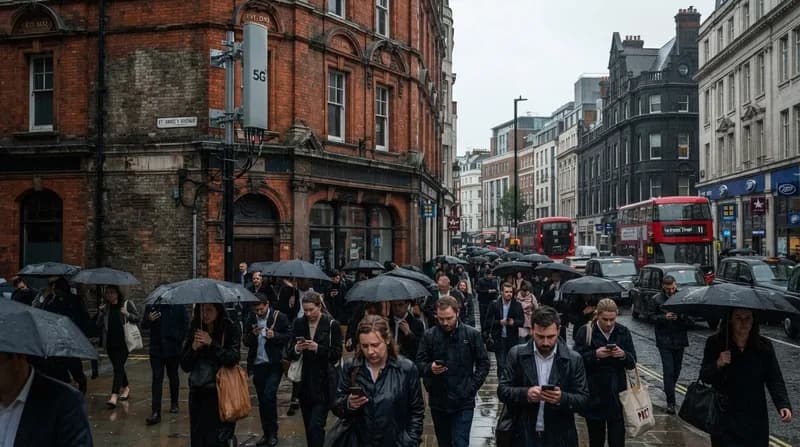
The core of the issue is acute congestion, particularly in Central London. Network performance data reveals a stark discrepancy between weekday business hours and weekends, with download speeds dropping by approximately 27 percent during peak commuter periods. This drop indicates that the city's current network density is insufficient to handle the volume of data requested by thousands of professionals and tourists simultaneously.
Beyond high usage, there are significant structural obstacles to improving this performance. The majority of mobile antenna sites in London are located on rooftops, and recent legislative changes to the Electronic Communications Code have drastically altered the financial incentive for landlords. Average rental income for rooftop sites has plummeted from roughly £21,000 annually to just £1,000, leaving many property owners to prioritize solar panels or other infrastructure over mobile connectivity equipment. Furthermore, "notices to quit"—which force operators to vacate sites during building redevelopment—result in roughly 7 percent of potential rooftop coverage being offline at any given time.
Planning Hurdles and Future Policy
The installation of new infrastructure is further hampered by a challenging planning environment. Since 2022, applications for new street masts have plummeted, with approximately three-quarters of all applications submitted since 2019 facing refusal. This is particularly prevalent in boroughs with strict conservation mandates, such as Westminster, where the aesthetic preservation of the landscape is often prioritized over the expansion of digital utility.
To combat this, City Hall has introduced a draft connectivity plan set for adoption in 2028. The proposal aims to mandate that developers maintain continuous mobile service during construction projects and encourages the placement of masts on taller structures and within the public realm. Additionally, the plan seeks to foster a more cooperative relationship between local boroughs and network operators to streamline site deployment in sensitive conservation areas.
Why it Matters
- Economic Impact: Persistent latency and slow speeds hinder productivity and digital innovation in a world-class financial hub.
- Policy Conflict: The tension between historical conservation, urban redevelopment, and the necessity of modern digital infrastructure remains a primary roadblock.
- Investment Divergence: Industry experts suggest that the government-mandated removal of certain vendor equipment and the historical over-hyping of 5G have diverted essential capital away from genuine capacity expansion.
As demand for data continues to climb, the challenge for London's operators is clear: they must find a way to densify their networks in one of the most physically and regulatory-constrained environments in the world.