The Engineering Frontier
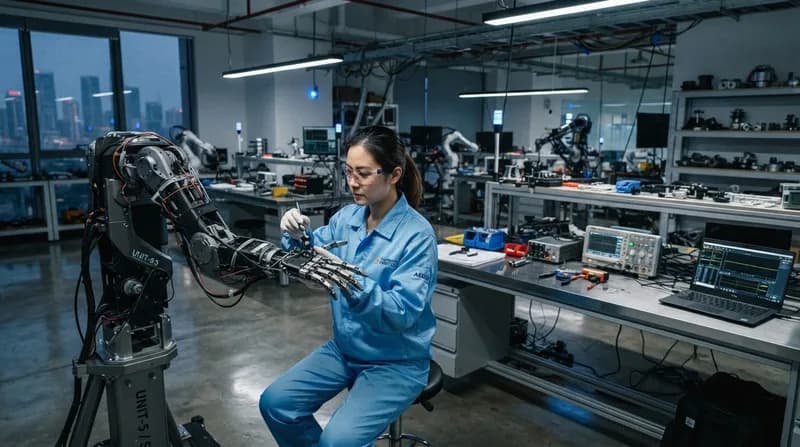
In a strategic maneuver to revitalize its manufacturing prowess, China has placed a monumental bet on the development of humanoid robotics, with a specific, intense focus on the engineering of dexterous robotic hands. While the global conversation often revolves around the "brains" of AI agents, Beijing is prioritizing the physical execution layer, recognizing that true industrial automation requires more than just processing power—it requires the fine motor skills to manipulate tools, assemble intricate components, and thrive in human-centric environments.
Addressing Demographic Shifts
This initiative is not merely a technological flex; it is a calculated response to a tightening labor market. As the national workforce begins a long-term contraction, the integration of humanoid robotics serves as a primary hedge against declining productivity. By mastering the ability to mimic human grip, pressure, and orientation, these machines are intended to occupy roles in sectors previously thought to be immune to full automation.
Why It Matters
- Manufacturing Agility: Unlike static industrial arms, dexterous hands allow for flexible assembly lines that can pivot between different product models without extensive hardware reconfiguration.
- Economic Resiliency: Scaling robotics is a core pillar in maintaining China's status as the 'factory of the world' despite an aging population.
- Technology Sovereignty: By controlling the supply chain for high-end actuators and force-feedback sensors, China aims to reduce its reliance on foreign high-tech components.
The Road Ahead
The pursuit of human-like dexterity presents significant hurdles, specifically in material science and power efficiency. A robotic hand must be lightweight enough to prevent overheating during long shifts while remaining powerful enough to exert precise force. As laboratories and firms across China receive increased state support for these projects, the focus is shifting toward mass-producible designs. If successful, this hardware evolution could fundamentally lower the barriers to entry for fully autonomous factories, permanently altering the global economic landscape and setting a new benchmark for robotic utility in consumer and industrial applications.