A Double Life for Cellular Glue
In the complex architecture of the human body, epithelial cells form the vital, tightly sealed barriers that line our skin, gut, and airways. For years, scientists have understood that these cells are held together by a molecular "glue" known as the E-cadherin complex. New research published in Nature Communications, however, reveals that this complex has a surprisingly dynamic second job: it serves as the mechanical machinery that allows epithelial cells to engulf and remove neighboring dead cells without breaking the vital tissue barrier.
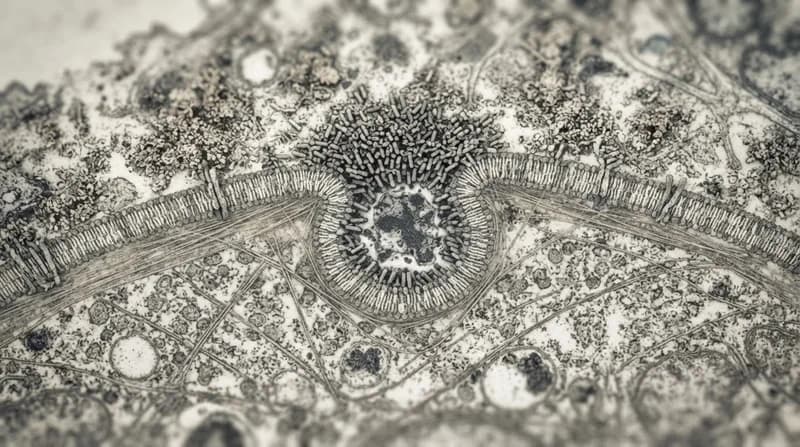
Led by ICREA Research Professor Verena Ruprecht, the team utilized live imaging of zebrafish and mouse embryos to observe this process in real-time. By monitoring the internal scaffolding of the cells, the researchers discovered that when a cell dies, the E-cadherin complex gathers at the site of contact. Rather than just acting as a static adhesive, the complex helps the living cell perform a sophisticated "swallowing" maneuver to clear the debris, which is a critical step in preventing chronic inflammation caused by decaying material.
The Mechanics of "Swallowing"
The study highlights a remarkable feat of cellular engineering. While one might expect a cell to lose its integrity when reshaping itself to engulf a large object, the epithelial tissue remains perfectly sealed. The researchers discovered that the cell acts differently on its top and bottom surfaces. While the lower surface stretches and bends to wrap around the dying cell, the upper surface remains stationary, ensuring the tissue barrier—whether it faces the outside environment or a body lumen—remains intact throughout the cleanup.
This mechanical flexibility is managed by specific protein components within the E-cadherin assembly:
- The Molecular Rope: One protein acts as a tether, connecting the E-cadherin assembly to the cell's internal skeleton. This allows the cell to transmit the force necessary to physically pull the debris inside. When this protein is absent, the clearing process fails entirely.
- The Cellular Brake: Another component functions as a brake for the cell’s contractile machinery. Interestingly, the study found that this component must be carefully regulated; if the "brake" is removed, the cell becomes too rigid, losing its ability to deform and properly consume the dying neighbor.
Why It Matters
Understanding how tissues clear dead cells is more than a biological curiosity—it is a significant milestone for medical research. When dead cells are not efficiently removed, they can rupture and release toxic contents, which is a primary driver of chronic inflammation. By pinpointing the specific role of the E-cadherin complex in this cleanup process, researchers have opened a new door into understanding how the body defends itself against internal decay.
Future Implications
While this research was conducted in embryos due to their transparency and ease of observation, the implications for adult human biology are profound. E-cadherin is ubiquitous in human epithelial tissues, and the structural similarity of these proteins across species suggests that this cleanup mechanism likely operates in the adult retina, colon, and airways. If scientists can determine how to support or enhance this process, it could lead to novel therapies aimed at reducing inflammation-based conditions, ranging from tissue damage to certain autoimmune responses.