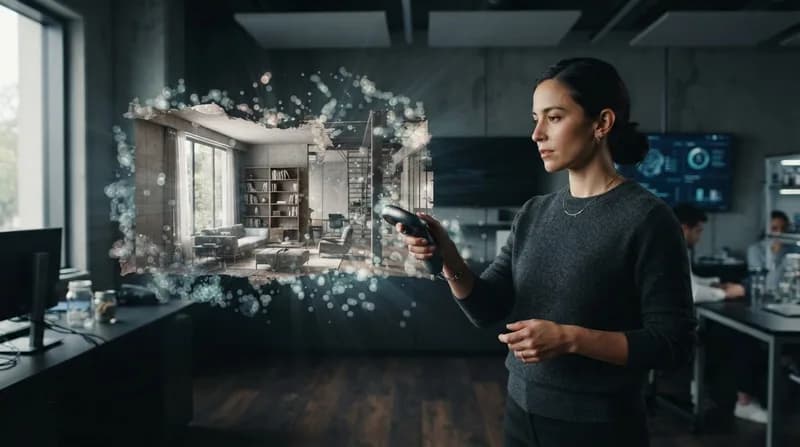
The Evolution of 3D Rendering
3D Gaussian Splatting has emerged as a groundbreaking technique in the world of computer vision and graphics, offering a way to represent complex 3D scenes with remarkable detail and efficiency. Unlike traditional point clouds or mesh-based models, this method utilizes millions of tiny, anisotropic 3D Gaussians to capture both geometry and light reflection. The result is a photorealistic reconstruction that maintains high performance, even when rendering intricate textures and transparent objects.
The WebGL Advantage
The latest breakthrough, documented by the team at Hugging Face, brings this intensive computational task to the browser via a dedicated WebGL viewer. By offloading the heavy lifting to the GPU through standard web APIs, developers and enthusiasts can now interact with, rotate, and zoom into high-fidelity 3D assets without requiring specialized software or powerful local workstations. This accessibility is a massive step forward for web-based 3D applications, from e-commerce product previews to immersive digital storytelling.
Why it Matters
- Reduced Latency: Moving these assets to the browser environment significantly lowers the barrier for users to view high-quality 3D data.
- Broad Compatibility: By utilizing WebGL, the viewer ensures that these complex scenes are accessible across a wide range of devices and operating systems.
- New Creative Workflows: Artists and researchers can now distribute their 3D models as linkable web content, fostering collaboration and open exploration of neural rendering techniques.
As the web continues to transition into a more spatial medium, tools that bridge the gap between heavy-duty rendering and standard browser accessibility are becoming essential. This WebGL viewer not only makes it easier to experience Gaussian Splatting but also paves the way for a more integrated 3D internet. Whether used for architectural visualization, game asset development, or academic research, the ability to stream high-density 3D scenes is fundamentally changing how we interact with digital spaces.