ScienceTechnical Deep Dive

Biological Breakthrough: Why Male and Female Skin Repair Differently

Published
EElectricBuzz Editorial Team
Biological Breakthrough: Why Male and Female Skin Repair Differently
3 min read517 wordsElectricBuzz Editorial Team

The Gist

“New research reveals that sex hormones dictate how skin stem cells synchronize, potentially unlocking new pathways for faster wound healing and cancer treatment.”

The Synchronization of Skin Renewal

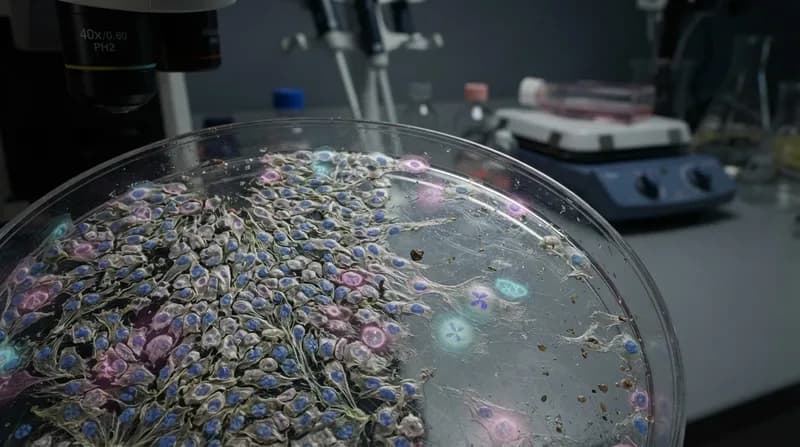
In a landmark study that challenges long-held assumptions about biological uniformity, researchers have uncovered fundamental differences in how male and female skin stem cells operate. By utilizing advanced microscopy to track individual stem cells in living mice over a five-month duration, a team led by the Université libre de Bruxelles (ULB) observed that female skin stem cells exhibit a high degree of coordination. When these cells divide, the resulting "sister" cells operate in unison, mimicking the synchronized motion of oarsmen in a boat to drive tissue regeneration.

Conversely, male skin stem cells tend to function with a greater degree of individual autonomy, lacking the tight coordination observed in their female counterparts. This structural difference in cellular behavior is not merely academic; it translates directly into physiological outcomes, specifically explaining why female subjects often demonstrate more efficient wound closure during the initial stages of the healing process. The research, published in the journal Nature, highlights how sex hormones act as the master regulators for these distinct cellular strategies.

The Role of Hormones in Cellular Behavior

To pinpoint the drivers of these observed disparities, the scientific team manipulated hormone levels in their subjects. The results confirmed that testosterone, more prevalent in males, accelerates the maturation of stem cells, effectively pushing them out of the stem cell layer at a faster rate. This hormone-driven process dictates the speed at which skin moves from a regenerative state to a specialized, protective barrier.

In contrast, estrogens—found at higher levels in females—serve as a catalyst for stem cell proliferation and are essential in maintaining the synchronization between sibling cells. When researchers performed ovariectomies on female mice, the synchronization vanished, and cell division rates plummeted. Conversely, treating male mice with testosterone resulted in the restoration of male-typical behavior, confirming that these sex-specific pathways are directly influenced by hormonal signaling rather than being fixed at a genetic level.

Why it Matters: Implications for Human Medicine

The discovery that sex-based biological differences extend deep into skin stem cell mechanics opens significant doors for personalized medicine. Historically, medical research has frequently overlooked sex as a variable in tissue repair, focusing instead on reproductive biology. This new data suggests that recognizing these divergent pathways could revolutionize the treatment of chronic wounds—such as those experienced by diabetic patients—and improve recovery outcomes after surgery or severe burns.

  • Precision Medicine: Future treatments may be tailored based on hormonal profiles to optimize the rate and quality of wound closure.
  • Cancer Research: By understanding the distinct ways male and female skin cells proliferate, clinicians may gain insight into the differing frequencies and progression patterns of skin cancers.
  • Fundamental Biology: The study provides long-awaited clarity on the intermediate stages of stem cell development, settling a decades-old debate about how the skin maintains its integrity over time.

As the scientific community shifts toward more gender-inclusive research, these findings underscore the importance of looking beyond universal biological models. The team now plans to transition from mouse models to further investigating how these hormonal mechanisms manifest in human skin, potentially setting the stage for a new generation of dermatological and regenerative therapies.

SPONSORED
The 5 Best Over-Ear ANC Headphones of 2026, Tested & Ranked
Editor's Pick Guide
92/100
Tech & Gadgets•12 min read

The 5 Best Over-Ear ANC Headphones of 2026, Tested & Ranked

We locked five over-ear ANC picks for 2026 — Sony WH-1000XM6, Bose QuietComfort Ultra 2, Soundcore Space One, Sennheiser Momentum 5, and Apple AirPods Max 2 — then stress-tested them on lab metrics, long-term owner truth, and live street prices.

Related Stories

Semantically matched articles, ranked by topic overlap and freshness.

Hidden Interactions: How Common Sweeteners May Alter Your Gut Microbiome
Science

Hidden Interactions: How Common Sweeteners May Alter Your Gut Microbiome

New research from the University of Cambridge reveals that sweeteners can disrupt gut bacteria, with some combinations—especially those involving common medications—producing significant microbial shifts.

Could a Soy-Derived Compound Be the Future of Salt-Defense Nutrition?
Science

Could a Soy-Derived Compound Be the Future of Salt-Defense Nutrition?

Japanese researchers have identified a soy-derived compound, LPC70, that mitigates the damaging effects of high-salt diets on both blood pressure and cognitive health in mice.

Surgical Sustainability: How Greener Anesthesia Practices are Cutting Hospital Emissions
Science

Surgical Sustainability: How Greener Anesthesia Practices are Cutting Hospital Emissions

A landmark study reveals that hospitals can significantly slash their carbon footprint and operating costs by optimizing anesthesia protocols without sacrificing patient safety.

Deciphering the Decade-Long Prelude to Inflammatory Bowel Disease
Science

Deciphering the Decade-Long Prelude to Inflammatory Bowel Disease

A groundbreaking study reveals that distinct immune system signatures can predict the onset of Crohn's disease and ulcerative colitis up to a decade before clinical diagnosis.

Mapping the Mind: New Breakthroughs in Precision Depression Treatment
Science

Mapping the Mind: New Breakthroughs in Precision Depression Treatment

Researchers at Mount Sinai have identified three specific white matter pathways that hold the key to lasting relief in treatment-resistant depression via deep brain stimulation.

New Clinical Trial Validates Exercise as a Drug-Free Tool for Spinal Cord Injury Pain
Science

New Clinical Trial Validates Exercise as a Drug-Free Tool for Spinal Cord Injury Pain

A landmark study from the University of British Columbia reveals that personalized exercise programs can significantly mitigate chronic pain for individuals with spinal cord injuries.

Psychedelic Breakthrough: Magic Mushroom Compound Mutes Aggression in Fish
Science

Psychedelic Breakthrough: Magic Mushroom Compound Mutes Aggression in Fish

A groundbreaking study reveals that psilocybin can selectively dampen aggressive behaviors in fish, offering new biological insights into how the compound affects social regulation.

Evolving Omicron: Researchers Uncover Divergent Infection Strategies in SARS-CoV-2 Variants
Science

Evolving Omicron: Researchers Uncover Divergent Infection Strategies in SARS-CoV-2 Variants

New research from HKUMed reveals that emerging SARS-CoV-2 variants are adopting distinct biological pathways, with some targeting the lungs while others demonstrate a surprising efficiency in colonizing the human gut.