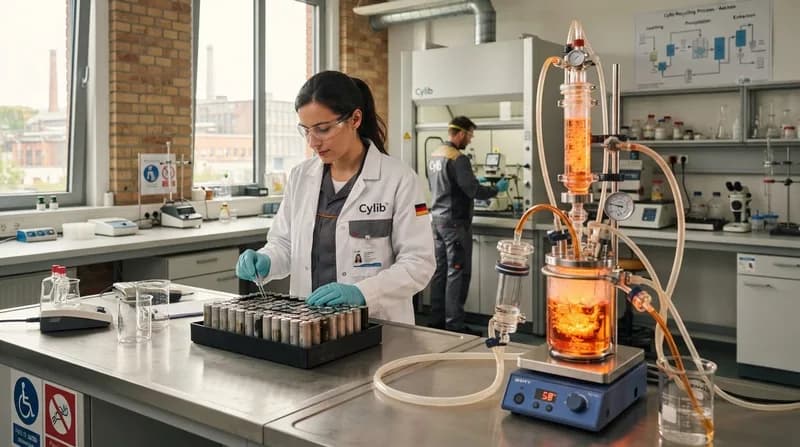
A New Chapter for Sustainable Battery Tech
The quest for European autonomy in battery production just took a significant step forward. Cylib, an Aachen-based specialist in battery recycling, has officially secured an investment from SPRIND, the German Federal Agency for Disruptive Innovation. This partnership marks a pivotal moment for the startup as it transitions from research-grade innovation to large-scale industrial reality.
Founded in 2022, Cylib has spent the last few years refining a unique, water-based recycling process known as OLiC (Optimised Lithium and Graphite Recovery). Unlike traditional methods that treat lithium as an afterthought—often losing it in the slag of thermal processes—the OLiC method prioritizes the recovery of lithium during the very initial stages of processing. This approach allows the company to boast impressive recovery rates exceeding 90 percent for critical materials, including nickel, cobalt, manganese, graphite, and lithium.
Why it Matters
- Strategic Autonomy: By creating a closed-loop system for battery materials, the initiative reduces Europe’s dependency on foreign raw material imports.
- Superior Recovery Rates: The OLiC process achieves over 90% efficiency for key battery components, a significant leap over conventional recycling benchmarks.
- Industrial Scaling: The backing by SPRIND validates the commercial potential of Cylib’s technology, which is already being tested through high-profile collaborations with major automakers like Porsche.
- Policy Alignment: The project has been officially classified as a “Strategic Project” under the EU’s Critical Raw Materials Act, highlighting its importance to the bloc's future green agenda.
Scaling for the Future
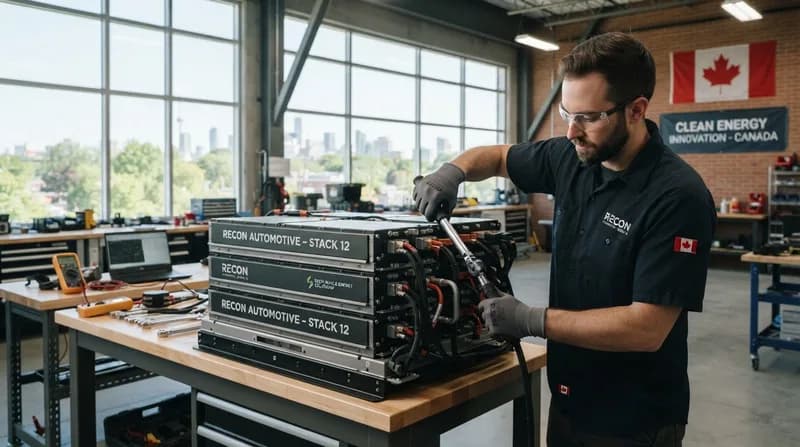
The company is currently executing a two-pronged infrastructure strategy. In Wernberg-Köblitz, the startup is already operational, processing end-of-life electric vehicle batteries into black mass with an eventual capacity of 10,000 tonnes annually. Meanwhile, construction is well underway at a state-of-the-art hydrometallurgical facility in Dormagen, North Rhine-Westphalia. This facility will serve as the primary site where the refined materials are extracted from the black mass and prepared for reuse in new cell manufacturing.
The validation of this tech is already surfacing in the real world. Earlier this year, Porsche announced the successful production of cathode active materials derived entirely from recycled raw materials recovered from their own fleet of retired EV batteries. These cells are currently undergoing rigorous performance validation. With SPRIND’s support, Cylib is positioned to bridge the gap between lab-proven breakthroughs and the industrial-scale supply chains required to power the next generation of European electric vehicles.