A Strategic Shift in Infrastructure
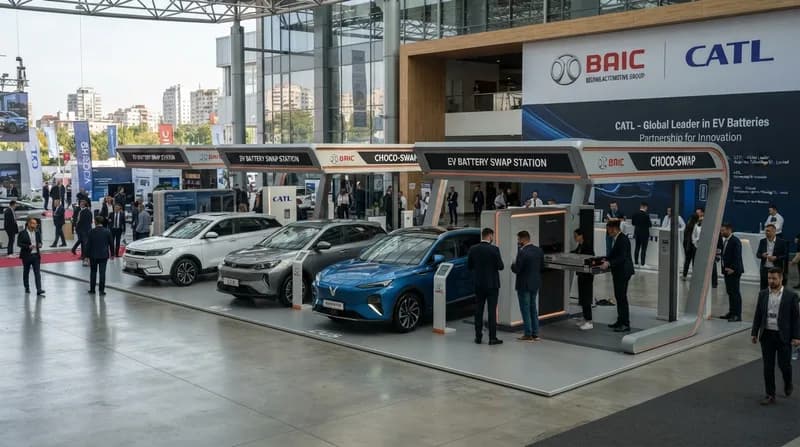
BAIC is signaling a major shift in its electric vehicle infrastructure strategy, placing 112 of its legacy battery swap stations on the auction block. The state-owned automaker plans to divest these assets—which include inventory, construction projects, and various intangible holdings—through the Beijing Equity Exchange. The package has been valued at a minimum of 278 million yuan, approximately 1.5 percent above its current book value. By categorizing these stations as non-core assets, BAIC aims to recoup capital and streamline its financial focus toward more sustainable long-term development.
This move marks a departure from the company's early, ambitious efforts to lead the battery swapping market. First launching swap technology in 2015, the firm previously envisioned a massive network under its 2017 'Optimus Prime Plan,' which targeted 3,000 stations. That goal ultimately proved elusive, leading the automaker to reassess its proprietary approach. Now, rather than sustaining the high operational costs of maintaining a standalone network, BAIC is betting on the economies of scale offered by industry giant CATL.
Aligning with the CATL Choco-Swap Ecosystem
The decision to sell these assets is directly tied to a deepened partnership with CATL, which is rapidly scaling its Choco-Swap network. Unlike BAIC’s older, proprietary designs that were tailored specifically for taxi and ride-hailing fleets, CATL’s Choco-Swap utilizes standardized battery modules. This universality is seen as the key to broader adoption, allowing for easier integration across different vehicle lineups and manufacturers. As of late 2026, the Choco-Swap network has already expanded to 2,500 stations across 200 cities, with projections to reach 6,000 locations by 2027.
For BAIC, the partnership is already yielding tangible results. Its premium Arcfox brand recently introduced swappable battery variants of the Beta T1 and Beta S3 models, and the company has committed to offering swappable versions for its entire product portfolio by next year. By leveraging CATL’s established footprint and hardware standards, BAIC is effectively outsourcing the infrastructure burden, allowing its engineers to focus on vehicle design while tapping into a significantly larger, more reliable charging ecosystem.
Why It Matters
- Cost Efficiency: By offloading high-maintenance proprietary stations, BAIC is shedding significant operational overhead.
- Standardization: Moving toward CATL’s modular system ensures greater compatibility and future-proofing for consumer vehicles.
- Network Reach: Aligning with a network that covers hundreds of cities allows BAIC’s customers to access a robust infrastructure that no single automaker could effectively maintain alone.
- Strategic Focus: This move highlights a broader industry trend where automakers are increasingly shifting from competing on individual charging infrastructure to adopting universal, third-party battery standards.