Accelerating Generative Audio
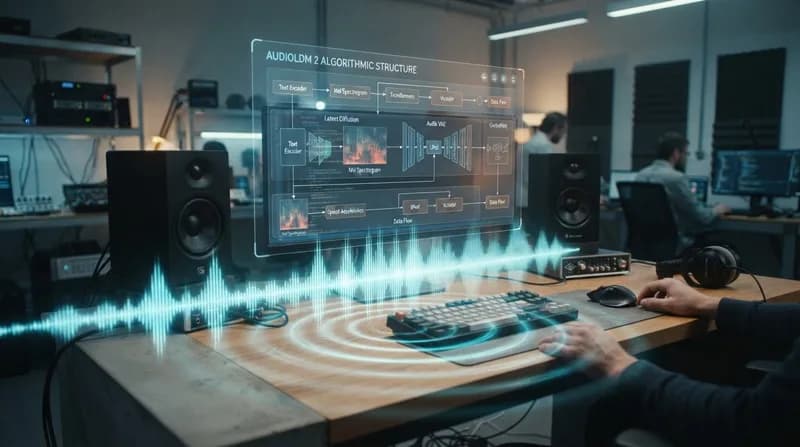
The landscape of generative audio has hit a new milestone with the latest optimizations for AudioLDM 2. As an evolution of the widely recognized latent diffusion model architecture, this update focuses heavily on latency reduction and inference efficiency. By refining how the model handles complex acoustic data, developers can now generate high-fidelity soundscapes, music, and voice synthesis with significantly lower computational overhead.
Why It Matters
Generative audio models have historically struggled with the high resource demands required to render coherent sound in real-time. The recent updates to the 0.3B parameter iteration of AudioLDM 2 represent a crucial step toward making sophisticated sound generation accessible for localized hardware. By squeezing more performance out of the same architecture, the barrier to entry for creative applications—such as real-time Foley effects in gaming or dynamic soundtrack generation—is effectively lowered.
- Model Architecture: Latent diffusion optimized for text-to-audio and audio-to-audio tasks.
- Efficiency Gains: Enhanced inference speed allows for faster prototyping and rapid iterative generation.
- Accessibility: The 0.3B model footprint ensures that researchers and developers can implement advanced audio AI without requiring massive server clusters.
The move by the community and Hugging Face to iterate on this specific model highlights a broader industry shift: after the initial 'wow' factor of generative AI, the focus is now squarely on optimization. As these models become faster, they transition from experimental tools into practical components for software developers. The ability to generate context-aware audio on-the-fly, rather than relying on static, pre-recorded asset libraries, changes the fundamental economics of content creation in digital media.
As these optimizations propagate through the open-source ecosystem, expect to see an explosion in applications ranging from intelligent audio editing suites to interactive sound environments that react to user input in milliseconds. This isn't just about speed; it's about the democratization of high-end generative audio production.