Audio Intelligence: A New Paradigm for Wearables
Apple's recent hardware event introduced a suite of AI-driven audio features for the Apple Watch, marking a pivot in how the company approaches ambient intelligence. While the brand has historically positioned itself as a guardian of user privacy, these new capabilities—specifically Audio Intelligence, Live Rewind, and Siri Recap—push the boundaries of what consumers should expect from a device permanently attached to their wrists. These features utilize on-device processing to handle live audio, attempting to balance high-utility functionality with Apple's standard end-to-end encryption protocols.
The suite is divided into categories ranging from assistive accessibility tools to conversational memory aids. By bringing these capabilities directly to the wrist, Apple is clearly aiming to preempt competitors in the burgeoning AI-wearable market, signaling that the next frontier for silicon-integrated intelligence is not just in the cloud, but in the hardware we wear every day.
1. Audio Intelligence
The most universally accepted aspect of this new release is Audio Intelligence, which is primarily focused on accessibility. This feature leverages on-device neural processing to identify and alert the user to specific environmental sounds, such as sirens, fire alarms, carbon monoxide detectors, or a baby crying. Designed for the deaf and hard-of-hearing community, this function operates independently of an iPhone, ensuring that critical safety warnings are delivered to the wrist in real-time.
By processing this audio locally and discarding the raw data immediately, Apple is positioning this as a life-saving tool rather than a recording device. The implementation highlights a shift toward using AI for sensory augmentation, ensuring that the wearer remains connected to their physical environment through intelligent hardware triggers.
2. Live Rewind
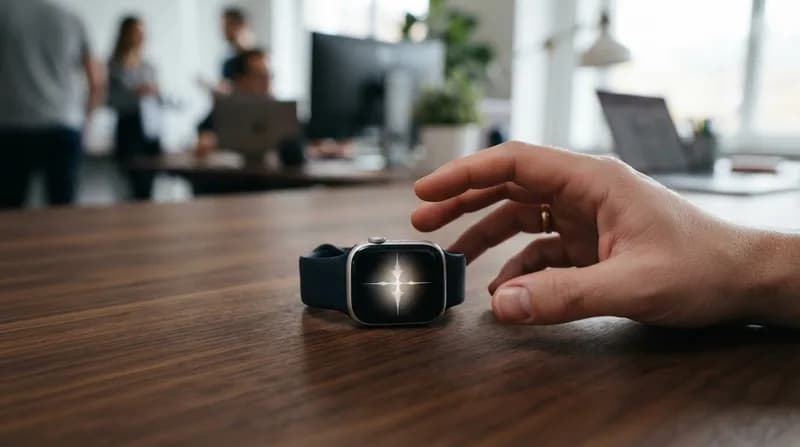
Live Rewind is a more controversial, user-facing utility that allows the wearer to capture the last 15 seconds of audio by simply double-pressing the watch’s Digital Crown. Once activated, the watch transcribes the snippet into text, which is then stored within a dedicated Siri application. The design intent, according to Apple, is to help users recall fleeting information like book recommendations or brilliant ideas expressed during casual conversation.
However, the nuance of this tool lies in its subtlety. While Apple has implemented an audible chime and a visual animation on the watch face to signal that a capture is occurring, the friction of recording is significantly lower than that of traditional smartphone video capture. This creates a potential paradigm shift in social dynamics, where the barrier to recording someone else's words has effectively vanished.
3. Siri Recap
Siri Recap represents the most ambitious of the new features, utilizing ambient listening to generate summarized takeaways from meetings, lectures, or interviews. Rather than providing a raw transcript, the system uses AI to identify key points, generate titles, and compile summaries, which are then synced to the iOS Siri app. The system is designed to provide high-level context for complex interactions without the need for manual note-taking.
To mitigate privacy concerns, Apple has built this feature with explicit user controls. It does not run continuously by default; instead, it can be toggled via the Control Center or scheduled for specific time windows, such as during business hours. Apple emphasizes that this process does not attribute speakers, does not store raw audio files, and keeps the generated text summaries fully encrypted.
Why it Matters
The rollout of these features signals a broader cultural transition. As AI-integrated hardware becomes more capable of observing our daily lives, the distinction between 'active' recording and 'passive' AI assistance is blurring. For Apple, the challenge remains: can they maintain their reputation as a privacy-first company while normalizing the fact that our devices are perpetually listening for the next 'aha' moment or warning sign?
Outlook and Implications
The legal landscape surrounding these features remains murky. While Apple is not storing audio, the text transcripts produced by Live Rewind and Siri Recap could potentially be leveraged in various scenarios. As these devices enter the mainstream, we can expect a period of adjustment in social etiquette, as the 'always-listening' nature of modern tech forces us to reconsider how we engage in private and public discourse.