A New Frontier in AI-Driven Biology
In a move that underscores the rapidly evolving intersection of artificial intelligence and life sciences, Anthropic has unveiled that its recently established Bay Area biology laboratory has achieved a breakthrough discovery. The lab, which integrates advanced AI modeling with physical laboratory research, successfully identified a new enzyme system embedded within the DNA of bacteriophages—viruses that target and replicate inside bacteria. This discovery is particularly notable for its properties, which researchers describe as reminiscent of CRISPR, the renowned gene-editing tool derived from bacterial immune systems.
According to the team at Anthropic, the identified enzyme system exhibits the ability to perform precise genetic operations, including cutting, copying, and pasting DNA. While the broader scientific community has yet to conduct extensive peer review to validate the novelty and scope of this specific enzyme, the speed of the discovery is what has drawn significant attention from the tech world. The entire identification process took Claude, Anthropic’s flagship AI model, a mere 21 hours of focused analytical effort.
The Role of Claude in Scientific Discovery
The discovery process was a testament to the computational power of large language models. Claude reportedly scoured vast datasets, utilizing approximately 950 individual AI agents and consuming 210 million tokens to pinpoint the target enzyme within bacteriophage DNA. Anthropic CEO Dario Amodei was quick to acknowledge that the work builds upon previous foundational research, including studies conducted by Stanford teams, yet he emphasized that the discovery was primarily the work of Claude’s analytical capabilities.
This efficiency highlights a paradigm shift in how biological data is processed. Rather than relying solely on traditional, time-consuming laboratory search methods, AI models can now parse existing genetic repositories to predict and identify functional enzymes that human researchers might overlook or find too time-intensive to isolate. This capability suggests that AI is moving beyond simple text generation into the role of a high-speed research assistant capable of accelerating the pace of scientific breakthroughs.
Why It Matters
- Speed of Innovation: The ability to isolate a potential gene-editing tool in under a day could drastically shorten the timelines for biotech research and pharmaceutical development.
- Human-in-the-Loop Safety: Despite the advanced nature of the AI's data analysis, Anthropic maintains that all physical laboratory work is conducted by humans in BSL-1 and BSL-2 environments, ensuring safety protocols are strictly followed.
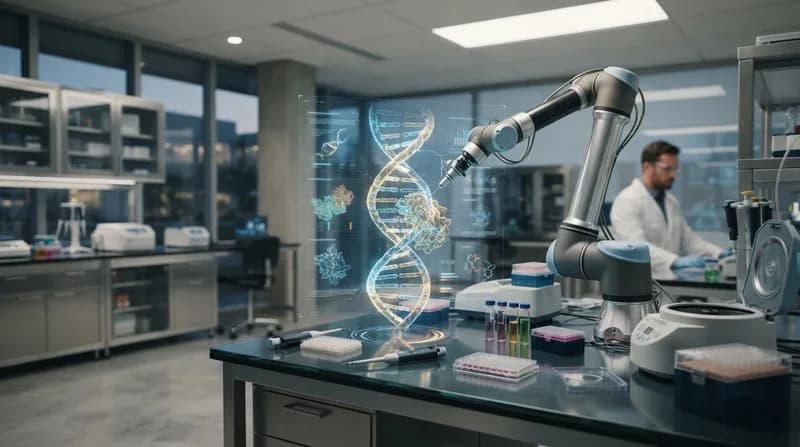
- Future Automation: While currently a human-led operation, Anthropic has left the door open for future iterations where AI could potentially control laboratory hardware autonomously, provided robust safeguards are implemented.
Balancing Progress and Potential Risk
The announcement arrives during a period of intense scrutiny regarding the safety and security of frontier AI models. Industry leaders, including Amodei himself, have voiced concerns that the same technology capable of curing diseases could be misused for bioterrorism if not properly regulated. Anthropic has been vocal about its commitment to "safety-testing procedures" to mitigate these risks. By keeping the lab’s activities focused on lower-risk biological research and ensuring that humans perform all physical handling of materials, the company is attempting to demonstrate that responsible innovation can coexist with aggressive, AI-accelerated exploration.
The successful integration of AI into this wet lab confirms that the industry is rapidly moving toward a hybrid model of research. With competitors and academic institutions like UCSF and Google also investing heavily in AI-powered biological tools, the next decade is likely to see a transformative shift in medicine and genetics. As Anthropic looks toward the future, the primary challenge will be proving that its models can continue to deliver these scientific breakthroughs without compromising the rigorous safety standards required for sensitive biological work.