ScienceTechnical Deep Dive

Ancient Fossil Cache Rewrites the Timeline of Oxygen-Dependent Complex Life

Published
EElectricBuzz Editorial Team
Ancient Fossil Cache Rewrites the Timeline of Oxygen-Dependent Complex Life
3 min read469 wordsElectricBuzz Editorial Team

The Gist

“A massive discovery of 1.7-billion-year-old microfossils in Australia provides definitive evidence that the dawn of complex life was tied to oxygen availability.”

A Deep Dive into Ancient Origins

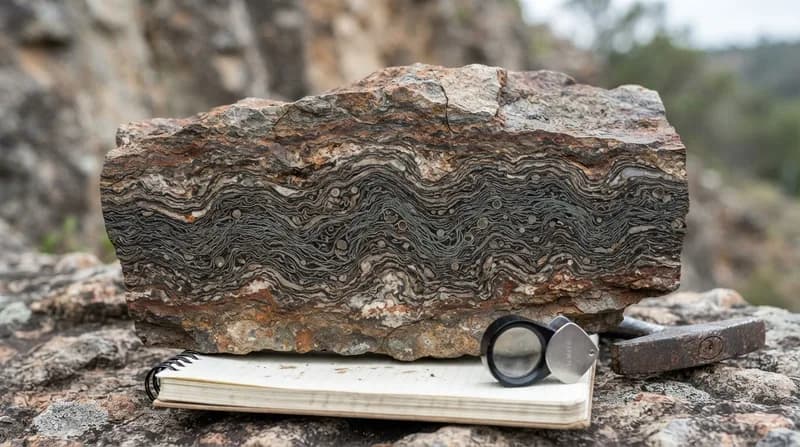
In the high-stakes quest to understand the origins of life on Earth, researchers have long grappled with the 'eukaryotic revolution.' This pivotal evolutionary moment, where simple prokaryotic cells evolved into the complex structures—complete with nuclei and organelles—that eventually gave rise to plants, animals, and humans, has remained shrouded in mystery. Now, a groundbreaking study published in the journal Nature has unearthed a massive clue hidden within the sedimentary rocks of northern Australia.

Stored within an open-air warehouse in Darwin, thousands of drill cores—originally extracted by mineral exploration companies—were hiding a biological treasure trove. By analyzing these ancient mudstones, which date back between 1.7 and 1.4 billion years, a team of scientists identified over 12,000 microscopic fossils. These specimens represent some of the earliest eukaryotes ever discovered, providing a rare window into the environment that facilitated the leap toward complex life.

The Oxygen Correlation

For years, the scientific community has debated the role of oxygen in early evolution. While nearly all modern eukaryotes rely on aerobic respiration—using oxygen to fuel their cellular energy demands—there has been lingering doubt as to whether this reliance was present at the very beginning. Recent discoveries of anaerobic eukaryotes and evidence suggesting a low-oxygen ancient atmosphere had cast doubt on whether oxygen was indeed the primary driver for early complex life.

The study of these Australian fossils provides a clear, data-driven answer. By analyzing both the biological residue of the 12,000 fossils and the chemical composition of the surrounding mudstone, researchers found a stark pattern. The complex, eukaryotic organisms were located exclusively in sediments deposited in oxygenated waters, ranging from coastal mudflats to open-sea environments. In contrast, samples taken from oxygen-free zones were populated only by simple, single-celled prokaryotic organisms.

Why It Matters

  • Evolutionary Timing: This discovery confirms that complex, nucleated life had already established a strict dependency on oxygen as far back as 1.7 billion years ago.
  • Methodological Breakthrough: The use of legacy drill cores from mining exploration demonstrates that industrial geological data can serve as an invaluable resource for evolutionary biology.
  • Defining Constraints: By mapping these fossils to their environmental chemistry, the team has effectively established the 'ecological ceiling' that early complex life faced before oxygen levels rose globally.

Implications for the Future

The implications of this research extend far beyond mere history. By pinpointing exactly where and how these organisms lived, scientists can better simulate the environmental conditions of the early Earth. This, in turn, helps refine our understanding of the 'symbiotic union' between archaea and bacteria that is believed to have birthed the first eukaryotic cell. As researchers continue to probe these enigmatic microfossils, the findings provide a critical map for understanding not only our own biological lineage but also the potential for complex life to emerge elsewhere in the cosmos under similar environmental pressures.


SPONSORED
The 5 Best Over-Ear ANC Headphones of 2026, Tested & Ranked
Editor's Pick Guide
92/100
Tech & Gadgets•12 min read

The 5 Best Over-Ear ANC Headphones of 2026, Tested & Ranked

We locked five over-ear ANC picks for 2026 — Sony WH-1000XM6, Bose QuietComfort Ultra 2, Soundcore Space One, Sennheiser Momentum 5, and Apple AirPods Max 2 — then stress-tested them on lab metrics, long-term owner truth, and live street prices.

Related Stories

Semantically matched articles, ranked by topic overlap and freshness.

Deciphering the Grave: DNA Reveals Medieval Burial Myths
Science

Deciphering the Grave: DNA Reveals Medieval Burial Myths

A groundbreaking genomic study from Stockholm University challenges long-held assumptions about medieval family burials, revealing complex social structures and early gender norms.

Novel Nasal Spray Offers Needle-Free Pain Relief for Pediatric Emergencies
Science

Novel Nasal Spray Offers Needle-Free Pain Relief for Pediatric Emergencies

A breakthrough clinical study reveals that a combination of sufentanil and ketamine delivered via nasal spray can rapidly manage moderate to severe pain in children without the distress of injections.

Breakthrough Trial Reveals 69% Drop in Stroke Risk for Intermediate-Risk AFib Patients
Science

Breakthrough Trial Reveals 69% Drop in Stroke Risk for Intermediate-Risk AFib Patients

A landmark clinical trial has demonstrated that direct oral anticoagulants significantly protect patients with intermediate stroke risk from serious cardiovascular events without increasing bleeding complications.

A Decade of Progress: Uterus Transplants Emerge as a Proven Clinical Path to Parenthood
Science

A Decade of Progress: Uterus Transplants Emerge as a Proven Clinical Path to Parenthood

A comprehensive national review reveals that uterus transplantation has matured from an experimental procedure into a reliable clinical reality, boasting a 70% success rate for live births.

Common Joint Supplement Linked to Accelerated Alzheimer’s Progression
Science

Common Joint Supplement Linked to Accelerated Alzheimer’s Progression

New research from the University of Florida suggests that glucosamine, a popular over-the-counter joint supplement, may accelerate cognitive decline in patients with existing memory impairment.

Unlocking New Paths: Researchers Identify Protein-Degradation Trigger for Inherited Heart Arrhythmias
Science

Unlocking New Paths: Researchers Identify Protein-Degradation Trigger for Inherited Heart Arrhythmias

A groundbreaking study has identified how a specific protein-degradation mechanism drives a life-threatening heart condition, paving the way for potential new therapies.

Beyond Cannabinoids: Hidden Medicinal Potential Found in Cannabis Waste
Science

Beyond Cannabinoids: Hidden Medicinal Potential Found in Cannabis Waste

Researchers have identified rare, previously overlooked compounds in discarded cannabis leaves that could revolutionize future biomedical research.

Unlocking Memory: How Personalized Music Bypasses Dementia's Neural Barriers
Science

Unlocking Memory: How Personalized Music Bypasses Dementia's Neural Barriers

New neurological research reveals that personally meaningful music triggers distinct brain activity in dementia patients, offering a potential breakthrough for non-pharmacological therapy.