The Return of a Preventable Crisis
In a development that has sent ripples through the American medical community, health experts are confronting a phenomenon that many believed was consigned to history: congenital measles. For the first time in over twenty years, the United States is documenting cases where infants are born already carrying the measles virus, a result of pregnant individuals transmitting the infection to their fetuses in utero. This emergence signals a critical shift in the nation's public health landscape, underscored by the loss of the measles-free status the U.S. has maintained since the turn of the millennium.
According to preliminary data released in a public health alert by NEJM Evidence, there were 13 reported cases of congenital measles between the beginning of 2025 and September of 2026. These cases occurred against the backdrop of large-scale outbreaks, with over 7,500 total measles cases recorded nationally in the past two years. Medical experts, including researchers at the University of Minnesota, characterize this as a brand-new threat, driven specifically by a decline in community vaccination rates that has left women of childbearing age uniquely vulnerable to a virus that had previously been effectively suppressed.
The Mechanisms of Transmission and Risk
The transmission of measles to a fetus occurs when a mother contracts the virus during pregnancy. Because the measles-mumps-rubella (MMR) vaccine cannot be administered while pregnant, the window for protection relies entirely on pre-conception immunity. For the past two decades, high vaccination rates created a 'herd immunity' buffer, shielding the population from the virus. However, as vaccination skepticism has grown and coverage has dipped, a generation of women has reached childbearing age without having been vaccinated and without ever experiencing natural exposure to the virus.
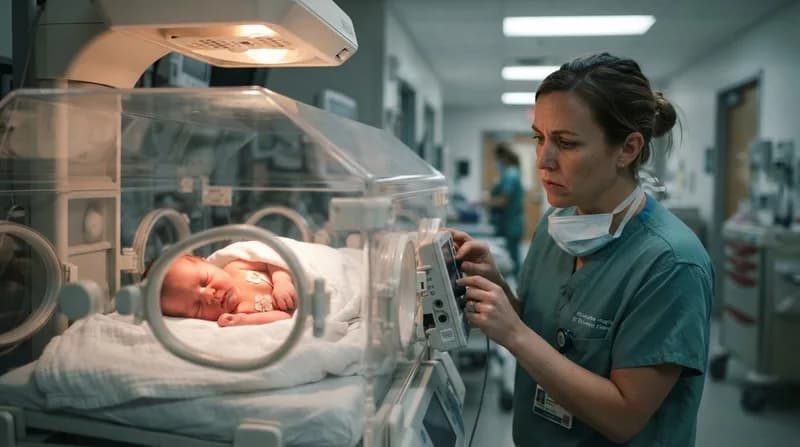
The clinical implications for newborns are severe. Babies exposed in the womb who test positive for measles shortly after birth are at risk for life-threatening complications, including pneumonia and encephalitis. Furthermore, doctors are increasingly concerned about subacute sclerosing panencephalitis (SSPE), a rare and universally fatal brain disorder. Emerging evidence suggests that infants who contract the virus congenitally may face a higher risk of developing SSPE, potentially with a much shorter latency period than those infected later in childhood.
Why It Matters: The Vaccination Threshold
- The 95% Benchmark: Public health authorities maintain that outbreaks are unlikely only when community vaccination rates for MMR reach or exceed 95%. Recent data indicates national kindergartner vaccination rates have fallen to 92.4%.
- Vulnerability of Infants: Routine MMR immunization typically begins between 12 and 15 months of age. Infants too young for the vaccine are entirely dependent on maternal antibodies transferred through the placenta, which are only present if the mother is immune.
- Prevention Strategies: The medical consensus remains that the only reliable defense is pre-pregnancy vaccination. For unvaccinated women exposed to the virus during pregnancy, medical intervention—specifically the administration of antibody solutions within a narrow six-day window—is essential to mitigate the risk of fetal transmission.
An Uncertain Outlook for Maternal and Child Health
The return of congenital measles represents more than just a cluster of clinical cases; it is a profound failure of preventative public health measures. Pediatricians and public health institutions now face the daunting challenge of closing the immunity gap. With outbreaks persisting in several states, including Pennsylvania, the call for renewed public education and a recommitment to vaccination protocols is intensifying. Without a shift in current vaccination trends, the medical community warns that we may see more newborns suffering from diseases that were nearly eradicated in previous decades. Restoring these protection levels will require a concentrated effort across the healthcare spectrum to ensure that those of childbearing age are fully protected before, not during, their pregnancy.