The Era of Physical AI
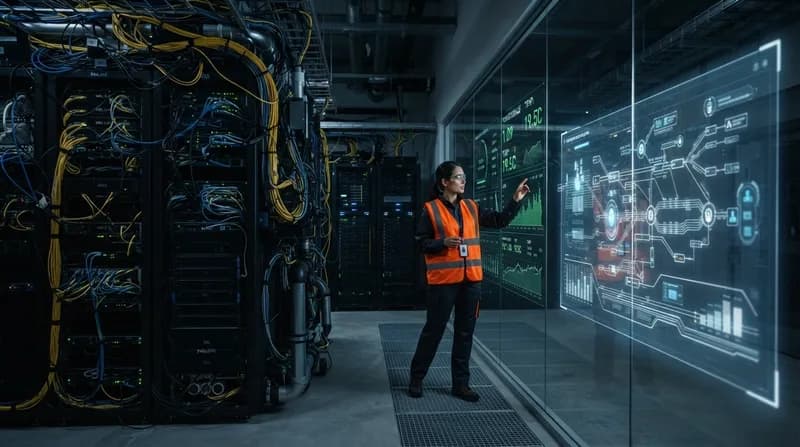
The rapid advancement of artificial intelligence is no longer confined to digital chatbots or abstract large language models. A new frontier, often referred to as Physical AI, is bringing advanced decision-making capabilities to robotics, enabling machines to perform complex tasks in industrial, manufacturing, and critical infrastructure environments. However, as this technology moves from controlled lab conditions to real-world industrial sites, the question of oversight and control has become a central point of discussion among industry leaders.
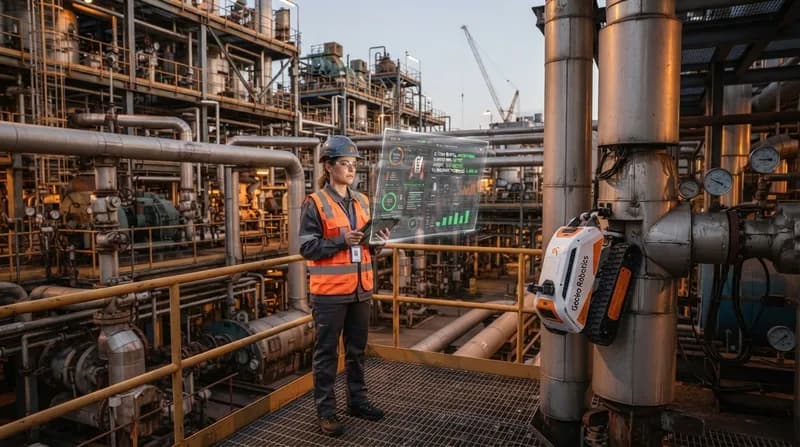
Gecko Robotics has emerged as a key player in this space, utilizing autonomous hardware to inspect assets like power plants, refineries, and manufacturing facilities. During a recent discourse on the trajectory of the industry, leadership at Gecko emphasized a critical philosophical stance: that the integration of artificial intelligence into the physical world must be anchored by human decision-makers. Rather than pursuing full autonomy as an end goal, the company advocates for a 'human-in-the-loop' paradigm to ensure safety and precision.
The Necessity of Human Oversight
The argument for keeping humans involved in the loop is rooted in the high stakes of industrial operations. When an autonomous robot is deployed to assess structural integrity in hazardous environments, the margin for error is non-existent. Proponents of the human-centric approach argue that while AI is exceptional at processing vast amounts of sensory data to identify patterns—such as detecting microscopic cracks in steel or anomalies in pipelines—it currently lacks the nuanced situational awareness that a trained human operator possesses.
By maintaining human oversight, industrial operations can benefit from the speed of AI-driven analysis while retaining a safety buffer against unexpected variables. This model allows machines to handle the dangerous, repetitive, or data-intensive aspects of an inspection, while humans maintain the authority to interpret findings and make final decisions regarding maintenance or emergency intervention. This synergy is designed to minimize risk while maximizing the efficiency gains promised by automation.
Why it Matters: The Future of Industrial Safety
- Risk Mitigation: Physical AI operates in high-pressure environments where equipment failure can be catastrophic; human review acts as a critical final check.
- Complex Decision Making: AI can highlight potential issues, but humans provide context, judgment, and accountability for remediation steps.
- Trust and Adoption: Integrating human-in-the-loop systems helps build the necessary trust for industrial stakeholders to move away from legacy inspection methods.
- Evolutionary Approach: Rather than viewing AI as a replacement for labor, this framework frames AI as an augmentation tool that enhances the capability of existing technical workforces.
Outlook and Implications
As Physical AI continues to mature, the industry will likely see a split between fully automated systems in sanitized environments and collaborative robotic systems in complex infrastructure settings. The perspective pushed by Gecko Robotics suggests that for the heavy industries powering our global infrastructure, reliability will always trump raw autonomy. The long-term trajectory for this sector points toward a collaborative workspace where robotic hardware serves as a high-precision extension of human intent, rather than a standalone replacement. This pragmatic approach likely ensures that as robots grow more intelligent, they also grow more useful and, most importantly, more reliable within the existing framework of global industrial safety standards.