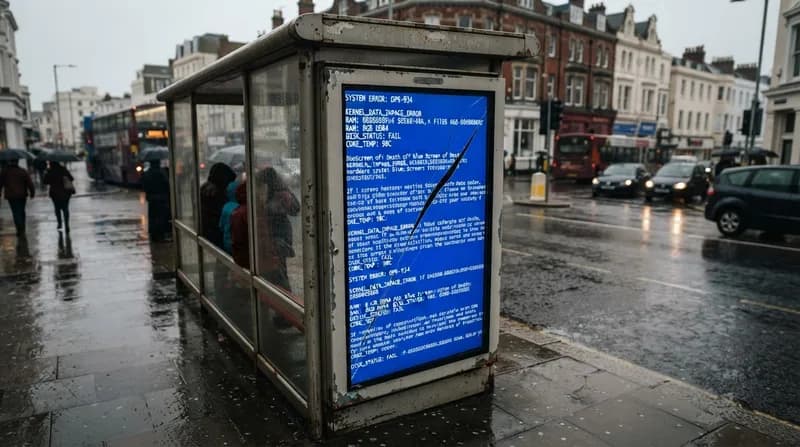
A Lesson in Digital Stagnation
Modern transit infrastructure aims to bring convenience through real-time data, but the experience at Portslade railway station recently served as a reminder that smart hardware is only as good as its uptime. A prominent digital bus display, designed to provide passengers with live arrival updates, has found itself trapped in a perpetual boot loop. Rather than informing commuters of their next departure, the screen is currently serving as an unintentional billboard for its own technical specifications.
The unit, identified as an Aesys Next Gen display, features a double-sided screen that has become entirely unresponsive to transit data feeds. Instead of scrolling through expected bus times for Brighton and Hove services, the screen endlessly cycles through its startup sequence. Passengers are greeted by the Vix logo—the systems integrator responsible for the network—spinning in a loop, followed by static text that displays the hardware’s internal resolution, 224x112 pixels. The display appears to be stuck in a diagnostic handshake, leaving commuters to rely on traditional paper timetables while the digital signage remains a display of vanity rather than utility.
Why It Matters: The Reliability Gap
The failure of this signage highlights a critical vulnerability in modern urban mobility: the over-reliance on interconnected digital systems that lack robust fallback mechanisms. While digital displays provide a significant upgrade over static prints by accounting for traffic and delays, they introduce a single point of failure. When software-driven hardware requires a reboot or suffers from a connection timeout, the convenience evaporates, leaving the public in the dark regarding actual vehicle locations.
Furthermore, the incident underscores the complexity of the transit ecosystem. With manufacturers like Aesys providing the physical display hardware and firms like Vix handling the backend system integration, identifying the source of a 'borked' device can be a challenge for operators. While the specific resolution identifier displayed on the screen is helpful for engineers to diagnose and track the faulty unit, it offers zero value to the average traveler standing in the rain waiting for a bus that may or may not be delayed.
The Outlook for Transit Tech
As cities continue to roll out intelligent transport systems, the focus must shift toward self-healing software and hardware that gracefully degrades to offline functionality. If a device cannot retrieve live data, it should arguably fall back to displaying the static schedule automatically, rather than locking users out with a looping boot screen or a system identifier. Until such fail-safes become industry standard, the 'magical mystery tour' experienced by commuters in Portslade serves as a cautionary tale for transit authorities everywhere.