The Arrival of Supervised Autonomy
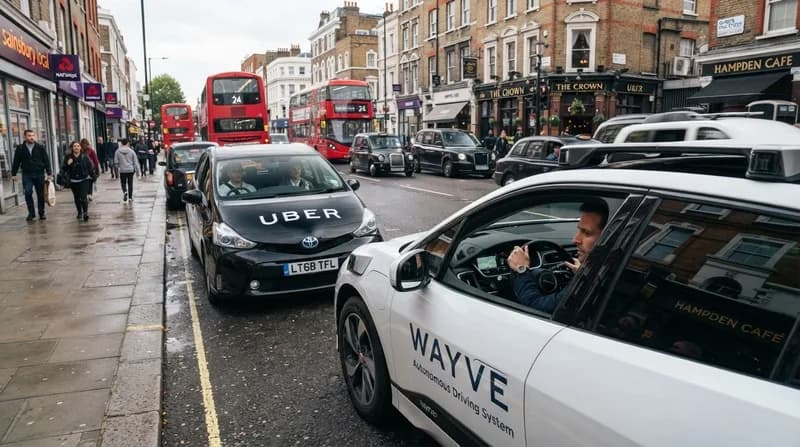
In a bold move that underscores the rapid evolution of autonomous mobility, Wayve and Uber have officially inaugurated a supervised self-driving ride service in London. The fleet currently consists of 15 electric Ford Mustangs, each outfitted with Wayve’s proprietary AI driver technology. While the vehicles are navigating the complex, often unpredictable traffic patterns of the UK capital, they are not yet fully autonomous in the strictest sense. Each trip is overseen by a trained, TfL-licensed private hire driver sitting behind the wheel, ready to intervene if the AI encounters a scenario outside its current operational parameters.
This launch represents a strategic maneuver to gain a foothold in the competitive London market, effectively outpacing rivals like Waymo that remain in preliminary testing phases. By allowing the public to book these rides, the companies are not just providing a service; they are gathering massive datasets from real-world passenger interactions. This data is the lifeblood of the Wayve AI model, which aims to transition from supervised learning to fully uncrewed operations as regulations and technology maturity allow.
The Next Generation: Nissan LEAF and NVIDIA DRIVE
While the Mustang fleet serves as the current proof-of-concept, the industry's gaze is already shifting to the next hardware iteration teased at the launch event: a specially prepared Nissan LEAF. This upcoming vehicle signals a departure from the "add-on" hardware aesthetic of the current fleet. The integration on the LEAF appears far more sophisticated, with a streamlined roof-mounted sensor suite that adheres closely to the vehicle's natural silhouette, along with integrated sensors on the bumpers and wings.
Technical underpinnings for the LEAF are centered around the NVIDIA DRIVE Hyperion platform, providing a robust compute foundation for the Wayve AI Driver. Unlike the current Mustang fleet, which serves as a testing ground for early-stage implementation, the LEAF is being designed with an eye toward the future of driverless mobility. Wayve has indicated that this platform is engineered to support fully autonomous operation, eventually eliminating the need for a safety driver, though both companies are maintaining a cautious, regulatory-compliant stance for the time being.
Why It Matters
The significance of this deployment extends beyond simple transportation. It highlights a pivot in how AI companies approach the urban environment. Rather than relying on static, pre-mapped HD environments—a common strategy for some competitors—Wayve’s approach emphasizes a generalized AI driver capable of navigating diverse cities. By leveraging Uber’s massive network and global reach, the partnership effectively creates a global feedback loop for its machine learning models. Starting in London, the program is already slated for expansion into international markets like Tokyo, positioning Wayve as a pivotal player in the global race for autonomous dominance.
Contextual Outlook: The path to "driverless" status remains tethered to stringent safety validation and government oversight. While the current "TEST VEHICLE" signage on the Mustang fleet reminds passengers that these cars are still learning, the transition to the more integrated LEAF hardware suggests that the industry is accelerating toward a tipping point where autonomous vehicles become a seamless part of the urban transit fabric.