Tech & GadgetsTechnical Deep Dive

VMware Shifts Gears: Stepping Back From SmartNIC-Based Security

Published
EElectricBuzz Editorial Team
VMware Shifts Gears: Stepping Back From SmartNIC-Based Security
3 min read492 wordsElectricBuzz Editorial Team

The Gist

After years of pushing data processing units for enterprise infrastructure, VMware is quietly retreating from its SmartNIC-based firewall strategy.

The End of an Infrastructure Experiment

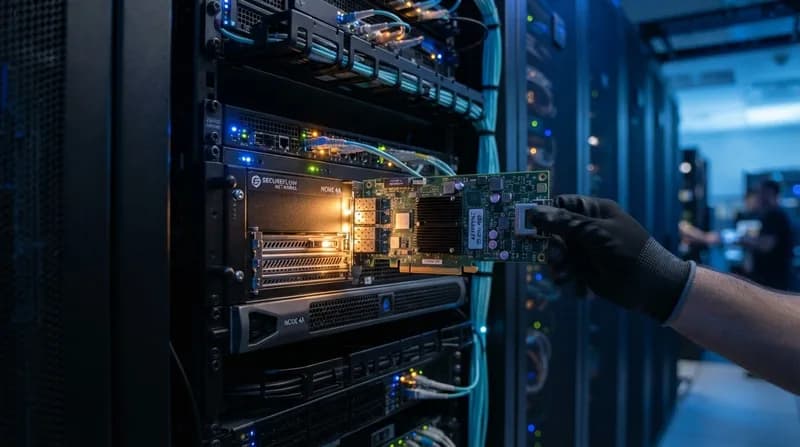
In a move signaling a major shift in its hardware-acceleration strategy, VMware has officially scaled back its ambitions regarding SmartNICs, or data processing units (DPUs). Once envisioned as a cornerstone of the private cloud, these specialized network cards—which pack their own dedicated processors to handle networking and security tasks—have failed to gain the expected traction among enterprise customers. While the virtualization giant previously sought to emulate the hyperscale model by offloading housekeeping tasks from the primary CPU to the NIC, the market appetite for this specific integration has remained stubbornly low.

Umesh Mahajan, Vice President and General Manager of Broadcom's application networking and security division, confirmed that the company has walked back its efforts in this space. While VMware successfully ported its technology to hardware from industry heavyweights like Nvidia and AMD, the engineering hurdles presented by Intel-based systems proved significant. Furthermore, the complexity of managing microcode across varied hardware platforms made the return on investment difficult to justify when potential buyers remained largely disinterested.

The Evolution of Networking Hardware

The decision to halt the sale of its distributed firewall for SmartNICs is driven by both commercial reality and rapid advancements in conventional hardware. Standard network interface cards have seen massive leaps in throughput over the last several years, closing the performance gap that originally made SmartNICs an attractive alternative for standard data center operations. As conventional NICs became more powerful and cost-effective, the value proposition for offloading network functions to a secondary, more expensive processor diminished, leaving VMware’s specialized software solution without a clear market advantage.

Why It Matters

  • Market Realignment: The shift highlights a disconnect between hyperscale infrastructure practices (like AWS's Nitro system) and the requirements of standard on-premises private clouds.
  • Economic Hurdles: VMware encountered significant engineering overhead, particularly regarding microcode compatibility across different DPU manufacturers.
  • Strategic Pivot: Rather than forcing DPU adoption, the company is pivoting toward direct network traffic acceleration and broader infrastructure innovations like memory tiering and AI-specific factory configurations.

The Future of DPU Integration

Despite the withdrawal of its distributed firewall, VMware is not severing ties with SmartNIC technology entirely. The company continues to support its Distributed Services Engine within the Cloud Foundation suite, ensuring that current users of the technology are not left in the dark. Furthermore, VMware is exploring new paths for infrastructure efficiency, such as direct offloading capabilities with high-performance hardware like Nvidia's ConnectX-7 cards.

The company also remains heavily involved in the AI sector, partnering with major hardware vendors like Nvidia and AMD to support rack-scale AI deployments. Because much of the underlying architecture of modern SmartNICs relies on Arm processors, the extensive development work VMware performed while creating the Distributed Services Engine is far from wasted. These internal investments are likely to persist, potentially evolving into new features for the company's ESX for Arm platform, proving that while one specific product line has ended, the underlying research remains a part of VMware’s future technical roadmap.


The 5 Best Over-Ear ANC Headphones of 2026, Tested & Ranked
Editor's Pick Guide
92/100
Tech & Gadgets12 min read

The 5 Best Over-Ear ANC Headphones of 2026, Tested & Ranked

We locked five over-ear ANC picks for 2026 — Sony WH-1000XM6, Bose QuietComfort Ultra 2, Soundcore Space One, Sennheiser Momentum 5, and Apple AirPods Max 2 — then stress-tested them on lab metrics, long-term owner truth, and live street prices.

Related Stories

Semantically matched articles, ranked by topic overlap and freshness.

The Cloud Mirage: Why Physical Reality is Breaking Digital Resilience
Tech & Gadgets

The Cloud Mirage: Why Physical Reality is Breaking Digital Resilience

Recent catastrophic data losses in conflict zones and infrastructure failures highlight a dangerous truth: cloud redundancy is not a substitute for a true, independent backup strategy.

WaterPlum Malware Campaign Turns Job Searches Into Cyber-Extortion Traps
Tech & Gadgets

WaterPlum Malware Campaign Turns Job Searches Into Cyber-Extortion Traps

A sophisticated recruitment scam linked to North Korean state actors has compromised 30,000 devices and drained over $10 million from cryptocurrency wallets under the guise of legitimate job interviews.

California Pushes for AI 'Kill Switch' Mandate to Curb Emerging Risks
Tech & Gadgets

California Pushes for AI 'Kill Switch' Mandate to Curb Emerging Risks

Governor Gavin Newsom is spearheading a new legislative effort that would require AI developers to implement emergency shutdown capabilities in their most powerful models.

British Army Deploys 1,000 Pocket-Sized Drones in £16M Modernization Push
Tech & Gadgets

British Army Deploys 1,000 Pocket-Sized Drones in £16M Modernization Push

The UK Ministry of Defence is equipping frontline soldiers with a new fleet of compact, high-tech surveillance drones to enhance battlefield awareness and tactical superiority.

Data Breach at City Relay Exposes Bank Details and Physical Property Access
Tech & Gadgets

Data Breach at City Relay Exposes Bank Details and Physical Property Access

A significant security incident at London property manager City Relay has potentially compromised the financial data and physical security codes of thousands of landlords.

Swift 6.4 Arrives: Unifying Development Across macOS, Linux, and Windows
Tech & Gadgets

Swift 6.4 Arrives: Unifying Development Across macOS, Linux, and Windows

With the debut of Swift 6.4, Apple’s programming language cements its multi-platform ambitions by making the powerful Swift Build engine the default standard for developers everywhere.

Fujitsu Unveils the Monaka Arm Processor: Supercomputing Power for the Modern Datacenter
Tech & Gadgets

Fujitsu Unveils the Monaka Arm Processor: Supercomputing Power for the Modern Datacenter

Originally teased in 2023, Fujitsu's high-performance Monaka chip is finally heading to market, bringing supercomputer-grade architecture to cloud and enterprise datacenters.

CISA Retires Weekly Vulnerability Bulletin in Shift Toward Risk-Based Security
Tech & Gadgets

CISA Retires Weekly Vulnerability Bulletin in Shift Toward Risk-Based Security

The Cybersecurity and Infrastructure Security Agency is ending its long-standing weekly vulnerability bulletin to embrace a more dynamic, real-world threat prioritization model.