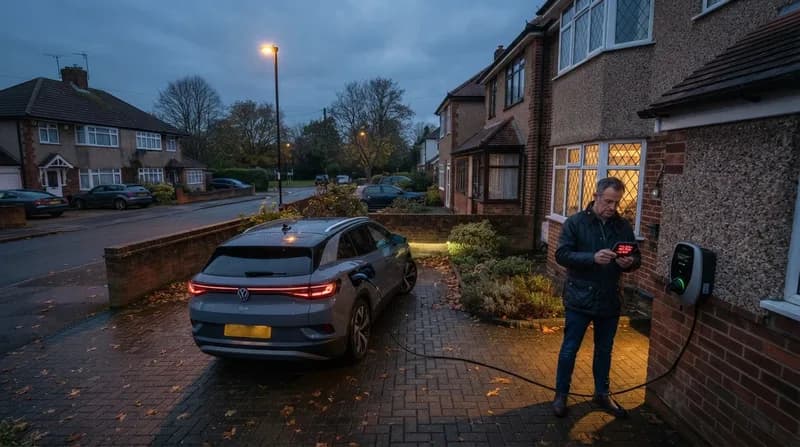
The Shift in Domestic Charging Economics
Electric vehicle owners in the United Kingdom are bracing for a financial adjustment as Ofgem, the national energy regulator, prepares to implement a substantial increase in the energy price cap. Starting January 1, 2027, the price of electricity for households on standard variable tariffs is slated to rise significantly, directly impacting the operational costs of home-based EV charging. The new cap sets the average electricity unit rate at 32.69p per kilowatt-hour, a sharp 26% climb from the current 26.32p rate.
This shift serves as a stark reminder of the volatility inherent in the energy market. For those who rely on home charging to fuel their daily commute, the difference in charging a mid-sized 60 kWh battery will jump from roughly £15.79 to £19.61 per session. Owners of long-range vehicles with 100 kWh battery packs could see their costs surge by over £6 per full charge. While these figures represent theoretical maximums based on empty-to-full scenarios, the cumulative effect of these price hikes over a full year could add hundreds of pounds to the annual running costs of an electric vehicle.
Why It Matters: Strategy and Mitigation
The core of this issue lies in the UK's ongoing dependency on natural gas for power generation, making domestic energy prices highly susceptible to global wholesale market fluctuations. As electricity costs rise, the economic appeal of switching to an EV becomes more sensitive to individual charging habits. The situation creates a clear divide between different types of EV users:
- Tariff Disparity: Households on standard variable rates are the most vulnerable, while those on specialized, off-peak 'time-of-use' tariffs for EV owners may largely circumvent the worst of the price increase.
- Public vs. Private Gap: The price cap increase emphasizes the widening divide between home charging, which benefits from lower VAT, and public charging infrastructure, which is taxed at the standard 20% rate.
- Strategic Charging: Drivers are now being encouraged to invest in smart-charging technology that automates power intake during off-peak hours when demand—and electricity prices—are lowest.
Ultimately, while the headline figures are alarming, the impact of the Ofgem announcement is not uniform across all EV owners. Those with the infrastructure and tariff flexibility to shift their energy consumption to off-peak hours will remain insulated from the brunt of the increase. However, for the average consumer, this price cap adjustment marks a significant moment where cost-efficiency must be actively managed rather than assumed as an inherent benefit of EV ownership. As the UK navigates these energy pressures, smart technology and adaptive charging habits are set to become the most critical tools for maintaining the long-term financial viability of the electric transition.