A Shift in the Regulatory Roadmap
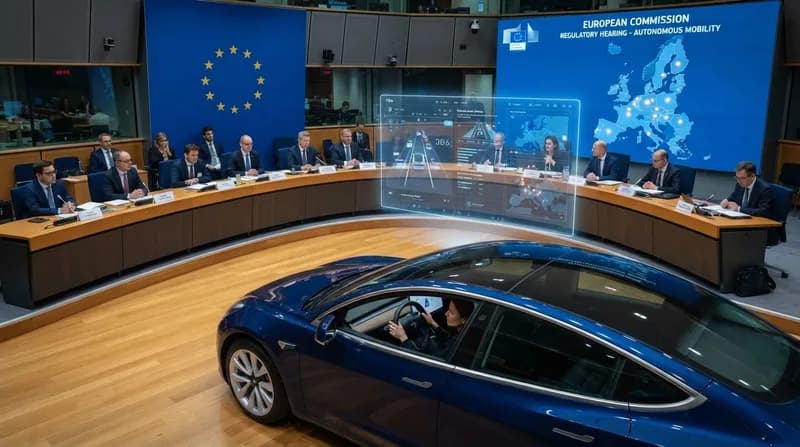
Tesla’s ambitions to secure broad, EU-wide approval for its driver assistance technology have hit a temporary roadblock. The Technical Committee on Motor Vehicles (TCMV), an expert body within the European Commission, has officially postponed its scheduled discussion regarding the system—now branded as Tesla Assisted Driving (TAD)—from December 1 to December 15. This delay is the latest development in a high-stakes regulatory process that will determine how the company’s automation software operates across the bloc’s member states.
The push for centralized approval follows a provisional type-approval granted earlier this year by the Dutch road authority, RDW. By leveraging Article 39 of EU Regulation 2018/858, which provides a framework for evaluating innovative technologies not yet fully codified in existing law, Tesla has sought a faster route to market. However, reaching a final, binding decision remains a complex process requiring consensus among a majority of the 27 EU member states.
The Road to Compliance
Central to the ongoing negotiations is the rebranding of the software. Previously known as Full Self-Driving (Supervised), the feature faced significant pushback from European regulators—most notably German officials—who argued the nomenclature was misleading. By shifting the name to "Tesla Assisted Driving" in October, the company aimed to better align with the reality of the technology: while the system manages complex tasks like steering, braking, and acceleration, it remains a "Level 2" driver-assistance tool that requires constant human oversight.
Despite the recent administrative delay, the technology has already seen a mosaic of success on the national level. Roughly a dozen EU countries have already granted independent approval for the system, with Italy being the most recent nation to signal its endorsement. Nevertheless, these fragmented victories remain precarious. According to reports, a formal rejection at the upcoming EU-wide vote could potentially invalidate existing national-level approvals, creating a high-pressure scenario for the company as it attempts to standardize its presence in the European market.
Why it Matters
- Regulatory Unity: An EU-wide approval would streamline operations, while a rejection could force a costly rollback of existing national-level permissions.
- Market Strategy: The rebranding from "Full Self-Driving" to "Assisted Driving" highlights the industry-wide tension between marketing terminology and the safety requirements of modern driver-assist systems.
- Threshold for Success: To gain the green light, the proposal needs a qualified majority—representing at least 15 of the 27 member states and 65% of the total EU population.
Future Implications for Automation
As the December 15 date approaches, the outcome of the committee's vote will likely serve as a benchmark for how the EU approaches semi-autonomous driving software. The decision will influence not just Tesla, but other manufacturers attempting to introduce advanced AI-based driving features into the highly regulated European landscape. For now, the automotive industry remains in a state of anticipation, waiting to see if European regulators will embrace the shift toward software-defined mobility or maintain their cautious stance on automated driver assistance.