Autonomous Mobility Takes the Streets of Munich
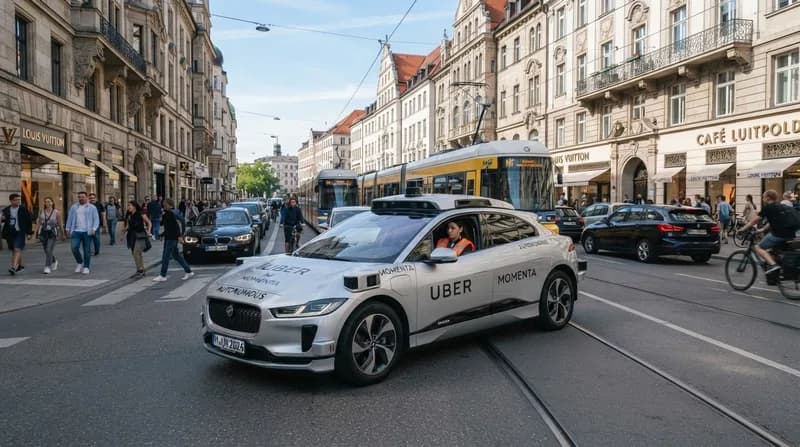
The landscape of urban transportation is shifting as Uber and the AI-focused tech firm Momenta officially launch a collaborative pilot project for autonomous passenger transport in Munich. By leveraging the existing Uber platform, the partners are bringing supervised, self-driving transit to the streets of northern Munich, including the areas surrounding the iconic Olympic Park. This pilot represents a major stride toward establishing a framework for autonomous mobility within Germany’s highly regulated transport environment.
For the duration of this testing phase, the service is not fully driverless. Safety remains the paramount concern, necessitating the presence of a specialized supervisor in every vehicle. This professional is tasked with monitoring the system’s performance and intervening if necessary, ensuring that the technology is rigorously vetted under real-world conditions. This measured approach allows both companies to gather critical data on navigation, traffic interaction, and user experience while adhering to the strict safety standards mandated by the German Federal Motor Transport Authority (KBA).
How the Pilot Service Functions
The operational framework of this pilot is designed to be as seamless as possible for the end-user. Pre-registered Uber customers operating within the designated northern Munich zone can access these autonomous rides through their standard Uber app. When booking a trip, users may be presented with an autonomous option when selecting ride tiers such as UberX, Electric, or Comfort. While the rides are currently free of charge, the pick-up and drop-off locations are fixed within the specified testing area to ensure the vehicles operate within known parameters.
To participate, users must update their Uber application to the latest version. Within the ‘Account’ and ‘Settings’ tabs, users can navigate to ‘Ride Preferences’ and opt into the ‘Autonomous Vehicles’ program to join the waitlist. As the pilot progresses, the companies intend to gradually expand the geographic scope of the service, eventually covering larger sections of the city. User feedback is a cornerstone of this initiative; passengers are actively encouraged to share their experiences via the app to help refine the system’s interface and ride comfort.
Why It Matters
- Regulatory Benchmarking: Germany’s stringent KBA regulations are widely considered a global benchmark for autonomous vehicle safety. Success here could fast-track approvals in other European markets.
- Physical AI Integration: Momenta’s 'Physical AI' approach focuses on deep-level understanding of road environments rather than just basic perception, which is essential for scaling complex urban driving.
- Hybrid Platform Strategy: This project highlights Uber’s broader vision of a multi-modal future where traditional human-driven rides and autonomous vehicles coexist to solve urban congestion.
Future Implications
This pilot is more than just a convenience trial; it is a strategic maneuver to prove that autonomous transit can function reliably within the dense, complex infrastructure of a major European hub. By proving the safety and efficacy of their systems, Uber and Momenta are setting the stage for a potential transition from a supervised trial to a full-scale commercial offering. As the test area expands and the underlying AI continues to 'learn' from every kilometer driven in Munich, the dream of automated, reliable, and accessible urban mobility moves closer to reality.