The Challenge of Forgotten Hardware
For many tech enthusiasts, the 'junk drawer' of electronics—or as some call it, the 'Basket of Old Tech'—is a repository of potential. Whether kept as a backup for emergencies, a dedicated media player, or a travel device, these dormant smartphones represent a significant investment in hardware that should, theoretically, last for years. However, when a device sits idle for months, the path to bringing it back into service is rarely seamless. The struggle of resurrecting a mid-range handset, specifically a 2022-vintage Samsung Galaxy A33, highlights a glaring inefficiency in modern mobile software management.
When a phone is left disconnected from the grid, environmental factors—such as humidity tripping the sensors in a USB-C port—can prevent charging entirely, rendering the device useless until the right conditions are met. Once the hardware hurdles are cleared, the user is often immediately thrust into a tedious, manual software marathon that feels more like a chore than a restoration project.
The Multi-Stage Update Marathon
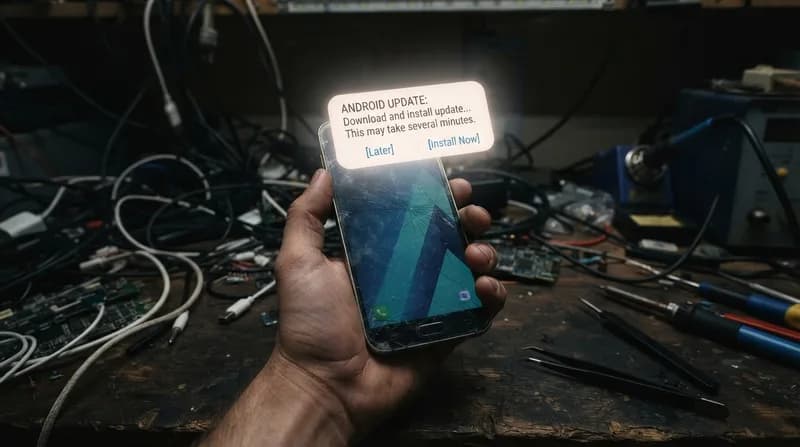
Modern Android smartphones are designed to receive regular security and firmware patches, but these updates are typically gated. When a device is months behind on its patch cycle, it cannot simply jump to the latest version. Instead, it must be updated in a staggered, sequential fashion. For a user returning to an idle device, this manifests as a cycle of 'install, reboot, wait, repeat.' Each patch requires manual consent, re-authentication, and a significant amount of time spent watching progress bars rather than enjoying the functionality of the handset.
The lack of cumulative update packages for older hardware turns what could be a five-minute task into a multi-day ordeal. In the case of the Galaxy A33, the user experience becomes a frustrating loop of overlapping update requests, reboots, and repeated prompts to log in. This creates an unnecessary barrier for those looking to keep their older electronics in rotation, effectively penalizing the user for letting a secondary device sit idle.
Why it Matters
- Longevity vs. Obsolescence: While manufacturers like Samsung offer extended security support until 2027, the difficulty of applying these updates in practice discourages users from keeping their hardware, potentially leading to more e-waste.
- User Friction: Software delivery mechanisms are currently failing to account for devices that are not used every single day, creating a 'resurrection tax' on secondary device owners.
- The Need for Cumulative Patches: The industry should pivot toward rolling up multiple security updates into single, comprehensive packages for offline devices, minimizing the number of manual interventions required.
- Smart Switch Awareness: Many users are unaware that desktop-based solutions like Samsung’s Smart Switch can often streamline the update process, yet this information is rarely surfaced when a phone is frantically pinging for updates post-resurrection.
Refining the Resurrection Process
The industry standard for updating mid-range devices needs a fundamental shift. Rather than forcing a trickle-feed of individual updates, manufacturers should implement smarter detection algorithms. If a device has been offline for an extended period, the OS should ideally recognize the gap and offer a single, cumulative image that brings the phone current in one pass. Furthermore, clearly surfacing the option to use a desktop utility during the setup phase would alleviate the 'update hell' that currently plagues the return-to-use experience, ultimately making our tech ecosystems more sustainable and user-friendly.