Scaling High-Power Freight Infrastructure
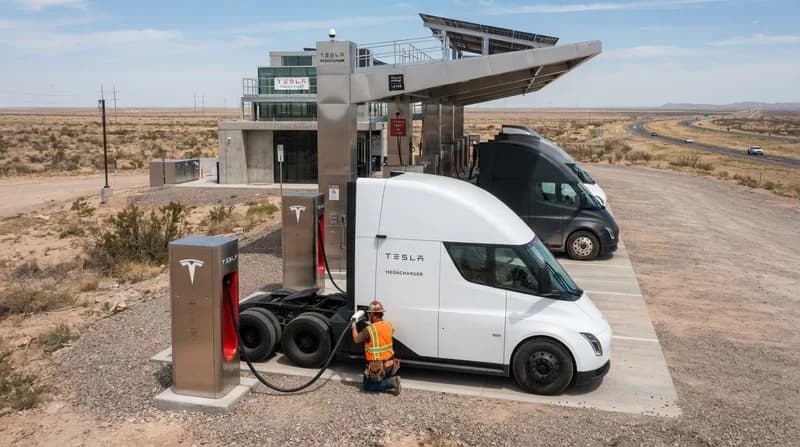
Tesla has officially inaugurated its first public Megacharger site in Texas, located in Mesquite, just east of the Dallas metropolitan area. This strategic placement places the charging hub squarely in one of the most vital freight corridors in the United States, signaling a major move toward the practical, long-term viability of battery-electric heavy-duty logistics. The facility is equipped with eight high-powered charging stalls, each capable of delivering up to 1.2 MW of power, significantly reducing downtime for the massive battery packs found in Class 8 electric trucks.
The Mesquite site is part of a broader, aggressive rollout of Tesla’s dedicated commercial charging network. As the company ramps up volume production of the Tesla Semi—which began at its Nevada gigafactory earlier this year with a long-term goal of 50,000 units annually—the need for reliable, rapid-access charging outside of private depots has become paramount. Operators can now look toward a growing network that serves as a bridge for routes that exceed the distance limits of traditional overnight charging.
The Growing Megacharger Network
The Texas opening follows a series of recent activations across the U.S. that reflect Tesla's commitment to building a specialized corridor for freight. The expansion has touched several key logistics hubs, including:
- Hodgkins, Illinois: Supporting the Midwest freight distribution network.
- Urbandale, Iowa: Providing a critical charging stop in the heart of the country.
- Ogallala, Nebraska: Serving trans-continental trucking routes.
- Riverdale, Utah: Enhancing the western reach of the charging infrastructure.
Combined with long-standing sites in California and Georgia, Tesla now manages seven public Megacharger locations across four states, accounting for 44 dedicated charging stalls. While this footprint is still maturing, the move represents a shift in how the industry approaches electric trucking, moving beyond siloed, private fleet solutions toward an accessible charging ecosystem.
Why It Matters
For the electric freight industry, the Megacharger is more than just a plug; it is the backbone of the transition to zero-emission logistics. Key implications of this rollout include:
- Throughput Capacity: The 1.2 MW output allows for meaningful battery top-ups in timeframes that respect driver hours-of-service regulations.
- Freight Corridor Integration: By positioning chargers near major metropolitan transit hubs like Dallas, Tesla is directly addressing the 'range anxiety' that has historically hampered electric vehicle adoption in the commercial sector.
- Hybrid Deployment: In addition to public sites, Tesla continues to offer its 'Semi Charging for Business' program, which allows commercial fleets to install Megacharger equipment directly at their private dispatch centers, offering a dual-pronged infrastructure strategy.
As 2026 winds down, Tesla continues to iterate on its network expansion strategy. While the current count trails initial ambitious targets, the successful deployment of high-voltage infrastructure in diverse geographic regions demonstrates that the technical and operational frameworks are now firmly in place to support a future of electrified heavy shipping.