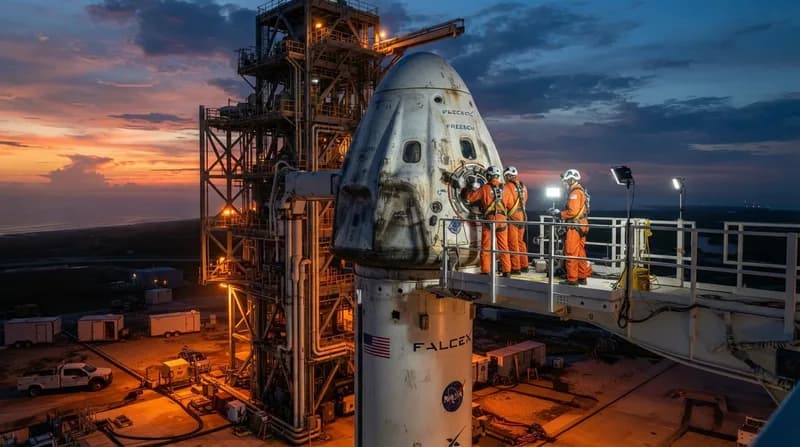
A New Chapter for Crewed Spaceflight
As the commercial space sector continues to mature, SpaceX is preparing to execute yet another vital mission for NASA, utilizing one of its seasoned Crew Dragon capsules. This upcoming flight represents a significant milestone in the vehicle's operational lifecycle as the company moves closer to retiring this specific unit from human-rated transport duties. The mission underscores the rigorous demands of sustaining continuous human presence in low-Earth orbit and highlights the evolving nature of reusable aerospace hardware.
While SpaceX has revolutionized the industry through its ability to recover and refurbish launch vehicles and spacecraft, these machines are subject to planned retirement schedules based on flight cycles and structural wear-and-tear projections. This upcoming mission serves as a testament to the reliability demonstrated by the Crew Dragon fleet, which has become the backbone of American human spaceflight since its maiden crewed voyage.
Why It Matters: Reliability and Sustainability
The transition toward retiring older capsules is a standard procedure in aerospace engineering to ensure crew safety remains the absolute priority. By rotating out hardware that has reached its flight-proven limit, NASA and SpaceX continue to maintain a high margin of safety while gathering essential data on the durability of composite materials and heat shielding during atmospheric reentry.
- Operational Provenance: This specific capsule has logged thousands of hours in space, providing critical telemetry data for future vehicle designs.
- NASA Partnership: The mission continues the Commercial Crew Program's goal of ensuring redundant access to the International Space Station.
- Fleet Transition: As veteran craft retire, they are systematically replaced by newer hardware iterations that incorporate iterative design improvements learned from the early years of the program.
The Future of Orbital Logistics
Looking ahead, the retirement of individual Crew Dragon units does not signal a slowdown for SpaceX. Instead, the company is actively integrating newer capsules that feature upgraded avionics, improved life support systems, and enhanced docking mechanisms. This seamless transition is essential for the future of private space exploration, including upcoming missions to commercial space stations and potential lunar orbits.
The expertise gained from analyzing the wear on these retiring vehicles allows engineers to refine maintenance protocols and extend the operational lifespan of future vessels. As we look to the next decade, the ability to rapidly cycle, evaluate, and upgrade orbital hardware will be the defining metric of success for the next generation of space logistics providers.