E-BUZZ ME Logo
ScienceTechnical Deep Dive

Solar Analysis Reveals 55% More Silver in the Sun Than Previously Estimated

Published
Solar Analysis Reveals 55% More Silver in the Sun Than Previously Estimated
1 min read167 words

The Gist

New atmospheric modeling suggests the Sun contains significantly higher levels of silver, aligning solar data with ancient meteorite compositions.

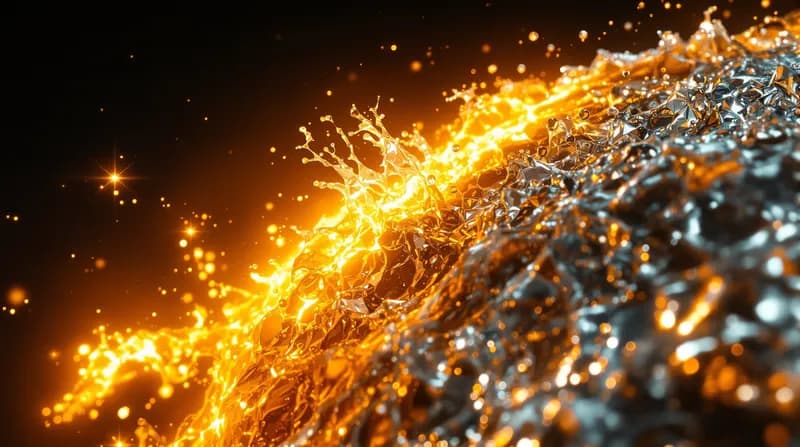
Recent scientific analysis has revealed that the Sun contains approximately 55% more silver than previous estimates suggested. This significant adjustment comes from the application of advanced solar atmosphere models, which provide a more accurate reading of the star's chemical makeup.

Aligning Solar Data with Meteorites

For years, there has been a discrepancy between the measured chemical composition of the Sun and that of ancient meteorites, which are often used as a benchmark for the early solar system's chemistry. This new calculation brings the Sun's silver content into much closer agreement with these primordial space rocks, resolving a long-standing inconsistency in solar science.

Tracking Cosmic Origins

The refined technique used in this study does more than just update the solar inventory; it provides a clearer lens through which scientists can track the cosmic origins of heavy elements. By understanding the precise levels of silver in our local star, researchers can better model how these elements were forged in the universe through processes like stellar nucleosynthesis and supernova events.

Related Stories

Semantically matched articles, ranked by topic overlap and freshness.

Geological Activity on Venus: New Evidence Suggests an Active Interior
Science70%

Geological Activity on Venus: New Evidence Suggests an Active Interior

Advanced 3D simulations reveal that Venus may be geologically active, with giant rift valleys potentially still expanding today.

Ken’ichi Nomoto and Stanford Woosley Awarded 2026 Shaw Prize in Astronomy
Science66%

Ken’ichi Nomoto and Stanford Woosley Awarded 2026 Shaw Prize in Astronomy

Astrophysicists Ken’ichi Nomoto and Stanford Woosley have been named joint winners of the 2026 Shaw Prize for their transformative research into stellar explosions.

Cosmic Speed Limits: How the Universe Outpaces Light
Science64%

Cosmic Speed Limits: How the Universe Outpaces Light

While nothing travels through space faster than light, the expansion of space itself allows distant galaxies to recede at speeds exceeding light-speed without violating Einstein's laws.

The Mystery of SuperAgers: DNA Alone Doesn't Explain Youthful Memory
Science63%

The Mystery of SuperAgers: DNA Alone Doesn't Explain Youthful Memory

New research suggests that the extraordinary cognitive abilities of 'SuperAgers' cannot be explained by genetics alone, pointing toward unknown environmental or lifestyle factors.

Orcas Observed Using High-Speed Impact Strategy to Shred Sunfish
Science63%

Orcas Observed Using High-Speed Impact Strategy to Shred Sunfish

Researchers in the Gulf of California have documented a previously unseen hunting behavior where orcas use high-speed collisions to dismantle sunfish carcasses.

Study Highlights Material Limits in Spain’s Shift to Renewable Energy
Science61%

Study Highlights Material Limits in Spain’s Shift to Renewable Energy

New research suggests that Spain's rapid expansion of renewable energy is only sustainable if accompanied by a significant reduction in overall material and energy demand.

Study Challenges Theory That Individual Recycling Hinders Climate Policy Support
Science61%

Study Challenges Theory That Individual Recycling Hinders Climate Policy Support

A four-year study of thousands of participants suggests that individual green habits do not distract citizens from supporting broader systemic environmental reforms.

From Soviet Physics to Martian Neighbors: Physics World Reviews the Latest Science Books
Science60%

From Soviet Physics to Martian Neighbors: Physics World Reviews the Latest Science Books

Physics World editors provide a condensed look at a diverse new collection of science literature covering everything from historical Soviet institutes to dystopian futures.