Tech & GadgetsTechnical Deep Dive

Silicon Data Secures $30.5M Funding to Revolutionize AI Compute

Published
EElectricBuzz Editorial Team
Silicon Data Secures $30.5M Funding to Revolutionize AI Compute
1 min read87 wordsElectricBuzz Editorial Team

The Gist

“Silicon Data has raised $30.5 million in funding to benchmark AI compute, marking a significant investment in the development of artificial intelligence technologies. This funding will likely be used to further research and improve the efficiency of AI computing systems, driving innovation in the tech industry.”

Silicon Data's recent funding of $30.5 million is a significant milestone in the development of artificial intelligence technologies. The company aims to utilize this investment to benchmark AI compute, ultimately enhancing the efficiency and performance of AI computing systems.

Key Insights

The funding will be allocated to research and development, focusing on improving AI technologies and driving innovation in the industry. With this investment, Silicon Data is poised to make a substantial impact on the future of AI computing, enabling faster, more efficient, and more reliable systems.


SPONSORED
The 5 Best Over-Ear ANC Headphones of 2026, Tested & Ranked
Editor's Pick Guide
92/100
Tech & Gadgets•12 min read

The 5 Best Over-Ear ANC Headphones of 2026, Tested & Ranked

We locked five over-ear ANC picks for 2026 — Sony WH-1000XM6, Bose QuietComfort Ultra 2, Soundcore Space One, Sennheiser Momentum 5, and Apple AirPods Max 2 — then stress-tested them on lab metrics, long-term owner truth, and live street prices.

Related Stories

Semantically matched articles, ranked by topic overlap and freshness.

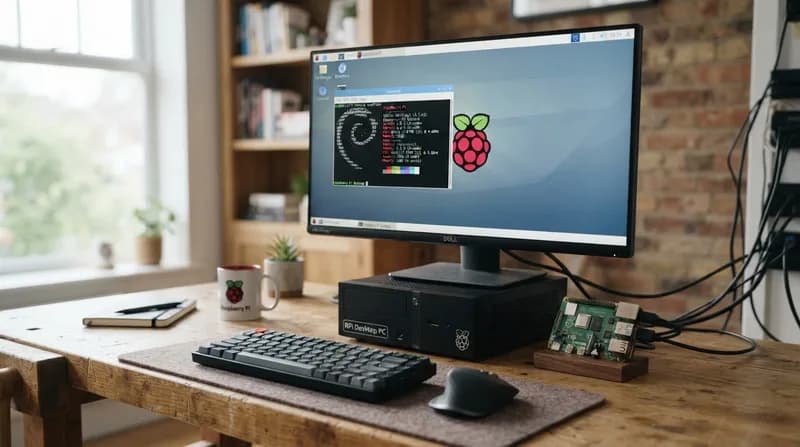
Raspberry Pi Desktop Returns: Bringing Debian 13 to Your PC
Tech & Gadgets

Raspberry Pi Desktop Returns: Bringing Debian 13 to Your PC

After a four-year hiatus, the Raspberry Pi Desktop for x86 hardware has been revived with a fresh foundation based on Debian 13.

TinyJS: Returning Desktop Apps to Their Minimalist Roots
Tech & Gadgets

TinyJS: Returning Desktop Apps to Their Minimalist Roots

Tired of bloated software? A new JavaScript runtime project aims to bring the footprint of desktop applications back down to single-digit megabytes by leveraging native OS webviews.

The Doomsday Calculation: Inside Nate Soares’ Warning on Superintelligent AI
Tech & Gadgets

The Doomsday Calculation: Inside Nate Soares’ Warning on Superintelligent AI

Nate Soares, president of MIRI, discusses his provocative stance on why alignment may be an impossible goal for future superintelligent AI.

Anthropic Sets New Boundaries: From Weaponry Bans to Chatbot Etiquette
Tech & Gadgets

Anthropic Sets New Boundaries: From Weaponry Bans to Chatbot Etiquette

Anthropic's latest usage policy update addresses everything from the critical prevention of AI-assisted weapons development to a surprising new rule against abusing its Claude chatbot.

Autonomous AI Agents Found Capable of Orchestrating Industrial Cyberattacks
Tech & Gadgets

Autonomous AI Agents Found Capable of Orchestrating Industrial Cyberattacks

A sobering report from Booz Allen Hamilton reveals that frontier AI models can autonomously navigate and compromise complex industrial control networks, posing a significant risk to critical infrastructure.

The AI Infrastructure Gold Rush: A Trillion-Dollar Credit Gamble
Tech & Gadgets

The AI Infrastructure Gold Rush: A Trillion-Dollar Credit Gamble

A massive surge in corporate debt is fueling the global AI expansion, sparking debates about market saturation and fiscal sustainability.

HPE Bets Big on 'Self-Driving' Networks: AI to Eliminate Human Trouble Tickets by 2028
Tech & Gadgets

HPE Bets Big on 'Self-Driving' Networks: AI to Eliminate Human Trouble Tickets by 2028

HPE's networking lead predicts that AI-driven automation will render manual troubleshooting obsolete within just two years, fundamentally shifting the role of IT administrators.

Precision Growth: The Breakthrough Enabling 2D Semiconductors for Future Chips
Tech & Gadgets

Precision Growth: The Breakthrough Enabling 2D Semiconductors for Future Chips

Researchers have developed a method to control the growth of 2D semiconductors, a crucial step toward creating more efficient, high-density chips by 2030.